1-800-868-2450
My Account | Cart | Checkout
Compressed air supports work in factories, workshops, food production, healthcare, and many other settings. Behind a steady hiss at an air tool is equipment that must deliver suitable pressure and flow, often for long shifts. Choosing a compressed air compressor is not just a matter of comparing horsepower or purchase price. Energy use, air quality, noise, maintenance access, and expected service life can change the real cost of ownership.
This overview introduces ten leading manufacturers and the strengths that distinguish their product ranges. It considers practical factors such as rotary screw and piston designs, oil-free options, variable-speed control, and system monitoring. A compact compressor may suit a small workshop, while a busy production line may need higher capacity and backup planning. Small details matter. A blocked intake filter or an undersized receiver can affect performance more than a brochure suggests.
Manufacturer reputations offer a useful starting point, not a guarantee of the right fit. Product availability, technical support, and specifications can vary by region and model. No ranking can replace checking a site’s pressure requirements, air demand, operating schedule, and installation conditions. Some comparisons are imperfect, too, because companies do not publish every figure on the same basis. Use this guide to identify options, ask sharper questions, and verify current data with manufacturers or qualified compressed-air professionals before making a decision.
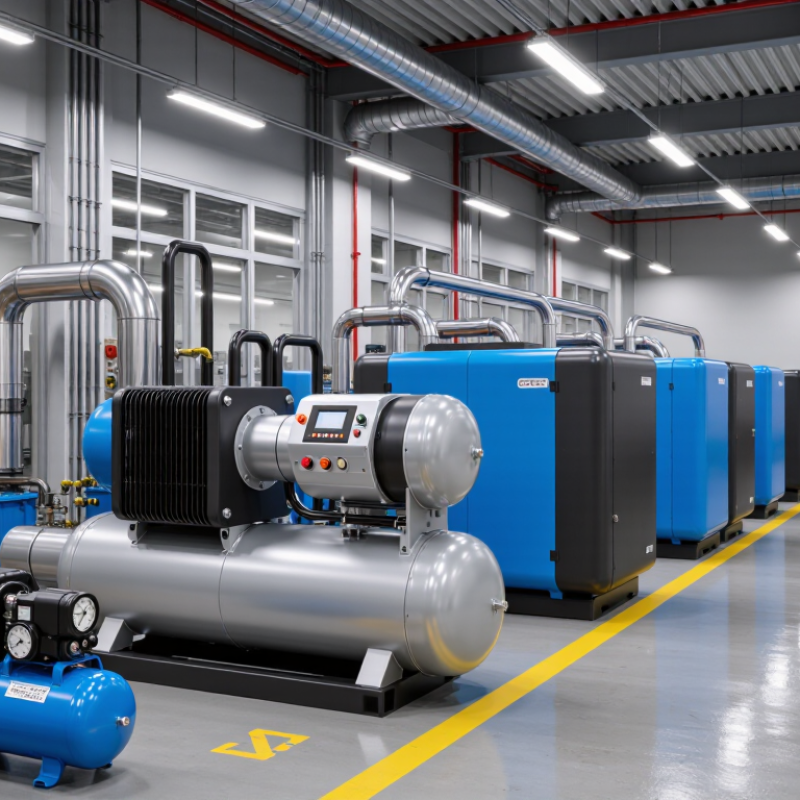
Compressed-air manufacturing covers more than the compressor itself. Factories build reciprocating, rotary-screw, and centrifugal machines for different flow and pressure needs. A small workshop may favor a compact piston unit, while a continuous production line often needs stable, high-volume delivery. Air matters. Design choices begin with duty cycle, inlet conditions, and required pressure—not headline horsepower.
Core technologies shape efficiency and maintenance. Rotary screws use meshing rotors to deliver a steady stream; variable-speed drives can reduce wasted output when demand fluctuates. Centrifugal designs suit large, consistent loads, while reciprocating models handle intermittent use and higher pressures. Heat is unavoidable. Manufacturers therefore integrate aftercoolers, dryers, filters, and condensate management to control moisture and particles before air reaches tools or processes. Oil-free equipment can be essential where contamination risk is tightly controlled, but it is not automatically the best fit for every plant.
Reliable production depends on more than machine efficiency. Sensors track pressure, temperature, and service intervals, while acoustic enclosures and vibration isolation improve the installation environment. Leaks remain a stubborn problem; a well-specified compressor cannot compensate for neglected pipework. There is an awkward truth: sizing is often based on peak demand, even when peaks last only minutes. That deserves a second look. A sound specification compares real load profiles, energy use, maintenance access, and air-quality targets, then leaves room for changing production needs.
A credible comparison of compressed-air compressor manufacturers begins with verified performance, not catalogue claims. The U.S. Department of Energy’s Improving Compressed Air System Performance sourcebook notes that compressed-air systems use about 10% of industrial electricity. That makes energy efficiency a practical selection criterion. Compare specific power, measured in kilowatts per unit of delivered air, under stated operating conditions. Lower figures can reduce running costs, but only when demand and pressure are matched.
Testing and air quality matter, too. ISO 1217 provides methods for testing displacement compressors, helping buyers compare capacity and power on a consistent basis. ISO 8573-1 classifies compressed-air purity by particles, water, and oil. A manufacturer should clearly state test conditions, rated output, service requirements, and the filtration needed to meet a facility’s target. Look for published data and independent verification. Details count.
Reliability is harder to reduce to one score. Review maintenance intervals, parts availability, warranty terms, and documented service response times. Ask for references from facilities with similar duty cycles, then check performance after installation. No scorecard is perfect. Real plants have leaks, changing loads, and imperfect maintenance; even efficient equipment can disappoint when systems are poorly managed. Compare lifetime energy and service costs, not purchase price alone.
The ten manufacturer profiles reflect different engineering priorities rather than one universal definition of quality. One focuses on oil-injected rotary-screw compressors for steady factory demand. Another specializes in oil-free systems, where product-contact requirements make air purity especially important. A third builds piston compressors for workshops with intermittent use. A fourth concentrates on centrifugal machines suited to large, continuous air loads. These designs are not interchangeable.
A fifth profile centers on portable compressors for construction and field work. A sixth emphasizes variable-speed controls that can adjust output as demand changes. A seventh combines compressors with dryers, filters, and storage equipment. An eighth serves heavy industrial sites, where uptime and maintenance access shape purchasing decisions. A ninth targets compact installations with limited floor space. A tenth distinguishes itself through regional service networks and parts availability.
Useful distinctions.
Comparisons should look beyond advertised capacity. Buyers can check pressure range, delivered airflow, operating hours, sound levels, and energy use under realistic load conditions. Service intervals matter too; a low purchase price may not mean low lifetime cost. Some figures are difficult to compare without consistent test conditions. That deserves a closer look. A profile is only a starting point: plant demand, air quality needs, and local service coverage can change which option fits best.
A comparison of the world’s leading compressed-air manufacturers should look beyond headline capacity. Product portfolios commonly span oil-injected and oil-free rotary screw compressors, centrifugal units, reciprocating machines, dryers, filters, and controls. That breadth matters. A food-processing line may need oil-free air and strict moisture control, while a metal workshop may prioritize variable output and durable service access.
Engineering capability shows in part-load performance, pressure stability, and system integration. The U.S. Department of Energy’s Improving Compressed Air System Performance sourcebook reports that compressed-air systems use about 10% of industrial electricity, and can reach 30% in some facilities.
That makes efficiency across changing demand more meaningful than motor power alone. Variable-speed drives, sequenced controls, heat recovery, and leakage diagnostics can all affect operating costs. Yet public catalogs rarely provide directly comparable part-load curves. This makes rankings less certain than they look.
Serviceability deserves equal attention. Compare documented maintenance intervals, spare-part availability, remote monitoring, and support for system audits—not just compressor specifications. ISO 11011 provides a framework for assessing compressed-air system energy efficiency, including supply, transmission, and demand.
It is a useful evaluation reference, not a manufacturer scorecard. One limitation remains: published performance figures may reflect different test conditions, so buyers should verify operating data against their actual pressure profile and duty cycle.
Compressed-air markets reflect very different industrial needs. In automotive plants, systems power tools and assembly lines; in food processing, clean, dry air helps protect product quality. Electronics factories need stable pressure and tightly controlled air quality. Demand therefore depends not only on compressor capacity, but also on operating conditions, maintenance skills, and local energy costs.
The U.S. Department of Energy’s Improving Compressed Air System Performance sourcebook estimates that compressed-air systems use about 10% of industrial electricity, reaching 30% in some facilities. That gap makes efficiency a practical purchasing factor. Variable-speed controls can match output to changing demand, while heat recovery can redirect compressor waste heat for useful processes. Small leaks matter. A pinhole connection may seem harmless, but leaks across a large plant can waste substantial energy.
Emerging trends include connected sensors that track pressure, temperature, and energy use, helping maintenance teams spot problems before production is affected. Oil-free designs also attract interest where air purity is critical, though they are not automatically the best choice for every application. Buyers should compare lifecycle costs, service access, and actual demand profiles—not just rated output. That assessment is often imperfect; production schedules change, and measured savings may differ from forecasts.
I&M Industrials Inc.
10 Akron Drive
Greenville SC 29605
Phone: 864-277-2450
GSA Number – GS07F0379Y