1-800-868-2450
My Account | Cart | Checkout
Choosing reliable industrial air compressor suppliers requires more than comparing purchase prices. Global buyers must examine performance data, service coverage, energy use, and documented quality controls. A compressor may look efficient in a showroom, yet perform differently in a dusty factory or a humid port city. Practical evaluation begins with the application. Consider pressure requirements, airflow demand, duty cycle, installation space, and ambient temperature. These details influence whether a screw, piston, centrifugal, or oil-free system is appropriate.
Experience matters.
Established suppliers usually provide test records, maintenance schedules, spare-parts planning, and clear warranty terms. They should explain how their equipment performs during continuous production, not only under laboratory conditions. Buyers should also review certifications, factory capabilities, technical support, and references from comparable industries. A dependable supplier can recommend air treatment equipment, receiver tanks, dryers, filters, and monitoring systems as one working package. However, no supplier is perfect. Delivery delays, unclear specifications, or weak local support can still create costly downtime. That risk deserves honest attention.
This guide introduces leading suppliers serving international markets and compares their strengths, product ranges, service networks, and sustainability practices. It also considers total cost of ownership, because electricity often costs more than the initial machine purchase. Real-world factors matter. A reliable air compressor industrial solution should deliver stable pressure, manageable maintenance, and measurable energy performance. Buyers should request current technical documents and verify claims independently before signing contracts. Conditions differ across regions, and one recommended brand may not suit every factory. Careful comparison remains essential.
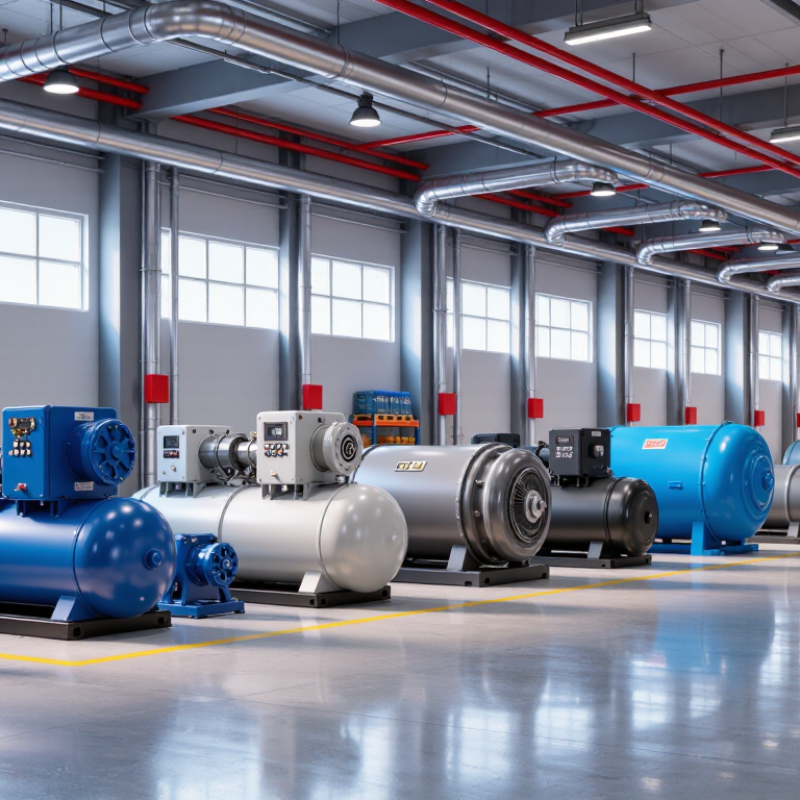
Industrial air compressors convert mechanical power into stored pneumatic energy. The main types are reciprocating, rotary screw, rotary vane, and centrifugal machines. Reciprocating units suit intermittent demand and higher pressures. Rotary screw compressors provide steady airflow for factories, workshops, and automated production lines. Centrifugal models serve large plants with continuous, high-volume requirements. Oil-lubricated designs reduce wear, while oil-free systems protect sensitive processes such as food packaging and electronics assembly. The choice is never purely about horsepower.
Core specifications should match actual operating conditions. Check free air delivery, working pressure, motor power, duty cycle, receiver size, and sound level. Air quality also matters. Ask for ISO 8573-1 classification when processes require controlled particles, water, or oil. A 7.5 kW compressor may look adequate, yet pressure loss through long piping can undermine performance. Measure demand at the point of use. Include leaks, peak shifts, and future equipment. Temperature and altitude can also reduce output.
In practice, compressors power pneumatic tools, spray systems, CNC equipment, material handling, and air brakes. Dryers and filters are not optional in many installations. They prevent corrosion and unstable valves. Maintenance records should show oil changes, separator replacement, drain testing, and safety inspections. A common mistake is choosing the lowest purchase price. Energy often dominates lifetime cost. Field technicians frequently find systems running unloaded for hours. That waste deserves attention. Buyers should compare measured efficiency, service access, spare-part availability, and documented testing before approving a supplier.
Evaluating industrial air compressor suppliers requires more than comparing catalog prices. Start with the working conditions. Record required pressure, flow rate, operating hours, ambient temperature, and air quality. A compressor rated for 8 bar may fail when the plant needs stable flow during peak demand. Ask suppliers to provide verified free air delivery data, noise levels, power consumption, and testing methods.
Reliable suppliers explain their engineering choices clearly. Check whether the proposed system uses oil-lubricated or oil-free compression, and match that choice with production requirements. Review pressure vessel documents, electrical specifications, quality certificates, and factory test reports. Confirm the availability of filters, valves, controllers, and replacement parts in your region. A strong service network matters when a production line stops at 2 a.m.
Experience also appears in practical details. Suppliers should request site information instead of sending a generic quotation. They may recommend variable-speed control, heat recovery, or proper receiver sizing after studying the load profile. However, efficiency claims deserve careful checking. I once focused too heavily on purchase price and underestimated maintenance labor. That mistake changed my evaluation method. Request lifecycle cost estimates, warranty conditions, technician response times, and customer references from similar industries. Leave room for uncertainty; real operating conditions often differ from spreadsheets.
Selecting an industrial air compressor requires more than comparing motor power or purchase prices. Buyers should match compressor technology with actual demand. Oil-injected screw compressors often suit steady factory loads, while oil-free models support sensitive processes. Centrifugal systems can perform well at high, continuous flow rates. Each option has limits.
Check free air delivery at the required pressure, not only the advertised displacement. A compressor rated at 10 bar may deliver less air under hot, dusty conditions. Ask suppliers for test data, operating ranges, and efficiency figures at partial load. These details reveal practical performance.
Energy use deserves close attention. Variable-speed control can reduce waste when demand changes during shifts. However, savings depend on correct sizing and control settings. An oversized unit may cycle inefficiently. A small receiver tank can also create pressure swings. Measure leaks, peak demand, ambient temperature, and duty cycles before comparing quotations.
Maintenance design affects long-term reliability. Inspect filter access, separator replacement intervals, cooling arrangements, and service support in the destination country. Remote monitoring may identify rising discharge temperature or abnormal vibration early. Useful, but not perfect. Sensors can drift, and operators still need training. A dependable supplier provides clear manuals, spare-parts planning, commissioning records, and realistic performance guarantees. Pay attention to noise, footprint, voltage compatibility, and available installation space. These practical details often matter more than impressive brochure figures.
Global buyers should evaluate industrial air compressor suppliers through documented compliance, not polished sales claims. ISO 9001 certification can indicate controlled quality processes, but it does not prove compressor performance. Ask for test results based on ISO 1217, including flow, pressure, power consumption, and measurement conditions. Small details matter.
For clean-air applications, review ISO 8573-1 classifications and request oil-content, particle, and moisture data. CE marking may apply to equipment sold within the European Economic Area, while UKCA or other national requirements may apply elsewhere. Pressure vessels, electrical panels, and safety controls can require separate assessments. The certificate must match the supplied model.
Experienced procurement teams also inspect factory acceptance test procedures, calibration records, manuals, and spare-parts traceability. Request a declaration of conformity, risk assessment, wiring diagrams, and local-language safety instructions. Confirm whether an accredited body issued the relevant certification. A logo on a document is not enough.
Supplier audits can reveal practical weaknesses. Check emergency stops, drain access, noise levels, and enclosure protection on the production floor. Shipping damage and unclear installation limits remain common problems. I have seen technically compliant equipment delayed because documents used inconsistent model numbers. That mistake is avoidable, but compliance reviews are often rushed. A reliable supplier answers specific questions and admits where regional requirements still need local verification.
The chart shows the publication year of widely referenced international standards used in supplier qualification, product quality, environmental management, occupational safety, energy management, and compressed-air quality control.
Buyer compliance requirements commonly include a valid management-system certificate, documented quality controls, product test records, applicable market conformity documentation, and ISO 8573-1 compressed-air quality specifications where air purity is critical.
Choosing an industrial air compressor supplier requires more than comparing quoted prices. Experienced buyers request airflow data, pressure ranges, duty cycles, and electrical requirements before ordering. A reliable supplier confirms whether the compressor suits dusty workshops, humid plants, or temperature-controlled facilities. Ask for a written delivery schedule, packing method, spare-parts availability, and acceptance criteria. Small details matter. A low initial price can hide unsuitable capacity or expensive site modifications. I have seen projects delayed because buyers measured floor space but ignored service clearance.
Installation should follow a practical site plan. Leave clear access around filters, drains, coolers, and control panels. Use level foundations, correctly sized piping, vibration control, and adequate ventilation. Technicians should verify rotation, pressure settings, air leaks, condensate drainage, and emergency isolation before production begins. Record readings during commissioning. This creates a useful baseline for future maintenance. However, installation checklists are not perfect; local dust, heat, and operator habits may reveal problems later. That assumption can fail.
Maintenance support should include inspection intervals, lubricant guidance, filter replacement procedures, and realistic response times. Ask whether remote diagnostics, technician visits, training, and compatible parts are available after delivery. A dependable service team explains failures clearly instead of replacing parts without evidence. Keep logs showing temperatures, pressures, running hours, and unusual noise. These records help identify gradual wear before an unplanned shutdown. After-sales agreements should define warranty coverage, exclusions, communication channels, and escalation contacts in plain language. Good support is measurable. It is also human. When suppliers listen carefully, small operational issues are less likely to become costly failures.
| Compressor Category | Typical Industrial Use | Common Motor Capacity | Typical Working Pressure | Typical Free Air Delivery | Recommended Ordering Information | Installation Requirements | Routine Maintenance | Expected Supplier Support |
|---|---|---|---|---|---|---|---|---|
| Oil-Injected Rotary Screw | General factory air, automotive production, machine tools, packaging, and assembly lines. | Approximately 5.5–315 kW | Approximately 7–13 bar(g); higher-pressure configurations are available for selected applications. | Approximately 0.6–55 m³/min, depending on motor size and discharge pressure. | Specify required air flow, operating pressure, duty cycle, ambient temperature, altitude, voltage, frequency, receiver size, and air-quality requirements. | Install on a level foundation with adequate ventilation, service clearance, electrical protection, condensate drainage, and correctly sized air piping. | Check oil level, filters, leaks, belt or coupling condition, condensate drains, and operating temperatures. Replace oil and consumables according to the operating manual and service conditions. | Commissioning, operating training, warranty terms, spare-parts availability, remote monitoring options, troubleshooting, and scheduled service support. |
| Oil-Free Rotary Screw | Pharmaceutical manufacturing, food and beverage processing, electronics, medical air, and applications where oil contamination must be minimized. | Approximately 15–450 kW | Approximately 7–10 bar(g) for many standard applications. | Approximately 1.5–75 m³/min, depending on configuration and pressure. | Confirm ISO 8573-1 air-quality requirements, required flow at the point of use, pressure stability, cooling method, humidity conditions, and validation documentation. | Provide clean installation conditions, sufficient cooling airflow or cooling-water capacity, suitable drainage, vibration control, and downstream filtration or drying where required. | Inspect air filters, coolers, condensate systems, bearings, seals, controls, and temperature readings. Maintenance intervals are especially important because oil-free compression stages use specialized components. | Factory acceptance or performance testing, air-quality documentation, trained service personnel, critical spare parts, calibration assistance, and documented preventive-maintenance plans. |
| Reciprocating Piston | Intermittent workshop air, service stations, small production areas, laboratories, and high-pressure applications with moderate air demand. | Approximately 1.5–30 kW for common industrial units | Approximately 8–30 bar(g), depending on the number of stages and design. | Approximately 0.1–4 m³/min for common industrial models. | Provide peak flow, average flow, required pressure, start frequency, receiver volume, noise limitations, and whether continuous or intermittent operation is expected. | Use a stable base, vibration isolation, adequate ventilation, correctly sized electrical supply, pressure relief protection, and a receiver installed in accordance with local regulations. | Drain receiver condensate, inspect and clean intake filters, check oil level, inspect valves and belts, and verify safety-valve operation. Service frequency depends strongly on operating hours and load cycle. | Installation guidance, pressure-vessel documentation, replacement valves and rings, warranty support, safety instructions, and local repair capability. |
| Centrifugal | Large continuous-demand systems in steel, chemicals, power generation, automotive manufacturing, and large process plants. | Approximately 200–10,000+ kW | Approximately 3–13 bar(g) for many multistage industrial systems. | Approximately 50–1,000+ m³/min, depending on the number of stages and operating conditions. | Submit a complete performance profile including minimum, normal, and maximum flow; inlet conditions; discharge pressure; cooling method; turndown needs; and utility limitations. | Requires engineered foundations, precise alignment, cooling-water or air-cooling systems, electrical integration, anti-surge controls, clean intake air, and sufficient access for major servicing. | Monitor vibration, bearing condition, inlet filters, intercoolers, operating pressure, surge-control performance, and lubricant systems. Condition monitoring is normally part of the maintenance program. | Site-performance testing, control-system integration, operator training, vibration analysis, emergency response planning, overhaul support, and long-term service agreements. |
| High-Pressure Booster | PET bottle production, pressure testing, gas handling, specialized instrumentation, and processes requiring pressure above standard plant-air levels. | Approximately 15–500 kW | Approximately 20–40 bar(g); specialized systems may operate at substantially higher pressures. | Approximately 0.2–15 m³/min, depending on final pressure and compressor design. | Confirm inlet pressure, final pressure, gas type, required purity, flow profile, allowable temperature, pressure-vessel standards, and safety classification. | Use pressure-rated piping, certified receivers, relief devices, isolation valves, suitable ventilation, appropriate electrical classification, and documented commissioning procedures. | Inspect valves, seals, intercoolers, pressure relief devices, filters, lubricants, and high-pressure connections. Test safety devices in accordance with applicable regulations. | Pressure certification, commissioning records, safety training, spare sealing kits, periodic inspection planning, technical documentation, and rapid breakdown support. |
| Portable Diesel Compressor | Construction, road maintenance, mining, outdoor installation, emergency repair, and remote-site pneumatic tools. | Approximately 20–500 kW engine power | Approximately 7–35 bar(g), depending on the model and application. | Approximately 2–45 m³/min, depending on pressure and engine rating. | Specify mobility requirements, tool air demand, site altitude, ambient temperature, fuel standard, emissions requirements, trailer or skid configuration, and operating hours. | Position on stable ground with adequate exhaust ventilation, safe fuel storage, weather protection, access for refueling, and properly rated hoses and couplings. | Check engine oil, coolant, fuel filters, air filters, battery, hoses, tires or skids, condensate drains, and emergency-stop systems. Follow engine-hour service intervals. | Delivery inspection, operator training, field-service capability, mobile spare-parts support, transport documentation, emissions compliance information, and emergency repair assistance. |
I&M Industrials Inc.
10 Akron Drive
Greenville SC 29605
Phone: 864-277-2450
GSA Number – GS07F0379Y