1-800-868-2450
My Account | Cart | Checkout
Choosing a compressed air compressor can shape a plant’s energy use, tool performance, and production reliability. A pneumatic wrench needs steady pressure; a packaging line may need clean, consistent airflow. When pressure drops, operators notice it at the tool, not on a spreadsheet.
The U.S. Department of Energy’s Improving Compressed Air System Performance: A Sourcebook for Industry reports that compressed air systems use about 10% of industrial electricity, though the share varies by facility. That is significant. The figure is a broad guide, not a promise of savings from any single machine. A poorly sized unit can cycle too often, while leaks at fittings and hoses waste air quietly. Leaks matter.
A carefully selected compressed air compressor can match output to actual demand and support more stable operations. DOE guidance also emphasizes system assessment, pressure management, and leak reduction—not just equipment selection. The compressor is only one part of the system. Still, choosing it well can make maintenance and energy decisions easier. It will not fix every problem. Before buying, compare required flow, operating pressure, duty cycle, air quality, and service access. A technician’s measurements are more useful than a guess based on motor size alone. This check is worth doing. A practical choice starts with the plant’s real demand, and that demand can change over time.
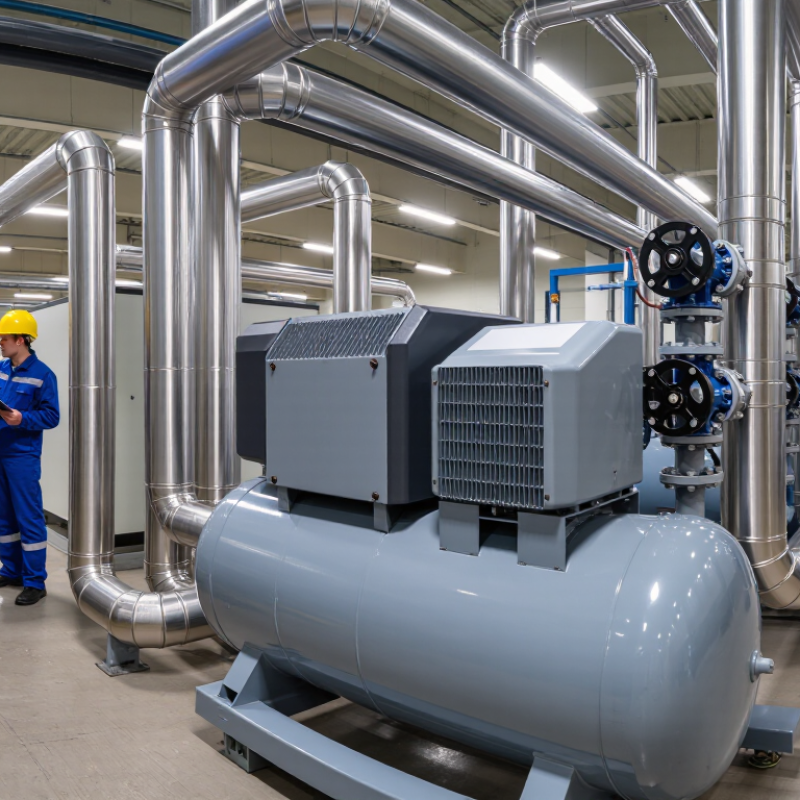
A compressed air compressor is a machine that takes in ordinary air, raises its pressure, and stores or delivers it for work. It typically uses an electric motor or engine to drive a pump. The pump squeezes air into a tank, where pressure builds. When a tool needs air, the stored energy flows through a hose and regulator. In a workshop, that may mean a steady hiss powering a nailer or blowing dust from a workbench.
Not every compressor works the same way. Piston models compress air in repeated strokes, while rotary screw units use rotating elements for continuous output. Capacity matters as much as pressure: a tool may need a certain airflow, measured in CFM or L/min, to keep running properly. A tank can smooth short bursts, but it cannot make an undersized pump deliver air indefinitely. It is not magic. Moisture also collects as air cools, so draining the tank and checking filters help protect tools. Buyers sometimes focus too much on maximum pressure and overlook airflow and duty cycle.
Tips: Match the compressor’s airflow rating to the tool’s stated demand, with a practical margin. Check the regulator gauge while working, not only at startup. Drain collected water regularly.
A compressor raises air pressure so it can power tools, equipment, and industrial processes.
The chart shows the theoretical minimum energy to compress 1 m³ of free air from 1 bar absolute to common delivery pressures. Values are calculated using ideal isothermal compression; real compressors require more energy because of heat and mechanical losses.
A compressor draws room air through an intake filter, then squeezes it inside a chamber. In a piston model, a moving piston reduces the air volume. In a rotary-screw model, turning rotors trap and compress the air. Pressure rises, and the air heats up. An aftercooler removes some heat before the air enters a receiver tank. Dryers and filters then help control moisture and particles before air reaches tools or production equipment. It is a practical process, but not perfectly efficient.
The U.S. Department of Energy’s Improving Compressed Air System Performance sourcebook reports that compressed air uses about 10% of industrial electricity. The DOE also notes that leaks can waste 20–30% of a compressor’s output. That makes system condition as important as compressor size. A pressure gauge may look reassuring, yet a small leak near a hose fitting can keep the machine running longer than needed. It is easy to overlook.
Why Choose a Compressed Air Compressor?
What Types and Components Should You Know?
Choosing a compressor starts with the tools and process it must serve. Check required pressure, airflow, and duty cycle before comparing models. A workshop using air intermittently may suit a reciprocating compressor. For steadier, extended demand, a rotary screw design is often a better fit. Centrifugal compressors generally serve large facilities with substantial, continuous airflow needs. Bigger is not always better; an oversized unit can waste energy during light use.
Know the main components, too. The motor drives the compression element, while an intake filter helps keep dust out. An aftercooler lowers air temperature, and a receiver tank stores compressed air and helps manage demand peaks. Moisture separators, dryers, and line filters can improve air quality, depending on the application. Controls regulate operation, while a pressure-relief valve provides an important safeguard. Air quality matters. So does maintenance: dirty filters and leaks can undermine performance. The right setup is not always obvious, and site conditions may change.
Tips: Record peak and typical airflow needs, then check both against the compressor’s specifications. Ask whether the stated capacity applies at your operating pressure. Leave room for ventilation and routine service. Track pressure drops at the point of use. Small leaks add up.
Compressed air powers pneumatic tools in auto repair shops, assembly lines, and construction sites. On a factory floor, it can drive a fastening tool, move a valve, or clear debris from a machine. Food and beverage plants use treated compressed air for packaging equipment and other controlled processes. In hospitals, specially designed systems supply medical air under strict quality controls. The right setup depends on the task: ordinary workshop air is not automatically suitable for sensitive applications. It adds up.
The U.S. Department of Energy’s Improving Compressed Air System Performance sourcebook reports that compressed air can account for about 10% of industrial electricity use, and up to 30% in some facilities. That makes compressors useful, but not automatically efficient. Leaks, oversized equipment, and poor pressure control can waste energy while tools still seem to work normally.
A hiss near a coupling may be easy to ignore during a busy shift. It deserves attention. Before choosing a system, operators should map air demand, check required pressure and quality, and review maintenance needs. A compressor that fits the actual workload is usually more practical than one selected by maximum output alone.
Compressed air can power tools, valves, and cleaning equipment from one shared supply. It is useful where several workstations need steady airflow. Air lines can also keep equipment layouts flexible. But compressed air is not automatically economical. Leaks and poor pressure control waste energy, sometimes quietly. Less downtime matters.
Choose a compressor by matching its pressure and airflow to actual demand. Check the tools’ required pressure, then estimate how many may run at once. A workshop using short bursts has different needs from a production line running all day. Duty cycle, room temperature, ventilation, and available electrical power also affect the choice. A receiver tank can help manage brief demand peaks, while filters and dryers protect air quality. The first estimate may be wrong; demand often changes after new tools arrive. Avoid sizing only for today, but do not buy excessive capacity “just in case.” Oversized equipment can cost more to operate and maintain.
Tips: Record pressure and airflow during a typical busy shift. Ask about service access, noise, and replacement parts before purchasing. Check for leaks regularly. A small leak still costs energy.
| Dimension | Benefit or purpose | What to assess when selecting | Practical check |
|---|---|---|---|
| Powering pneumatic equipment | Compressed air can operate tools, actuators, and production equipment where a distributed supply of pressurized air is useful. | List every air-powered device and its required operating pressure and air consumption. | Use the equipment manufacturer’s stated requirements; do not assume that all tools need the same pressure or airflow. |
| Airflow capacity | Correct capacity helps equipment run reliably during normal operation and periods of simultaneous demand. | Size the system using the combined demand profile, including peak use, duty cycle, and expected future additions. | Compare compressor delivery in consistent units, such as m³/min or cfm, at the required pressure. Distinguish delivered flow from theoretical displacement. |
| Operating pressure | Provides the pressure needed at the point of use for tools and processes to function as intended. | Determine the minimum pressure required by the most demanding application, then account for losses through piping, filters, dryers, and other treatment equipment. | 1 bar is approximately 14.5 psi. Avoid setting pressure higher than necessary: higher pressure can increase energy use and air leakage. |
| Energy efficiency | Efficient operation can reduce electricity costs, which are often a major part of the lifetime cost of a compressed-air system. | Compare measured or rated power against delivered airflow at the operating pressure. Consider operating hours, load variation, and control method. | Review expected energy consumption over the planned service life, not just the purchase price. Correct leaks and avoid unnecessary pressure. |
| Demand variation and duty cycle | A suitable compressor and control strategy can respond to changing demand while avoiding excessive unloaded or short-cycle operation. | Establish whether demand is steady, intermittent, or highly variable, and check the compressor’s permitted duty cycle. | A receiver can buffer short-term demand fluctuations, but it does not replace adequate compressor capacity for sustained demand. |
| Air quality | Appropriate treatment helps protect products, processes, tools, and downstream equipment from moisture, oil, and particles. | Specify the required air quality for each application, then select compatible filtration, drying, and condensate management. | ISO 8573-1 classifies compressed-air purity by particles, water, and oil. Choose the class required by the process rather than assuming one level fits all uses. |
| Installation and environment | A suitable installation can support dependable operation and make maintenance more accessible. | Check available floor space, ventilation, ambient temperature, noise limits, electrical supply, and access for servicing. | Follow the compressor manufacturer’s installation and ventilation requirements; heat removal and service access should be planned in advance. |
| Maintenance and lifecycle cost | Routine maintenance helps sustain performance and can reduce unplanned downtime. | Compare service intervals, consumables, parts availability, maintenance labor, and expected operating hours. | Assess total cost of ownership, including electricity, air treatment, maintenance, and downtime—not only initial equipment cost. |
| System measurement | Monitoring helps identify inefficient operation, pressure problems, and unexpected demand. | Consider pressure and flow measurement, runtime or power monitoring, and regular leak checks. | Actual performance depends on system design, operating conditions, equipment configuration, and maintenance. |
I&M Industrials Inc.
10 Akron Drive
Greenville SC 29605
Phone: 864-277-2450
GSA Number – GS07F0379Y