1-800-868-2450
My Account | Cart | Checkout
Choosing the China best industrial air compressor manufacturers requires more than comparing prices, horsepower, or factory photographs. A reliable supplier should prove performance through measured data, documented testing, service coverage, and transparent warranty terms. In a real factory, a compressor may run beside a hot furnace, feed dusty production lines, and operate for thousands of hours annually. Small design differences can affect pressure stability, energy use, noise, and maintenance costs.
Ron Marshall, a long-time compressed-air systems specialist, has emphasized, “Compressed air is often the most expensive utility in a plant.” This warning gives the topic practical meaning. The strongest air compressor industrial manufacturers understand lifecycle costs, not only the initial purchase. They should offer correctly sized machines, efficient motors, intelligent controls, quality air treatment, and accessible replacement parts. Their engineers should also explain whether an oil-injected screw compressor, oil-free system, reciprocating unit, or centrifugal model suits the application.
Yet ranking manufacturers is not perfectly simple. A famous brand may perform poorly when installation support is weak. A lesser-known Chinese producer may provide excellent engineering but limited overseas service. These details are easy to miss. Therefore, this guide examines manufacturing experience, certifications, product reliability, energy efficiency, customization, export capability, and after-sales support. It also considers real operating conditions, including leakage, variable demand, ambient temperature, and maintenance discipline. The best choice is not always the cheapest machine. Sometimes, the quietest and most efficient compressor creates greater value over ten years. Even this assumption deserves verification through site measurements and independent technical evidence.
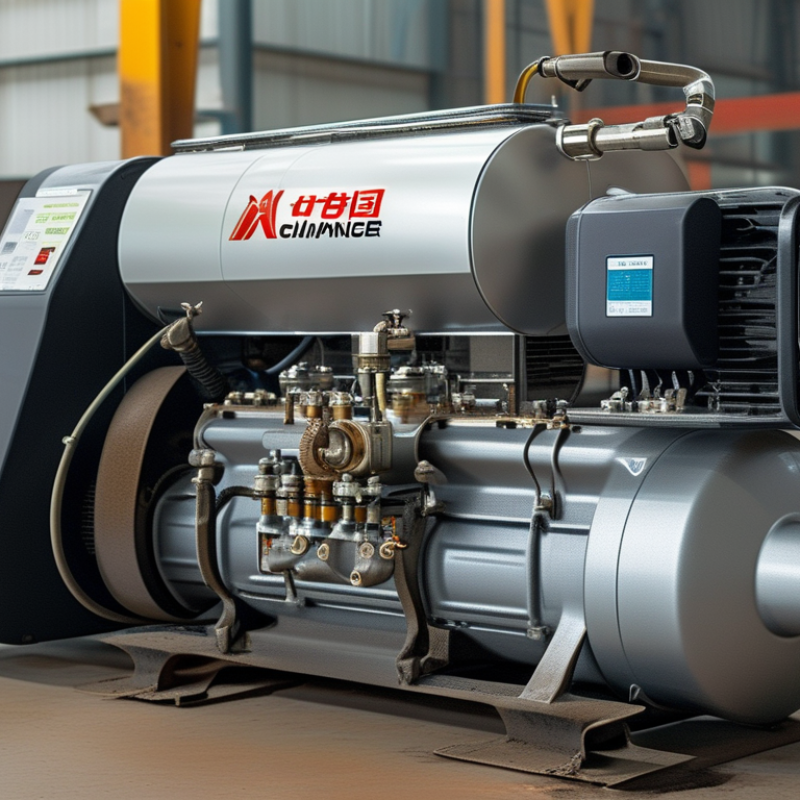
Industrial air compressors are machines that convert mechanical energy into pressurized air. They draw in atmospheric air, compress it, and store or deliver it through a controlled system. Unlike small workshop units, industrial models support continuous production, heavier loads, and demanding operating schedules.
Common designs include rotary screw, centrifugal, and reciprocating compressors. Each suits different pressure, flow, and duty requirements. Rotary screw systems often serve factories, packaging lines, and automated assembly equipment. Centrifugal units can supply large volumes of air for steel, chemical, and utility operations. Reciprocating compressors remain useful where higher pressure is needed intermittently, such as maintenance shops and gas handling areas.
Compressed air powers pneumatic tools, robotic actuators, valves, spray equipment, and material conveying systems. In food processing, properly treated air helps operate filling and sealing machinery. Medical and laboratory facilities require carefully filtered, dry air for instruments and controlled processes. Moisture, oil carryover, and unstable pressure can damage products or interrupt production. I have seen teams select capacity from peak demand alone, then face costly cycling and energy waste. That mistake is easy to repeat. A dependable specification should examine leakage, temperature, altitude, duty cycle, filtration, drainage, and future expansion. Air quality must match the application, not merely the compressor’s rated output.
Evaluating Chinese industrial air compressor manufacturers requires more than comparing purchase prices. Field experience shows that efficiency changes sharply under partial load, high ambient temperatures, and unstable demand. The U.S. Department of Energy reports that compressed air can consume about 10% of industrial electricity, while leaks may waste 20–30% of compressor output. These figures make specific power, measured in kW per cubic metre per minute, a critical purchasing metric. Ask for test results under clearly stated pressure, flow, and temperature conditions.
Reliable manufacturers should provide performance data tested under ISO 1217 methods. Their air-quality claims should match ISO 8573-1 classes, especially for food, electronics, and pharmaceutical applications. Check oil carryover, sound levels, cooling design, vibration limits, and controller response. A factory visit can reveal practical details: clean assembly areas, calibrated instruments, serialized components, and technicians who explain failures without avoiding difficult questions. Good documentation matters.
Service capability is equally important. Request spare-parts lead times, maintenance intervals, remote diagnostic procedures, and local engineer coverage. The DOE also recommends systematic leak detection and pressure optimization, not simply buying a larger compressor. Oversizing is common, and it quietly increases energy costs. A lower initial quotation may hide weak after-sales support or uncertain efficiency data. No checklist is perfect. Independent acceptance testing remains wise, particularly when projected savings influence a long-term investment.
China’s industrial air compressor suppliers generally fall into several practical categories. Oil-injected rotary screw suppliers serve factories needing stable, continuous airflow. Their systems suit machining, assembly, packaging, and general manufacturing. Oil-free screw suppliers target food, pharmaceutical, electronics, and other sensitive production areas. Reciprocating compressors remain useful for workshops, intermittent demand, and high-pressure applications. Centrifugal units fit large plants with steady, high-volume air consumption. Portable diesel or electric models support construction and remote maintenance work.
Energy performance deserves closer attention. The U.S. Department of Energy reports that compressed air can consume about 10% of industrial electricity in some facilities. Its compressed-air guidance also identifies leakage losses commonly reaching 20% to 30% of system output. That makes efficiency more than a catalogue claim. Buyers should request measured specific power, pressure stability, service intervals, and leak-control support. Numbers on a brochure can look excellent.
The supplier landscape is not perfectly clean. Some manufacturers assemble imported components, while others develop complete systems locally. Both models can work, but traceability matters. Review factory test records, ISO 8573 air-quality compliance, motor efficiency data, and after-sales response times. A supplier with strong engineering may still lack overseas service coverage. That weakness becomes expensive when a compressor stops beside a hot production line. MarketsandMarkets’ industrial compressor research also points to continued demand for energy-efficient equipment, although forecasts should never replace site measurements.
China’s best industrial air compressor manufacturers are judged by measurable standards, not attractive catalogs. Strong factories build systems around ISO 9001 quality management and test airflow under recognized ISO 1217 conditions. They also control oil carryover, noise, vibration, and discharge temperature. Each pressure vessel, motor, and controller should have traceable records. Small details matter.
Tips: Ask for factory test reports. Check serial-number traceability. Request verified energy data.
Modern production lines often use variable-speed drives, permanent-magnet motors, intelligent controllers, and heat-recovery systems. These technologies can reduce energy waste during changing demand. However, advanced components cannot repair poor assembly. Technicians should inspect rotor clearance, seal quality, wiring torque, and cooling channels before final testing. A clean control panel can still hide weak calibration.
Reliable quality control includes incoming material checks, in-process inspections, pressure testing, electrical safety checks, and several hours of loaded operation. Independent laboratory testing adds credibility, especially for air purity under ISO 8573-1. Experienced manufacturers also provide installation guidance, maintenance schedules, and spare-parts identification. No factory is flawless. Some performance data may reflect ideal conditions, not a dusty workshop in summer. Buyers should compare field records, warranty response, and service training rather than relying on claims alone.
| Evaluation Dimension | Recognized Standard or Benchmark | Typical Manufacturing or Technology Practice | Quality-Control Evidence | Why It Matters to Buyers |
|---|---|---|---|---|
| Quality management system | ISO 9001 quality-management principles | Documented production procedures, supplier controls, traceability, corrective actions, and internal audits | Valid certificate from an accredited certification body, audit records, and controlled inspection plans | Indicates that manufacturing and quality processes are systematic and repeatable |
| Compressor performance testing | ISO 1217 for displacement compressors and acceptance tests | Measurement of delivered flow, discharge pressure, power input, temperature, and specific energy consumption | Factory test report with calibrated instruments, test conditions, and recorded operating points | Enables fair comparison of capacity, efficiency, and operating cost |
| Compressed-air cleanliness | ISO 8573-1 air-purity classification | Oil-injected or oil-free compression selected according to particle, water, and oil requirements | Particle, humidity, and oil-content test results; validation of filters, dryers, and separators | Important for food, pharmaceutical, electronics, painting, and other sensitive applications |
| Energy efficiency | Specific power in kW per m³/min or kW per delivered air volume | Variable-speed drives, optimized air ends, high-efficiency motors, inlet modulation, and automatic sequencing | Measured power and flow at multiple load points, including part-load operation | Energy consumption often represents a major portion of lifetime compressor cost |
| Motor efficiency and protection | IEC 60034-30-1 motor-efficiency classes and IEC 60529 enclosure ratings | High-efficiency three-phase motors, thermal protection, overload protection, and appropriately rated enclosures | Motor nameplate data, insulation-resistance testing, winding checks, and protection-device verification | Reduces electrical losses and helps protect equipment in demanding industrial environments |
| Pressure-vessel and receiver safety | Applicable pressure-equipment regulations and national installation requirements | Designed safety margins, certified relief valves, drain systems, corrosion protection, and pressure-rated receivers | Material certificates, weld inspection records, hydrostatic or approved pressure tests, and relief-valve certificates | Supports safe operation and helps satisfy local inspection and registration requirements |
| Air-end manufacturing | Controlled dimensional tolerances and process capability appropriate to precision rotating components | Precision machining, rotor balancing, bearing control, surface-finish inspection, and controlled assembly | Dimensional inspection reports, balance records, vibration measurements, and serial-number traceability | Directly affects efficiency, noise, vibration, service life, and maintenance frequency |
| Variable-speed drive technology | Applicable electrical safety and electromagnetic-compatibility requirements, including IEC 61000 series practices | Automatic speed control matched to demand, soft starting, pressure-band control, and fault monitoring | Drive parameter records, temperature tests, electrical safety checks, and EMC verification where required | Can reduce unloaded running and improve efficiency under fluctuating demand |
| Noise and vibration control | Declared sound-power or sound-pressure measurement method and applicable workplace limits | Acoustic enclosure, isolation mounts, balanced rotating assemblies, optimized cooling fans, and airflow management | Sound-level readings, vibration measurements, and test conditions documented in the factory report | Improves operator comfort, equipment reliability, and suitability for indoor installation |
| Cooling and environmental suitability | Declared ambient-temperature range, altitude, humidity, and ingress-protection conditions | Oversized coolers where needed, dust-resistant filtration, efficient ventilation, and temperature monitoring | Thermal-load tests, high-temperature testing where specified, airflow checks, and alarm verification | Helps maintain rated performance in hot, dusty, humid, or high-altitude locations |
| Final assembly and functional inspection | Risk-based inspection and documented production-control procedures | Torque-controlled fastening, leak testing, oil-level verification, electrical inspection, and controller configuration | Checklists, torque records, leak-test results, alarm simulations, and completed commissioning reports | Reduces installation problems and confirms that the delivered unit matches its specification |
| Reliability validation | Design verification, endurance testing, and failure-mode analysis appropriate to the product | Continuous running tests, thermal cycling, start-stop testing, oil-separation checks, and component life evaluation | Test duration, failure records, corrective-action reports, and validated maintenance intervals | Provides greater confidence in uptime and total cost of ownership |
| Documentation and after-sales support | Clear technical documentation, maintenance instructions, and applicable conformity documents | Parts lists, wiring diagrams, service schedules, remote monitoring options, and operator training | User manuals, spare-parts availability statements, response-time commitments, and service records | Shortens downtime and simplifies operation, maintenance, and compliance management |
Note: Standards, certifications, pressure-equipment approvals, and performance values should be verified against the specific compressor model, destination market, operating conditions, and current certificate validity.
Choosing the right Chinese air compressor manufacturer requires more than comparing prices. Start with your actual operating conditions: required airflow, working pressure, duty cycle, air quality, and installation environment. A compressor for a dusty workshop needs different protection than one serving a clean production line. Ask for performance curves, energy data, material details, and test records. Clear documentation often reveals a manufacturer’s technical discipline.
Inspect the factory or request a live video audit. Look for assembly controls, motor testing, pressure testing, spare-parts storage, and final inspection procedures. Check whether the manufacturer understands international electrical and safety requirements for your destination market. Speak with comparable customers, not only the references selected by the supplier. No manufacturer looks perfect on paper. That is useful to remember.
Tips: Compare lifecycle cost, not only the purchase quotation. Confirm warranty terms, response times, service coverage, and replacement-part availability. Request a sample maintenance schedule and clarify who handles commissioning. A slightly higher initial price may reduce energy waste and downtime. Still, do not accept efficiency claims without test conditions. The figures may change in real workshops. Review the assumptions carefully.
I&M Industrials Inc.
10 Akron Drive
Greenville SC 29605
Phone: 864-277-2450
GSA Number – GS07F0379Y