1-800-868-2450
My Account | Cart | Checkout
Choosing among China’s top rotary screw compressor manufacturers requires more than comparing catalog prices. A reliable review should examine engineering depth, factory controls, airend design, motor efficiency, noise levels, and after-sales support. These details become visible on the plant floor: stable pressure at a CNC line, clean piping connections, and a service technician who arrives with the correct filter element.
Ron Marshall, a respected industrial compressed-air auditor, has said, “Compressed air is often the most expensive utility in a plant.” His warning remains practical. A rotary screw compressor may run for thousands of hours each year, so a small efficiency loss can become a large operating expense. Buyers should study specific power, measured under recognized conditions, rather than trust broad marketing claims. ISO 1217 test data can help, although documents still need careful verification.
This guide will compare leading Chinese manufacturers through performance, customization, certifications, warranty terms, and customer experience. It will also consider whether a supplier supports variable-speed systems, oil-injected designs, intelligent controllers, and remote monitoring. Factory scale matters. It is not everything.
Some manufacturers may offer attractive prices but limited overseas service coverage. Others may provide strong technology yet lack clear delivery records. That difference deserves attention. The “best” supplier depends on duty cycle, climate, installation quality, and maintenance skills. A compressor that performs well in a dry workshop may struggle in a humid coastal plant. This guide aims to separate proven capability from polished promotion, while acknowledging that public data is sometimes incomplete and independent testing is not always available.
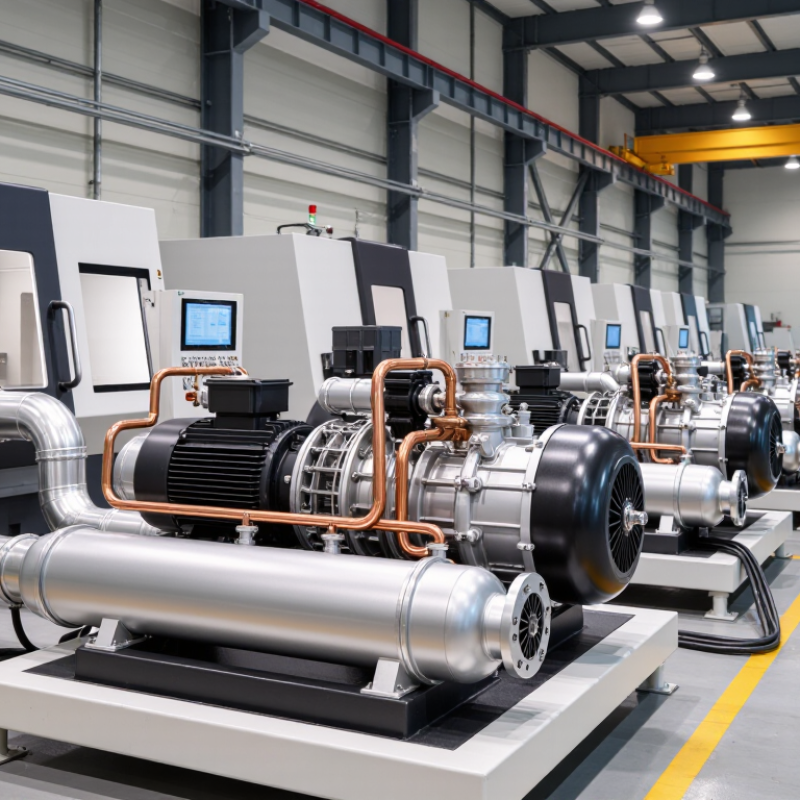
A rotary screw compressor produces compressed air through two meshing helical rotors. As the rotors turn, trapped air moves forward and reduces in volume. This continuous process supplies steadier airflow than many start-stop compressor designs.
In China, these compressors support factories, workshops, logistics centers, and process plants. They power pneumatic tools, packaging lines, textile equipment, and automated valves. Oil-injected models are common for general manufacturing. Oil-free models suit electronics, pharmaceuticals, and food-related production where air purity matters more.
Reliable manufacturers usually offer air-end testing, motor data, pressure measurements, and maintenance guidance. Buyers should check airflow at working pressure, not only the advertised motor size. A 75-kilowatt unit can perform poorly when cooling, piping, or controls are mismatched. Site temperature matters, especially during humid summers in southern China.
Service quality also affects operating cost. Engineers should inspect filters, separators, drains, and lubricant condition at practical intervals. Remote monitoring can reveal pressure loss before production stops. Yet “top manufacturer” is not always a clear technical judgment. A large factory may still provide weak commissioning support. I have seen specifications look impressive while installation details remained vague. That gap deserves careful questions, verified test records, and a realistic lifecycle calculation.
China’s rotary screw compressor industry is concentrated in several manufacturing regions, each with different industrial strengths. The Yangtze River Delta supports precision machining, electric motors, variable-speed drives, and automated testing. Its factories often integrate controllers, separators, coolers, and air-end assemblies within short supply chains. The Pearl River Delta adds strong electronics production and export logistics. This helps manufacturers develop compact units for workshops, food processing, and general factories. The Bohai region and Shandong have deeper experience with steel, chemicals, shipbuilding, and large air systems. Their equipment tends to prioritize durability, high flow, and continuous operation.
Testing separates a capable plant from a polished catalogue. ISO 1217 performance testing can verify airflow, pressure, and power consumption under defined conditions. ISO 11011 energy assessments also encourage leak surveys and system-level analysis. The U.S. Department of Energy reports that leakage may waste 20–30% of compressor output in poorly maintained systems. The International Energy Agency identifies compressed air as a meaningful industrial electricity load, so efficiency claims deserve careful checking. Testing matters.
In practice, buyers should inspect vibration records, oil carryover data, motor efficiency, and service response times. Regional supplier density can reduce spare-parts delays. It does not guarantee stable quality. Some factories still depend heavily on outsourced controllers or inconsistent castings. That weakness deserves attention. A factory visit, witnessed performance test, and maintenance-cost review often reveal more than a brochure.
Leading Chinese Rotary Screw Compressor Manufacturers
China has become a major sourcing center for rotary screw compressors. Leading manufacturers serve workshops, factories, mines, and process facilities worldwide. Their product ranges often include oil-injected, oil-free, fixed-speed, and variable-frequency models.
Experienced manufacturers usually control key stages, including airend assembly, motor matching, electrical testing, and final pressure checks. Buyers should examine airflow data at specific working pressures, not only motor power. A compressor rated at 75 kW may deliver different performance across operating conditions. This detail matters.
Reliable suppliers provide test records, maintenance schedules, wiring diagrams, and clear warranty terms. Their engineers should explain noise levels, cooling requirements, lubricant choices, and service intervals. Remote monitoring can also help track pressure, temperature, running hours, and fault alarms. Factory visits remain valuable. A clean assembly area and traceable components can reveal more than polished brochures.
No manufacturer is perfect. Published efficiency figures may not reflect dusty workshops or unstable electrical supply. I would request a witnessed performance test before placing a large order. Spare parts availability also deserves careful attention, especially for air filters, oil separators, valves, and controllers. Some factories respond quickly during commissioning but become slower afterward. That risk needs honest discussion. A strong Chinese manufacturer combines engineering capability with practical support, consistent documentation, and willingness to correct design weaknesses.
China Top Rotary Screw Compressor Manufacturers?
How to Compare Compressor Quality, Technology, and Efficiency
Comparing rotary screw compressors requires more than reading pressure and horsepower figures. Inspect the airend design, motor class, separator quality, and controller response. A reliable supplier should provide test records, material specifications, and traceable production data. Ask how each unit performs at partial load, not only at full capacity.
Look closely at energy efficiency. A variable-speed drive should match output with changing demand, while avoiding frequent starts and stops. Request specific power data, measured in kilowatts per cubic metre per minute. Check the claimed figures under defined pressure, temperature, and humidity conditions. Numbers without test conditions are weak evidence. Very weak.
Technology also affects maintenance. Review oil filtration, cooling channels, vibration control, and access to service parts. A clear fault history can reveal more than a polished brochure. During a factory assessment, examine wiring, pipe joints, paint quality, and assembly cleanliness. Small details matter. I would also compare noise readings and discharge temperature after continuous operation, although laboratory results may not reflect every factory floor.
Experience from installation teams is valuable. Ask about startup support, technician training, spare-part availability, and response times. Do not accept vague promises. A supplier may offer impressive efficiency, yet poor documentation can create expensive confusion later. I have seen specifications that looked excellent until operating conditions changed; the lesson is simple: verify performance in conditions close to your own.
China Top Rotary Screw Compressor Manufacturers?
When evaluating China’s top rotary screw compressor manufacturers, export readiness matters as much as factory capacity. A supplier should identify the target market’s electrical, safety, and documentation requirements before quoting. Common references include ISO 1217 for compressor performance and ISO 8573-1 for compressed-air purity. CE marking may support European sales, while other destinations may require different approvals. Ask for current declarations, test records, wiring diagrams, and serial-number traceability. Documents must match the exact model.
Applications influence the correct specification. Food processing and electronics may require oil-free air or additional filtration. General workshops often use oil-injected compressors for tools, assembly lines, and cleaning systems. Mining and construction sites need strong cooling, dust protection, and stable performance under uneven loads. Check free air delivery at the working pressure, not only the motor rating. A larger motor does not always produce more useful air.
Purchasing decisions should include voltage, frequency, ambient temperature, duty cycle, noise limits, and installation space. Variable-speed control can reduce energy use during changing demand, but its savings depend on the operating pattern. Request performance data from a witnessed factory test when possible. Confirm spare-parts availability, service response, warranty limits, and remote troubleshooting procedures. A low purchase price can mislead. I have seen buyers overlook voltage compatibility and pay for avoidable modifications. The quotation should list every accessory, filter, receiver, dryer, and commissioning requirement.
| Compressor Category | Typical Motor Range | Typical Working Pressure | Approximate Air Delivery | Common Applications | Key Purchasing and Export Considerations |
|---|---|---|---|---|---|
| Oil-Injected Fixed-Speed Rotary Screw | 7.5–315 kW | 7–13 bar(g) | 0.9–52 m³/min | General manufacturing, workshops, automotive assembly, pneumatic tools, and plant utilities | Compare specific power, motor efficiency, oil-separation performance, service access, voltage, frequency, and replacement filter availability. |
| Oil-Injected Variable-Speed Rotary Screw | 7.5–315 kW | 7–13 bar(g) | 0.9–52 m³/min, depending on speed and pressure | Facilities with fluctuating compressed-air demand, packaging, machining, and automated production lines | Review the usable turndown range, inverter cooling, minimum speed, control logic, motor efficiency, and total cost of ownership rather than purchase price alone. |
| Oil-Free Rotary Screw | 15–450 kW | 4–10 bar(g) | 2.0–75 m³/min | Food and beverage, pharmaceutical manufacturing, electronics, medical air, and sensitive coating processes | Confirm the oil-free technology, ISO 8573-1 air-quality class, validation documents, condensate management, noise level, and maintenance requirements. |
| Low-Pressure Rotary Screw | 15–250 kW | 1.5–5 bar(g) | 4–60 m³/min | Wastewater aeration, textile air-jet looms, glass production, paper processing, and pneumatic conveying | Do not select a standard high-pressure model for low-pressure duty without checking efficiency; compare free air delivery at the exact operating pressure. |
| High-Pressure Rotary Screw Package | 37–450 kW | 15–40 bar(g) | 2–35 m³/min | PET preform production, high-pressure testing, specialized process equipment, and industrial instrumentation | Check whether a two-stage or booster arrangement is required, along with pressure-vessel documentation, discharge-temperature control, cooling capacity, and safety protection. |
| Integrated Compressor with Air Treatment | 7.5–160 kW | 7–13 bar(g) | 0.9–27 m³/min | Small factories, workshops, laboratories, service centers, and installations with limited floor space | Evaluate the receiver volume, dryer pressure dew point, filtration grade, drain type, heat rejection, package dimensions, and access for filter replacement. |
| Containerized or Skid-Mounted Package | 30–450 kW | 7–40 bar(g) | 4–75 m³/min | Temporary plants, remote sites, infrastructure projects, mines, and modular production facilities | Confirm lifting points, transport dimensions, ambient-temperature limits, ventilation, fire protection, anti-corrosion treatment, and commissioning responsibilities. |
| Export Documentation and Compliance | Not applicable | Specified by the selected model | Specified by the selected model | International shipments to industrial, commercial, and project-based customers | Request a commercial invoice, packing list, certificate of origin where required, technical datasheet, wiring diagram, operation manual, test records, and applicable conformity documents. Confirm destination voltage, plug or cable requirements, HS classification, Incoterms, and shipping insurance. |
| Technical ranges are representative market ranges for industrial rotary screw compressor packages. Actual performance depends on inlet conditions, rated pressure, ambient temperature, cooling method, motor configuration, altitude, and the applicable test standard. Confirm final values using the manufacturer’s certified datasheet and performance test documentation. | |||||
I&M Industrials Inc.
10 Akron Drive
Greenville SC 29605
Phone: 864-277-2450
GSA Number – GS07F0379Y