What Is Industrial Air and How Does It Work?

Industrial air is a broad term for air used, moved, or controlled in factories and commercial facilities. It can describe compressed air, process air, ventilation air, or air filtered for sensitive production areas. The term is not perfectly precise. Its meaning depends on the equipment, industry, and operating conditions. In a packaging plant, industrial air may power pneumatic cylinders that open and close rapidly. In a metalworking facility, it may remove heat, dust, and welding fumes from the work zone. Cleanrooms demand much tighter control than ordinary workshops.

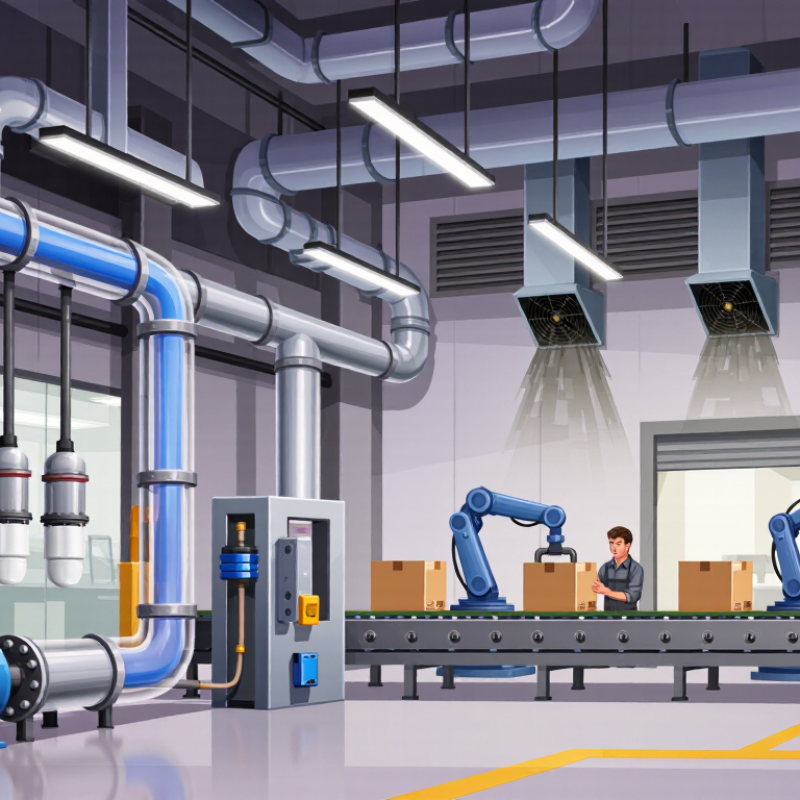
Industrial air works through a connected system of intake, treatment, distribution, and exhaust. A compressor draws in atmospheric air, then raises its pressure for tools or automated machinery. Dryers and filters remove moisture, oil aerosols, and solid particles. Pipes carry the treated air to valves, actuators, and production lines. Meanwhile, fans and ductwork can exchange indoor air, capture contaminants, and maintain safer pressure differences between rooms. Small leaks matter. A faint hiss near a fitting can waste energy continuously and reduce machine performance.

Reliable design requires more than selecting a powerful compressor. Engineers assess airflow, pressure, temperature, contaminants, noise, and demand changes. They also inspect filters, drains, hoses, and ventilation paths during routine maintenance. Standards and manufacturer instructions provide useful benchmarks, but every facility has different risks. A system may appear efficient while hidden pressure drops weaken production. That possibility deserves attention. Understanding industrial air helps managers improve equipment reliability, worker comfort, product quality, and energy use without treating one solution as suitable for every site.
What Is Industrial Air and How Does It Work?

Definition and Core Functions of Industrial Air

Industrial air is air prepared for manufacturing, processing, and plant operations. It may be compressed, filtered, dried, or regulated before reaching equipment. Unlike ordinary room air, it must meet specific requirements for pressure, cleanliness, temperature, and moisture. Its quality can directly affect product consistency and machine life.

A typical system draws ambient air through an intake filter. A compressor then raises its pressure for practical use. After compression, coolers and separators remove heat and condensed water. Additional filters capture oil aerosols, dust, and fine particles. Dryers reduce moisture before the air enters storage tanks or distribution pipes.

Pressure matters. Poor regulation can damage tools or create unstable production.

Industrial air powers pneumatic cylinders, control valves, lifting devices, and automated tools. It can also move materials, clean surfaces, and support packaging processes. In food, pharmaceutical, or electronics production, air purity requires tighter monitoring.

Technicians usually inspect pressure drops, drain points, unusual noise, and filter condition. A hissing connection may seem minor, but it can waste significant energy over time. Moisture remains troublesome. Even a well-designed system can perform poorly when maintenance records are incomplete or demand changes suddenly. Measuring flow at real operating conditions often reveals problems that pressure gauges alone cannot show.

How Industrial Air Is Generated and Distributed

What Is Industrial Air and How Does It Work?

Industrial air usually means compressed air used to power tools, valves, actuators, and production equipment. A compressor draws in atmospheric air, compresses it, and stores it in a receiver tank. The air then passes through coolers, dryers, filters, and pressure regulators before reaching the factory floor. This treatment removes moisture, oil, and particles that could damage equipment or affect product quality. ISO 8573-1 classifies compressed-air purity by particles, water, and oil.

Distribution depends on pipe design and pressure control. A ring-shaped network often provides steadier flow than a long, dead-end line. Undersized pipes create pressure drops, especially when several machines start together. The U.S. Department of Energy reports that compressed air can represent about 10% of industrial electricity use. Its guidance also notes that leaks may waste 20% to 30% of compressor output. These figures vary by site, age, and operating pressure. They should not be treated as universal facts.

Tips: Check leaks with ultrasonic equipment during scheduled maintenance. Inspect receiver tanks, drains, and filters regularly. Keep pressure close to the level each tool requires. Higher pressure feels safer, but it increases energy demand. The European Commission identifies compressed-air systems as a major energy-saving opportunity in industry. Still, a perfect layout on paper can perform poorly when demand changes, maintenance is irregular, or operators bypass controls. Measuring flow and pressure at different shifts reveals those hidden weaknesses.

Key Equipment Used in Industrial Air Systems

Industrial air is compressed air produced for manufacturing, processing, and maintenance tasks. A compressor raises atmospheric air pressure, then sends it through a treatment and distribution system. The equipment selected affects air quality, energy use, and production reliability.

Key equipment includes the compressor, air receiver, dryer, filters, regulators, valves, and distribution piping. The compressor supplies pressure. The receiver stores air and reduces pressure fluctuations during sudden demand. A dryer removes moisture that could corrode pipes or damage pneumatic tools. Filters capture oil, dust, and water particles. Regulators control pressure at each work area. In a well-designed system, pressure gauges and sensors help operators identify leaks or unstable performance. Relief valves also provide essential protection against excessive pressure. I have seen small leaks waste substantial energy over time. No system is perfectly efficient.

Tips: Drain receiver tanks regularly. Inspect filters before they become restricted. Listen for hissing near joints and fittings. Keep pressure as low as practical for the task. Check readings during busy production periods, not only during quiet shifts. Maintenance records should include pressure, moisture, filter changes, and leak repairs. A frequent weakness is assuming the compressor is the only important component. Poor piping layout can create pressure loss, even when the compressor appears powerful enough. Review the whole air path.

What Is Industrial Air and How Does It Work? - Key Equipment Used in Industrial Air Systems
Equipment or System Element Primary Function Typical Operating Range or Rating Key Performance Data Air Quality or Process Role Energy and Maintenance Considerations
Air Compressor Converts mechanical energy into pressurized air for tools, actuators, process equipment, and control systems. Discharge pressure commonly ranges from 7 to 13 bar(g) for general plant applications. Capacity is commonly specified as free air delivery, measured in m³/min or CFM. Industrial units may range from less than 1 m³/min to more than 100 m³/min. Provides the energy source for the compressed-air network. Oil-free designs are used where oil contamination is unacceptable. Variable-speed drives can reduce unloaded running. Regular checks include lubricant condition, inlet filters, coolers, belts, and condensate management.
Air Receiver Stores compressed air, absorbs short-term demand peaks, and reduces pressure fluctuations. Designed for the system's working pressure, commonly 7 to 13 bar(g), with a safety margin required by applicable pressure-vessel regulations. Volume is selected according to compressor capacity, demand pattern, allowable pressure fluctuation, and control strategy. Common installations use vessels from several hundred to several thousand litres. Allows moisture and liquid condensate to settle before downstream treatment when correctly arranged and drained. Automatic drains should be tested regularly. Periodic inspection and pressure testing are required according to local regulations.
Air Dryer Removes water vapor from compressed air to prevent corrosion, freezing, product contamination, and pneumatic equipment failure. Refrigerated dryers typically deliver pressure dew points near +3 °C. Desiccant dryers can achieve approximately -20 °C to -40 °C or lower. Selection is based on flow rate, inlet temperature, operating pressure, ambient conditions, and required pressure dew point. Refrigerated drying suits general plant air. Desiccant drying is used for low-dew-point instrument air and moisture-sensitive processes. Refrigerated dryers consume electrical power. Desiccant dryers may consume purge air unless equipped with heatless-purge optimization or blower-assisted regeneration.
Coalescing Filter Removes liquid aerosols, oil mist, and fine solid particles from compressed air. Typical filtration grades range from about 0.01 to 1 micrometre, depending on the element and application. Pressure drop should remain low; a rising differential pressure indicates filter loading and increased operating cost. Protects dryers, valves, instruments, and processes from liquid contamination and fine aerosols. Filter elements require replacement when the specified differential-pressure limit is reached. Drains must remain functional.
Particulate or Dust Filter Captures solid particles generated by the compressor, pipe scale, desiccant dust, or the surrounding environment. Common downstream ratings include 1 to 5 micrometres, while specialized applications may require sub-micrometre filtration. Efficiency and pressure drop depend on particle size, air velocity, filter media, and loading level. Improves air cleanliness and protects pneumatic components from abrasive or obstructive particles. Overloaded elements increase pressure loss and compressor energy use. Differential-pressure monitoring supports timely replacement.
Activated Carbon Filter Adsorbs oil vapors, hydrocarbon odors, and certain gaseous contaminants. Typically installed after a high-efficiency coalescing filter and used at the pressure and flow conditions specified by the element manufacturer. Service life depends on vapor concentration, temperature, humidity, flow rate, and carbon-bed size. Used when air must meet more demanding oil-vapor or odor requirements, such as sensitive manufacturing processes. Carbon media can become saturated without causing a large pressure-drop increase, so replacement must follow service-life monitoring or a defined schedule.
Pressure Regulator Reduces and stabilizes downstream pressure for tools, actuators, instruments, and process equipment. Common regulated supply levels include approximately 4 to 7 bar(g), although the required setting depends on the application. Performance is assessed by outlet-pressure stability, flow capacity, and pressure drop under changing demand. Prevents excessive actuator force, component damage, and unnecessary air consumption. Incorrectly high settings increase leakage and energy use. Regulators should be checked for creep, blockage, and damaged diaphragms.
Pneumatic Control Valve and Actuator Uses compressed air to control the movement of valves, dampers, cylinders, and automated machinery. Many systems operate within approximately 4 to 8 bar(g), subject to actuator and valve specifications. Important factors include force or torque, stroke speed, cycle frequency, response time, and air consumption per cycle. Converts compressed-air energy into controlled mechanical motion for automation and process control. Leaks at fittings, seals, tubing, or valve seats can create continuous demand. Correct sizing and flow controls help avoid shock and excess consumption.
Compressed-Air Distribution Network Transports treated air from the compressor room to points of use. Pressure loss should generally be kept low; a well-designed system often targets no more than about 0.1 to 0.3 bar loss across the main distribution path. Pipe diameter, total length, fittings, layout, flow rate, and future expansion determine network performance. Properly sized piping reduces turbulence, pressure drop, and the risk of condensate reaching production equipment. Looped layouts improve flow distribution. Drip legs, isolation valves, correct slopes, and regular leak surveys are important for reliability.
Condensate Drain Discharges water and oil-contaminated condensate collected in receivers, filters, dryers, and low points. Drain type and pressure rating must match the vessel or filter location and the system's maximum working pressure. Zero-loss drains discharge condensate only when needed, while timed drains may release compressed air during each cycle. Prevents liquid carryover, corrosion, blocked filters, and water damage in downstream equipment. Blocked drains can flood the system; leaking timed drains waste air. Condensate containing oil may require approved treatment before disposal.
Air Receiver and Line Pressure Instrumentation Measures pressure, temperature, flow, dew point, and differential pressure to support system control and fault detection. Measurement ranges are selected to cover normal operation without excessive over-ranging; pressure transmitters commonly cover 0 to 16 bar(g) in general systems. Useful data includes compressor output, peak demand, pressure stability, dew point, filter differential pressure, and leakage-related flow. Provides evidence that air quality and pressure meet process requirements. Calibration, sensor placement, and data trending are essential. Monitoring can identify leaks, overloaded filters, and inefficient control settings.

Industrial Air Quality, Pressure, and Flow Control

Industrial air is the controlled movement of air through factories, workshops, laboratories, and processing areas. It carries heat, dust, moisture, fumes, and sometimes useful materials. The system works through fans, ducts, filters, dampers, and sensors. Pressure differences guide air from cleaner zones toward areas needing extraction. Flow determines whether contaminants are removed effectively. Small errors matter.

Industrial air quality depends on more than visible dust. Fine particles, humidity, temperature, and chemical vapors can affect equipment and worker safety. During site inspections, technicians often compare readings at the source, inside ducts, and near occupied work areas. A pressure gauge may show normal results while a blocked filter quietly reduces airflow. That problem is easy to miss. Regular testing, filter checks, and sensor calibration improve reliability. Still, measurements can vary with production schedules, open doors, and changing weather.

Tips: Check airflow at several points, not one location. Record pressure before and after filters. Keep ducts sealed and access panels closed. Adjust dampers gradually. I have seen overcorrection create noise, energy waste, and unstable pressure. The better approach is patient testing, clear records, and practical adjustments based on real operating conditions. No system is perfect. Allow room for review.

Industrial Applications and Safety Considerations

Industrial air usually means air used in manufacturing, processing, ventilation, or pneumatic equipment. Ambient air enters through an intake and passes through compressors, dryers, filters, and storage tanks. Pressure then moves the air through pipes to tools, valves, cylinders, or production areas. The air may look invisible and harmless. It is neither.

Industrial applications demand different air quality levels. Dry air helps prevent corrosion inside control systems. Filtered air protects sensitive instruments from dust and oil. In food, pharmaceutical, and electronics facilities, contamination control becomes critical. ISO 8573 testing can measure particles, water, and oil. However, one test result does not prove permanent safety. Conditions change during production.

Compressed air can injure skin, damage hearing, or move loose objects at dangerous speed. Workers should never direct it toward people or use it to clean clothing. Pressure relief devices, guarded couplings, and clearly marked isolation valves reduce risk. Maintenance teams should inspect hoses for cuts, leaks, and swelling. A small leak can create noise and waste energy. Lockout procedures must control stored pressure before repairs begin.

Safety depends on actual operating conditions, not assumptions. A clean filter may be blocked internally. A quiet line may still hold dangerous pressure. Training should include emergency shutdowns, eye protection, hearing protection, and routine leak checks. Experienced technicians also verify gauges against reliable instruments. They record unusual pressure drops, because ignoring them can turn a minor fault into equipment failure. Mistakes happen, and honest reporting helps prevent repeated ones.

What Is Industrial Air and How Does It Work?

Industrial air systems move, filter, heat, cool, or exhaust air to control contaminants and maintain safe working conditions. The chart shows selected occupational exposure limits expressed as approximate milligrams per cubic meter.

Safety note: Lower exposure limits indicate stricter control requirements. Actual limits depend on exposure duration, jurisdiction, process conditions, and the applicable safety standard.