China Best Air Compressor Air Dryer Manufacturers
Compressed air may look clean at the outlet, but moisture can corrode pipework, damage pneumatic tools, and spoil paint finishes. A correctly sized air compressor air dryer helps remove water vapor before compressed air reaches sensitive equipment. Small details matter. Dryer performance depends on inlet temperature, pressure, flow rate, and the room’s ambient conditions—not just the capacity printed on a product label.
The U.S. Department of Energy’s compressed-air guidance notes that these systems account for about 10% of industrial electricity use, and can reach 30% in some facilities. That figure makes efficient equipment selection more than a purchasing detail. ISO 8573-1 provides a framework for classifying compressed-air purity, including water content, which gives buyers a useful reference when comparing specifications. Yet the right class still depends on the process; a general workshop and a moisture-sensitive production line do not share the same needs.
China’s air dryer manufacturers offer varied designs, capacities, and support arrangements. This guide examines how to assess their products, documentation, energy use, and after-sales service. It also considers refrigerated and desiccant dryers, since neither technology suits every operating condition. Catalog comparisons help, but they rarely reveal maintenance quality or response times. And the comparison is not always neat. Buyers should verify performance claims, request clear test conditions, and match the dryer to measured demand before choosing a supplier.
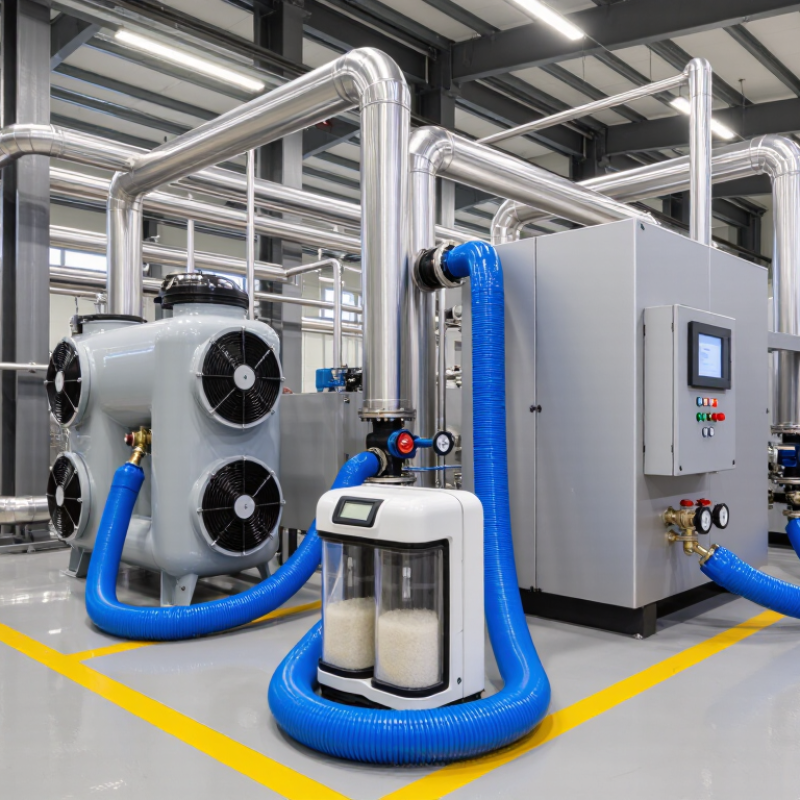
Understanding Air Compressor Air Dryers and Their Industrial Role
An air compressor dryer removes water vapor before it condenses in pipes, valves, and tools. Without effective drying, droplets can cause corrosion, sticky controls, and uneven paint or product finishes. The risk is easy to miss: air leaving a compressor may look clean while cooling downstream. A dryer helps control this moisture, but it does not replace proper filtration or condensate drainage.
Dry air also supports reliable production. The U.S. Department of Energy’s Improving Compressed Air System Performance guide reports that compressed air uses about 10% of industrial electricity, reaching 30% in some facilities. That figure covers the whole system, not the dryer alone. Still, an incorrectly sized or poorly maintained dryer can add avoidable energy costs. Match its capacity to airflow, inlet temperature, pressure, and the required pressure dew point. These details matter. A single “standard” specification may not suit a humid workshop or a cold pipeline.
Tips: Check the dew point at the point of use, not only at the dryer outlet. Inspect drains and filters regularly, and watch for pressure drops. Keep a maintenance log; it may reveal patterns, though logs are often incomplete.
China Best Air Compressor Air Dryer Manufacturers - Understanding Air Compressor Air Dryers and Their Industrial Role
| Dryer Type | How It Removes Moisture | Typical Pressure Dew Point | Common Industrial Uses | Key Selection Considerations |
|---|---|---|---|---|
| Refrigerated dryer | Cools compressed air so water vapor condenses and can be separated and drained. | Usually about +2°C to +10°C; many standard designs target approximately +3°C. | General manufacturing, pneumatic tools, plant air, and applications where a sub-zero dew point is not required. | Check inlet temperature, pressure, ambient conditions, airflow capacity, condensate drainage, and whether the required dew point can be maintained. |
| Heatless desiccant dryer | Uses adsorbent material to capture water vapor; a portion of dry compressed air commonly regenerates the saturated desiccant. | Commonly designed for approximately -20°C, -40°C, or -70°C, depending on the system. | Low-dew-point plant air, outdoor equipment in freezing conditions, and moisture-sensitive processes. | Consider purge-air consumption, pressure drop, filtration, desiccant condition, and the dew point required by the process. |
| Heated desiccant dryer | Uses desiccant adsorption and heated regeneration to remove accumulated moisture from the adsorbent. | Often selected for low pressure dew points, with achievable levels depending on design and operating conditions. | Continuous industrial systems that need dry air while aiming to reduce regeneration-air losses compared with heatless designs. | Review heater energy use, regeneration controls, cooling requirements, purge requirements, and the specified outlet dew point. |
| Membrane dryer | Allows water vapor to permeate through selective hollow-fiber membranes, with a small purge stream carrying moisture away. | Varies by design and operating conditions; commonly used for moderate dew-point reduction rather than the lowest dew points. | Point-of-use drying, compact installations, and applications where a simple dryer with no moving parts is useful. | Account for purge-air loss, inlet-air cleanliness, flow capacity, pressure, and the dew point required at the point of use. |
| Deliquescent dryer | Passes air through a moisture-absorbing chemical medium that dissolves as it captures water. | Typically provides limited drying; outlet performance depends strongly on inlet conditions and the medium used. | Some remote or low-maintenance installations where moderate moisture reduction is sufficient. | Plan for consumable medium replacement, disposal, possible downstream carryover control, and seasonal changes in inlet conditions. |
Note: Pressure dew point values are typical ranges, not guaranteed performance specifications. Actual results depend on dryer design, inlet-air temperature and pressure, flow rate, ambient conditions, and maintenance. Select a dryer based on the required air quality at the point of use.
Related Posts
-
Top Air Compressor Air Dryer Choices for Your Needs?
-

Top Tips for Choosing the Best Compressed Air Dryer?
-
Top 10 Air Compressor Air Dryer Options for Your Needs?
-

What Is Industrial Air and How Does It Work?
-

2026 Top Screw Compressor Oil Options for Optimal Performance?
-
7 Best Compressed Air Solutions for Global Buyers?