1-800-868-2450
My Account | Cart | Checkout
What Is a Suction and Discharge Hose? It is more than a flexible tube. It is a pressure-rated flow path designed to move liquids, slurries, or selected dry materials safely. The suction side must resist collapse under negative pressure. The discharge side must withstand internal pressure, vibration, and repeated bending. One hose rarely performs both tasks equally well.
Industry data supports its importance. Grand View Research’s Industrial Hose Market report identifies oil and gas, chemicals, water treatment, and agriculture as major demand sectors. MarketsandMarkets also reports continued growth in industrial hose applications, driven by fluid transfer, infrastructure renewal, and stricter safety expectations. These reports describe market direction, not automatic product quality. Selection still depends on actual service conditions.
Details matter. A 100-millimeter hose may look suitable, yet an undersized pump inlet can create damaging vacuum conditions. A hose carrying abrasive slurry needs a different tube compound from one handling clean water. Temperature, chemical compatibility, bend radius, coupling design, and working pressure must be checked together. Standards such as ISO 1823 and EN 1765 provide useful testing and construction references, while manufacturer data confirms the limits of a specific assembly.
Small errors become expensive. A loose coupling can spray fluid across a concrete floor. A sharp bend can restrict flow and accelerate fatigue. Field experience also shows an uncomfortable truth: inspection schedules are often treated as paperwork. They should not be. This guide explains how a Suction And Discharge Hose works, where it is used, and how informed selection improves reliability without replacing professional engineering review.
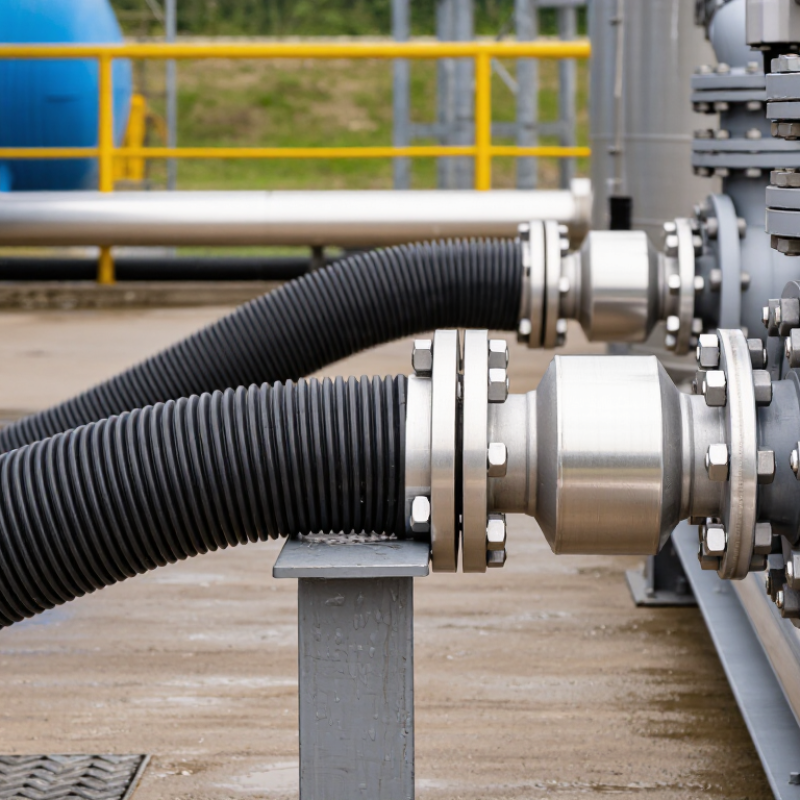
A suction and discharge hose moves liquids, but each design serves different pressure conditions. A suction hose draws fluid toward a pump or vacuum source. Its wall must resist collapse when outside air pressure squeezes inward. Helical reinforcement, thick walls, and firm couplings are common safeguards. Discharge hoses carry fluid away from the pump. They manage internal pressure instead of external vacuum. Still, the terms can overlap. Poor wording causes poor selection.
Flow direction is only the starting point. Check the pump’s inlet and outlet, then trace the liquid path physically. A clear section near the connection can reveal bubbles, flattening, or unexpected flow. Use the hose’s working-pressure rating, not its burst rating. Burst pressure is an emergency limit, not a target. Vacuum service also needs a rated vacuum level. A hose may tolerate pressure yet collapse under suction. That failure can happen quietly. Temperature, fluid chemistry, abrasion, and bend radius matter too. A tight bend near the pump can restrict flow and stress fittings.
During field inspections, I look for soft spots, cracked covers, loose clamps, and exposed reinforcement. I also verify gasket material and coupling security before starting equipment. These checks seem basic. They prevent expensive surprises. One imperfect habit deserves correction: replacing a suction hose by diameter alone is unsafe. The same size may have different vacuum, pressure, and temperature limits. Select the hose from measured service conditions, then inspect it during use. If flow changes, stop and investigate rather than trusting appearance.
A suction and discharge hose transfers liquids, slurries, or other materials under changing pressure. Its construction has three working layers: tube, reinforcement, and cover. The tube contacts the conveyed material, so its rubber or thermoplastic compound must resist swelling, abrasion, and temperature damage. Reinforcement gives the hose strength during suction, pressure, bending, and movement. Textile plies, wire, or a combination may be used. The cover protects against sunlight, oil, scraping, and weather. Small details matter.
Bore sizes commonly range from 1/2 to 12 inches. A 1/2-inch bore suits controlled flow in compact equipment. Larger bores reduce flow resistance and support higher volumes, but they need more space and stronger supports. Field experience shows that an oversized hose can be awkward, not automatically better. The correct size depends on flow rate, operating pressure, suction conditions, fluid compatibility, bend radius, and connection design. I have seen failures caused by fitting mismatch, not weak hose construction. That is an easy detail to miss.
Tips: Measure the actual connection before ordering. Check both working pressure and vacuum rating. Confirm the tube material against the fluid and temperature. Keep bends gradual, and support heavy lengths near couplings. Inspect for flattened sections, cuts, exposed reinforcement, or soft spots. Replace damaged hose promptly. Records help, though they are often incomplete.
What Is a Suction and Discharge Hose?
A suction and discharge hose carries liquids into and away from pumps. Suction service exposes the hose to external atmospheric pressure. The hose must resist collapse while the pump creates negative pressure. Many industrial hoses are rated around 28–29 inHg vacuum. This approaches a full vacuum at sea level, but actual performance depends on altitude, temperature, and hose construction. A soft hose may flatten before reaching its published limit.
Discharge service creates internal pressure. Typical ratings range from 150 to 300 psi for suitable industrial assemblies. These figures describe working pressure, not burst pressure. The correct rating must include the fluid, temperature, coupling design, and pressure surges. Water hammer can exceed the normal gauge reading within seconds. I have seen otherwise sound hoses fail because the assembly rating was treated as a rough suggestion.
Inspection matters as much as the specification sheet. Check for flattened sections, exposed reinforcement, cracked covers, and loose couplings. Keep bends gradual, especially near the pump inlet. A hose can meet 29 inHg in a laboratory and perform poorly when kinked in the field. That detail is easy to miss. Use a vacuum gauge on the suction side and a calibrated pressure gauge on discharge lines. Replace uncertain assemblies instead of guessing.
What Is a Suction and Discharge Hose?
A suction and discharge hose carries fluid under changing pressure. SAE J517 classifies 100R4 as a wire-reinforced hydraulic suction hose. Its reinforcement supports vacuum service and helps resist collapse. It is not automatically suitable for every fluid or temperature.
The standard matters.
SAE J517 defines construction and performance expectations for 100R4 hose. EN ISO 1307 provides hose bore sizes, outside dimensions, and dimensional tolerances. These measurements affect coupling selection. A small bore mismatch can create leakage, turbulence, or difficult assembly. ISO 1307 also reminds engineers that nominal size is not the entire design.
Couplings need equal attention. The fitting must match the hose’s actual inside diameter, cover type, vacuum rating, and fluid compatibility. Clamp pressure should remain distributed around the hose. Over-tightening may damage reinforcement. Under-tightening may permit air entry on the suction side. A reliable assembly normally receives visual inspection, dimensional checks, and pressure or vacuum testing based on the application specification.
Field inspections often reveal an overlooked detail: the hose may meet SAE 100R4, while the coupling assembly does not. This weakens the whole system. EN ISO 1307 does not provide one universal coupling design, so project drawings must state fitting geometry, insertion depth, retention method, and test conditions.
A practical uncertainty remains.
Standards evolve, and older drawings may cite incomplete editions. Engineers should verify the current SAE J517 and EN ISO 1307 requirements before approval. Sources: SAE J517, “Hydraulic Hose”; ISO 1307, “Rubber and plastics hoses—Hose sizes and tolerances.”
This chart shows whether each reference directly addresses key hose-assembly topics. A value of 1 means the topic is directly covered; 0 means it is not the primary purpose of that reference. SAE 100R4 defines hydraulic hose construction and performance requirements, EN ISO 1307 focuses on hose dimensions and tolerances, and coupling selection must be verified separately for compatibility, pressure rating, size, and application.
A suction and discharge hose moves liquids under different pressure conditions. Suction service can create vacuum, so the hose needs reinforcement to resist collapse. Discharge service exposes the hose to internal pressure. Select the hose for the actual medium, temperature, pressure, vacuum, and flow rate. Check chemical compatibility charts carefully. Water, oils, acids, and solvents can affect the tube or cover differently. Do not guess.
Bend radius matters during installation and operation. Follow the specified minimum radius, especially near couplings. Avoid sharp bends, twisting, dragging, hot surfaces, and contact with rough edges. Support heavy hose sections without crushing them. A hose may look flexible but still be overstressed inside. That small detail matters. Allow enough length for movement, but do not leave loose loops where equipment can catch them.
Inspect the hose before every use. Look for cuts, blisters, flattening, exposed reinforcement, soft spots, leaks, and loose couplings. Check for unusual odor or discoloration after chemical service. During operation, watch for swelling, vibration, or sudden pressure changes. Stop the system and depressurize it before handling a damaged hose. Replace any hose with structural damage or an uncertain history. Keep inspection dates and service conditions recorded. Even careful teams miss hidden wear. A checklist helps, but it is not perfect. Review it when failures, near misses, or new fluids reveal a weakness.
I&M Industrials Inc.
10 Akron Drive
Greenville SC 29605
Phone: 864-277-2450
GSA Number – GS07F0379Y