1-800-868-2450
My Account | Cart | Checkout
A Toyota Tacoma Side Mirror is more than a reflective glass panel beside the cab. It is a driver’s visual link to nearby traffic, parking spaces, trailers, and narrow trails. Its housing protects the glass, adjustment mechanism, wiring, and sometimes heating or turn-signal components. Some Tacoma models also include blind-spot monitoring sensors. The exact design depends on the truck’s year, trim, and equipment package.
John Ibbotson, chief mechanic at Consumer Reports’ Auto Test Center, offers a practical reminder: “A mirror is only helpful when it is adjusted for the driver’s view.” That principle matters with every Toyota Tacoma Side Mirror replacement. The mirror should provide a clear view along the truck’s side without hiding the next lane. It should also remain stable when the door closes or the truck travels over rough ground.
A small detail can create a large problem. A loose base may produce vibration. A scratched surface can scatter headlights at night. An incorrect connector may leave power adjustment or heating features inactive. Fit matters.
This guide explains what a Toyota Tacoma Side Mirror does, how its parts work, and which features affect daily driving. It also considers manual, powered, heated, folding, and towing-style designs. Not every replacement is truly equivalent. Some look right but perform poorly. That is where careful checking becomes essential. Heretofore overlooked details, such as connector shape and mounting points, deserve attention before installation. Experiences can vary, and even factory-style parts may need final adjustment.
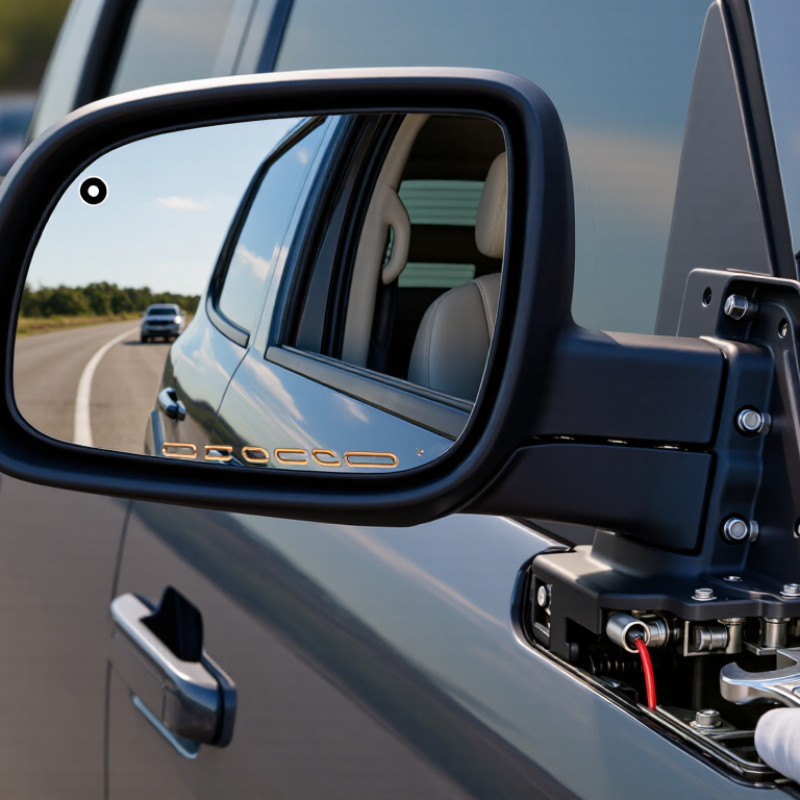
A Toyota Tacoma side mirror is an exterior viewing device mounted beside the cabin. It helps the driver see traffic, cyclists, parking lines, and nearby obstacles outside the windshield’s view. Most versions include a flat mirror for normal distance judgment. Some also use a convex section, which shows a wider area but makes objects appear smaller.
Its purpose is practical and safety-focused. A properly adjusted mirror reduces blind spots during lane changes and reversing. It also helps the driver position the vehicle near a curb or narrow trail. From hands-on inspection, the mirror should sit firmly without excessive vibration. A loose housing can turn a clear reflection into a shaking image at highway speed. That detail is easy to miss.
Many side mirrors fold inward to limit damage in tight spaces. Some include heating elements, turn signals, cameras, or power adjustment controls. These features improve convenience, but they also add wiring and failure points. A cracked glass surface, loose hinge, or damaged electrical connector needs attention before regular driving. I have found that drivers often adjust the mirror too far inward, leaving a large blind area. That habit deserves reconsideration. The best setting usually shows a narrow edge of the vehicle while keeping adjacent lanes visible. Even then, mirrors cannot replace a direct shoulder check. Safety depends on using both methods carefully.
A side mirror is an exterior viewing device mounted beside a pickup’s front doors. It helps the driver monitor adjacent lanes, parking spaces, and approaching traffic. Its main components include the mirror glass, housing, backing plate, pivot joint, and mounting bracket. Some assemblies also contain wiring, a heating element, or an integrated turn signal. The housing protects the glass from rain, dust, and light impacts.
Mirror types differ by adjustment method and viewing purpose. Manual mirrors use a hand-operated control, while power mirrors use a small electric motor. Heated mirrors reduce fog and frost during cold, damp conditions. Folding mirrors pivot inward, which helps in narrow garages or crowded streets. Convex glass provides a wider view but can make vehicles appear farther away. Towing mirrors extend outward and may include separate upper and lower viewing sections.
Choosing the correct type requires more than matching the vehicle’s shape. Check the mounting points, connector style, glass curvature, and adjustment range. A mirror that fits loosely may vibrate at highway speed. That detail matters. I have found that a clear mirror can still create blind spots when positioned poorly. Adjust the inner edge to show a narrow strip of the vehicle, not most of its side. Avoid relying on the mirror alone. A shoulder check remains necessary, although experienced drivers sometimes skip it in familiar traffic. That habit deserves honest correction.
A pickup side mirror is more than a reflective panel. It is a carefully positioned visibility tool beside the driver’s window. From the seat, it helps reveal vehicles traveling beside the rear quarter panel. That small area can disappear during a lane change. NHTSA’s 2009–2013 crash analysis estimated about 840,000 blind-spot-related crashes annually in the United States. The report also linked these incidents to approximately 300 deaths each year. These figures show why mirror adjustment deserves more attention than a quick glance.
In daily driving, I adjust the inside mirror first, then angle the side mirror outward until the vehicle’s side nearly leaves view. This reduces overlapping reflections and expands the visible lane. However, mirrors cannot expose every position. IIHS guidance still recommends a shoulder check before changing lanes. A mirror may look clear. The road may not be.
Tips: Sit normally before adjusting the mirror. Keep your head against the seatback. Set the mirror so a nearby vehicle moves smoothly from side-mirror view toward peripheral vision. Check it again after another driver uses the vehicle. Rain, darkness, and heavy loads can reduce useful detail. Even experienced drivers sometimes trust the glass too much. That habit deserves correction.
A side mirror gives the driver a wider view beside and slightly behind the vehicle. It helps reveal nearby cars, cyclists, parking lines, and blind spots. Modern side mirrors may include manual or electric adjustment, folding hinges, heating elements, turn signals, and blind-spot warning displays. Features vary by vehicle and equipment level, so checking the owner’s manual remains the most reliable approach.
Adjust the mirror while sitting in the normal driving position. Keep only a narrow strip of the vehicle’s side visible. The remaining glass should show the adjacent lane and nearby traffic. This setup reduces overlap between the inside mirror and side mirrors, though no adjustment removes every blind spot. Turn your head before changing lanes.
Electric controls usually move the glass horizontally and vertically with small switch inputs. Heated glass can clear light frost, mist, or rain, but it does not replace careful cleaning. Foldable mirrors are useful in tight parking areas. Move them gently if folding by hand; forcing a stiff hinge may cause damage. I have found that drivers often aim the mirror too far inward. That feels familiar, but it limits useful road coverage.
Check the mirror surface after washing or loading the vehicle. A loose housing, cracked glass, or delayed adjustment deserves prompt inspection. Blind-spot alerts can support awareness, yet they may miss small objects, fast traffic, or poor-weather conditions. Use them as assistance, not as your only decision tool.
A side mirror is a safety component that helps reveal vehicles, cyclists, and obstacles outside your direct view. During inspection, check the glass for cracks, loose movement, and dark spots. Look closely at the housing, mounting plate, and folding joint. A mirror that vibrates on rough roads needs attention.
Before driving, adjust both mirrors from the driver’s seat. The side of your vehicle should barely appear along the inner edge. This reduces blind areas without hiding nearby traffic. Test the adjustment switch, heater, indicator, and camera functions if fitted. I once ignored a small crack near the mirror edge. It spread after a cold night, so replacing damaged glass early is sensible.
Replacement can involve only the glass, the outer cover, or the complete assembly. Confirm the connector, mounting points, and adjustment style before ordering parts. Disconnecting the battery may be wise when electrical wiring is exposed. Use the correct fasteners and tighten them evenly. Excessive force can damage plastic threads. A service manual gives more reliable torque information than guesswork.
Basic maintenance is simple. Clean the glass with a soft cloth and mild cleaner. Avoid spraying directly into switches or wiring gaps. Lubricate a stiff folding joint only with a product suitable for plastic and metal. Check the mirror after washing or minor contact. My own inspection routine is not perfect, but repeated checks often catch looseness before it becomes a visibility problem.
I&M Industrials Inc.
10 Akron Drive
Greenville SC 29605
Phone: 864-277-2450
GSA Number – GS07F0379Y