Top 10 Taped Litz Wire Manufacturers for Global Buyers?
Selecting a taped litz wire manufacturer is not just a price comparison. The tape, strand count, insulation, and winding dimensions can affect performance in high-frequency transformers, inductors, and compact power systems. A sample spool may look excellent, yet behave differently after bending or winding. Details matter.
Dr. Charles R. Sullivan, a researcher in high-frequency magnetics, offers a useful principle through his published work: choose winding construction for the actual frequency and geometry, not the product label alone. This is a paraphrase, not a verbatim quotation. Buyers can apply it by asking manufacturers for strand and tape specifications, dimensional tolerances, test information, and sample availability. Clear answers help distinguish proven production capability from attractive catalog language.
This Top 10 guide compares manufacturers through practical purchasing questions: product range, customization, quality controls, technical support, and export experience. It also considers whether suppliers can explain their choices, rather than simply promise low loss. No shortlist fits every project. A supplier suited to a prototype may not support steady, high-volume orders. And a polished datasheet is not the whole story. Buyers should verify critical claims against their own operating conditions and qualification tests. The comparison is a starting point, not a substitute for engineering review.
What Taped Litz Wire Is and Where It Is Used
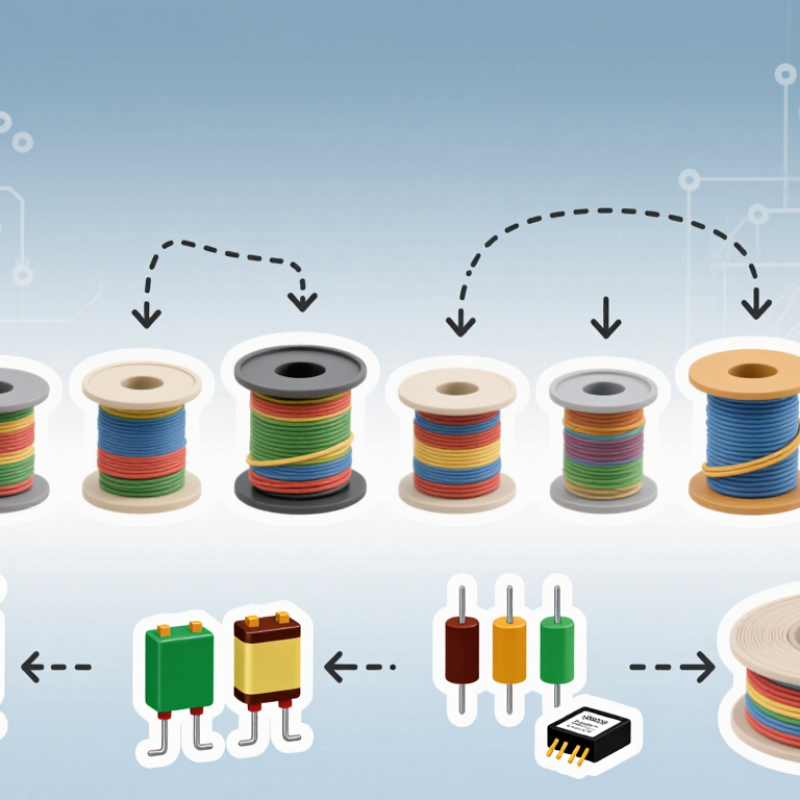
Taped litz wire is a bundle of many fine copper strands, each insulated and arranged to share current more evenly at higher frequencies. A thin tape layer wraps the bundle, helping hold the strands together and adding mechanical protection or an extra insulation barrier. The tape does not replace the strand insulation. Its material, thickness, overlap, and temperature rating must suit the winding design.
It is used in high-frequency transformers, inductors, resonant power converters, and some wireless charging coils. In these applications, properly constructed litz wire can help reduce skin-effect and proximity-effect losses. Details matter. Strand diameter, strand count, twist pattern, operating frequency, and winding space all influence performance. Tape can also affect flexibility and heat transfer, so a heavily wrapped conductor may not fit every compact coil.
For example, a designer might compare a taped bundle’s finished diameter with a bobbin slot before approving a sample. They should also check voltage requirements, insulation class, bend radius, and how the wire will be terminated. A datasheet is useful, but test results in the actual winding are better. Specifications can look complete and still miss a practical issue: tape edges may lift during tight winding, or the finished coil may run warmer than expected.
How Taped Litz Wire Is Designed and Manufactured
Taped litz wire is built from many fine, enamel-insulated copper strands rather than one solid conductor. Each strand follows a controlled path through the bundle, helping distribute current and reduce losses at high frequencies. The design starts with operating frequency, current, temperature, and available space. Small details matter.
During production, strands are gathered and twisted into carefully arranged groups. Consistent twist patterns help each strand occupy different positions along the wire. The bundle is then wrapped with insulating tape, such as polyester or polyimide, with specified overlap and tension. Too little tension can leave gaps; too much may deform the bundle or damage insulation. Neither problem is obvious from a quick glance.
Tape material, thickness, and coverage depend on voltage, heat exposure, flexibility, and the winding process. There is no perfect tape choice. A thicker wrap can improve insulation but increase the finished wire’s diameter, and that trade-off deserves a second look during design reviews. Manufacturers should check dimensions, continuity, resistance, and insulation integrity against the agreed specification. A sample winding can also reveal stiffness or fit issues before production scales up.
Criteria for Comparing Taped Litz Wire Manufacturers
Comparing taped litz wire manufacturers starts with the actual operating conditions. Share the target frequency, current, winding space, and temperature range. Then check whether the proposed strand count, strand diameter, and tape material fit those needs. A compact coil can expose problems that a general data sheet misses. Small details matter. Ask for evidence.
Review electrical and insulation data together. Request resistance measurements, dielectric test conditions, and thermal ratings, not just headline values. Confirm how the tape is applied, including overlap and coverage, because uneven wrapping can affect insulation and winding consistency. Ask how samples are tested and whether results can be linked to production batches. A polished specification is useful, but it cannot show every variation on a production line.
Manufacturing controls deserve equal attention. Look for documented inspection steps, traceability, and clear handling procedures for reels and finished wire. Ask about acceptable tolerances and what happens when a batch falls outside them. Delivery capacity matters, too: sample lead times may differ from repeat-order schedules. Request a representative sample and evaluate it on your own winding equipment. One imperfect sample does not always tell the whole story, but unexplained differences between samples deserve a closer look. Clear technical answers are often more useful than broad claims.
Top 10 Taped Litz Wire Manufacturers for Global Buyers? — Criteria for Comparing Taped Litz Wire Manufacturers
Copper skin depth decreases as frequency rises. This calculated reference helps buyers assess whether a supplier can design strand sizes suited to the intended operating frequency; it is not manufacturer-specific performance data.
Calculated using copper resistivity of 1.724 × 10⁻⁸ Ω·m at 20°C and relative magnetic permeability of approximately 1. Actual skin depth varies with material properties and temperature.
Top 10 Taped Litz Wire Manufacturers for Global Buyers
Choosing among the top ten taped litz wire manufacturers requires more than comparing catalog pages. Buyers should match each supplier’s capabilities to the coil design, operating frequency, and production volume. Confirm strand count and strand diameter, then check tape material, overlap, finished dimensions, and insulation ratings. Small differences can affect winding fit and electrical performance. That matters.
Ask for sample coils, dimensional inspection records, and test data relevant to the intended application. A capable manufacturer should explain how it controls tape tension and coverage, since uneven wrapping may create problems during automated winding. Request documented tolerances and traceability for production lots. Ask for evidence. Clear technical answers are more useful than broad claims about quality.
For global purchasing, compare minimum order quantities, sample lead times, packaging, and communication across time zones. Also confirm whether the supplier can maintain the same construction across repeat orders. I would not trust a polished comparison chart alone; actual samples can reveal stiffness, edge quality, and how neatly the tape sits around the wire bundle. That check takes time, and it can still miss issues that appear only on a production line.
How to Evaluate and Select a Manufacturer for Your Needs
Evaluate taped litz wire manufacturers against the actual coil, not a catalogue label. Request strand diameter and count, copper grade, tape material, overlap, finished dimensions, and thermal class. Ask for AC resistance at your operating frequency; a low DC resistance alone can hide excess skin and proximity losses. Inspect a sample cross-section. Tape wrinkles or exposed edges can compromise insulation. Small details matter. IEC 60317 requirements may apply to winding-wire components, but ask the supplier to identify the exact applicable parts and any exceptions.
Check whether test evidence matches your production conditions. Request dielectric withstand results, temperature-rise data, dimensional tolerances, and lot-level traceability. A useful report states test method, sample size, frequency, and acceptance limits—not just “passed.” The International Energy Agency’s Global EV Outlook 2024 reported nearly 14 million electric-car sales in 2023, about 18% of global car sales. That growth signals expanding demand for power components, but it does not prove any supplier can meet your design’s needs. Compare lead times, minimum order quantities, change-control practices, and corrective-action records. Then run a pilot batch under your own winding process. One uncomfortable question remains: can the manufacturer reproduce the same insulation overlap after scaling up? Ask for evidence, not reassurance.