1-800-868-2450
My Account | Cart | Checkout
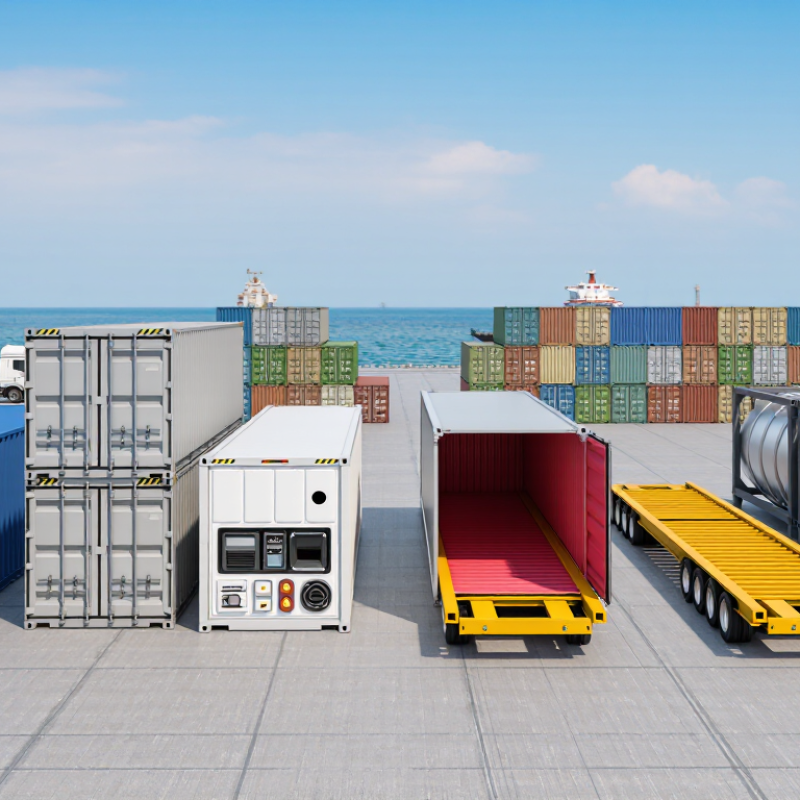
Choosing a Shipping Container in 2026 is less about finding one “best” box and more about matching its design to the cargo, route, and handling equipment. A Dry Container remains the familiar workhorse for boxed goods and palletized freight. High-cube models add extra vertical space. Reefer containers carry temperature-sensitive products, while open-top and flat-rack units accommodate tall or unusually shaped loads. Tank containers serve liquid cargo.
Maritime historian Marc Levinson’s work on containerization offers a useful perspective: standardization matters as much as the container itself. That is a paraphrase of his documented analysis, not a direct quotation. It helps explain why common dimensions and handling compatibility remain practical selection factors. Yet the details matter. A reefer needs dependable power and temperature monitoring; a flat rack needs suitable cargo support and securing arrangements. Small choices count.
This guide compares the main container types buyers are likely to encounter in 2026, including their uses, strengths, and trade-offs. It also considers less common options, such as side-opening and insulated containers. No single type fits every shipment. A high-cube unit may offer useful volume, but extra space alone does not guarantee a better fit. Specifications, condition, and the cargo’s actual dimensions deserve a careful check. That part is easy to overlook. It can be.
ISO 668:2020 defines the classification, external dimensions, and ratings of Series 1 freight containers. A nominal 20-foot unit measures 6.058 metres long; a 40-foot unit measures 12.192 metres. Both are 2.438 metres wide. Standard height is 2.591 metres, while high-cube units are typically 2.896 metres tall. A 40-foot container counts as two TEUs, or twenty-foot equivalent units. These shared dimensions help cranes, ship cells, and chassis handle containers across different routes.
On a busy quay, those measurements matter: a few centimetres can affect clearance or fit. Still, ISO dimensions do not guarantee identical internal space. Wall thickness, doors, and construction details vary, so shippers should check each unit’s actual specifications. Easy to overlook. UNCTAD’s Review of Maritime Transport 2024 reports that global container-port throughput reached 858.9 million TEUs in 2023. That scale makes consistent sizing essential, but it also shows why capacity planning cannot rely on nominal length alone.
ISO 668 sets the common frame; operational checks fill in the practical details.
Dry containers remain the most common Shipping Container type because they handle ordinary, non-temperature-controlled cargo. Their enclosed steel structure protects goods from rain, wind, and handling debris. For many shipments, that straightforward protection is enough. No special equipment is needed.
A standard 20-foot dry container offers about 33 cubic meters of internal volume. That figure describes space, not the weight it can carry. Actual usable room depends on the container’s dimensions, condition, and the shape of the cargo. A stack of uniform cartons may fit efficiently; bulky machinery can leave awkward gaps. Measure carefully.
The practical details matter. Check door clearance, cargo dimensions, and how goods will be secured before loading. A few centimeters can change whether an item passes through the doorway. Pallets also reduce usable space, even when the published volume looks generous. The number is helpful, but not a loading plan. Dry containers dominate because they are versatile, widely available, and simple to handle. Still, choosing one by volume alone is an easy mistake.
| Container type | Typical size | Approx. internal dimensions (L × W × H) | Approx. capacity | Common cargo and practical use |
|---|---|---|---|---|
| Dry (general purpose) | 20-foot | 5.90 × 2.35 × 2.39 m | About 33 m³ | Packaged goods, machinery, and palletized freight. A widely used general-purpose size for dry cargo. |
| Dry (general purpose) | 40-foot | 12.03 × 2.35 × 2.39 m | About 67–68 m³ | High-volume dry freight; offers roughly twice the length of a 20-foot container. |
| Dry high-cube | 40-foot | 12.03 × 2.35 × 2.69 m | About 76 m³ | Bulky, lightweight freight that benefits from extra interior height. |
| Refrigerated (reefer) | 20-foot | About 5.4 × 2.29 × 2.27 m | About 28 m³ | Temperature-controlled food, pharmaceuticals, and other perishables. Insulation and refrigeration equipment reduce usable space. |
| Refrigerated high-cube | 40-foot | About 11.6 × 2.29 × 2.54 m | About 67 m³ | Larger temperature-controlled shipments; requires an appropriate power connection during operation. |
| Open-top | 20-foot | About 5.9 × 2.35 × 2.35 m | About 32–33 m³ | Tall or top-loaded cargo, such as equipment; a removable roof cover allows loading from above. |
| Flat rack | 40-foot | Platform about 12.2 m long; no enclosed interior | Not applicable | Oversized or heavy cargo, including vehicles and industrial equipment; cargo dimensions and securing requirements determine fit. |
| Tank container | 20-foot frame | Tank held in a standard-length frame; vessel dimensions vary | Typically about 24,000–26,000 L | Bulk liquids and suitable gases; tank specification and cargo compatibility are essential. |
Dimensions and capacities are indicative industry ranges. Actual internal measurements, usable capacity, and permitted payload vary by container design, operator, and unit condition; verify the specific unit before loading.
A 40-foot high-cube container gains space through extra height. Its interior is typically about 12.03 metres long, 2.35 metres wide, and 2.69 metres high. A standard 40-foot unit is about 2.39 metres high. The Container Handbook, an industry technical reference, gives approximate capacities of 76.3 and 67.7 cubic metres. That is roughly 12.7% more volume. A small height difference can make a real packing difference.
The extra volume helps when cargo is bulky but relatively light, such as boxed household goods or furniture. The container’s permitted payload does not increase. Check the unit’s data plate, cargo weight, and stacking limits before loading. Weight still matters. UNCTAD’s Review of Maritime Transport 2024 reports that more than 80% of global trade by volume moves by sea, underscoring why efficient use of cargo space matters across supply chains.
The headline percentage is not a guaranteed gain for every shipment. Pallet dimensions, door clearance, packaging, and safe stacking can leave some space unusable. I would compare a real loading plan with the container’s internal measurements, rather than rely on cubic capacity alone. A few centimetres can change the final row. That detail is easy to miss.
What Are the Top Shipping Container Types in 2026?
Reefer, open-top, and flat-rack containers solve different cargo problems. A reefer suits goods that need a controlled temperature during transit, such as chilled produce or frozen ingredients. Before loading, check the required temperature, airflow needs, and cargo condition. A set temperature alone cannot protect poorly packed or warm cargo. Keep vents clear, too.
An open-top container works for tall machinery or bulky items loaded from above. A crane can lower a machine through the removable roof area, while a secure cover helps shield the load from weather. Flat racks suit oversized equipment, steel sections, or other cargo that extends beyond standard container dimensions. Their exposed sides make careful lashing and weather planning essential. Measure twice. A tight fit on paper may still leave too little room for lifting gear.
Tips: Confirm cargo dimensions, weight, lifting points, and route requirements before booking. Photograph the load and its restraints before departure. For reefers, record temperature settings and pre-cool cargo when appropriate. For open-top and flat-rack loads, ask a qualified shipping professional to review securing plans. Small details matter. Conditions vary, and even experienced teams sometimes need to revise a loading plan.
Reefer containers are designed for temperature-controlled cargo, open-top containers suit cargo loaded from above or exceeding standard door height, and flat-rack containers accommodate oversized or heavy cargo. Scores are an illustrative cargo-fit guide, not standardized capacity ratings; verify dimensions, payload limits, and route requirements before booking.
ISO tank containers move liquid cargo inside a pressure-rated vessel held within a standard transport frame. Many common models carry roughly 21,000–26,000 liters, though exact capacity varies by design. The familiar 20-foot frame fits established intermodal handling systems. But capacity figures can mislead. They describe the tank, not necessarily the safe amount for every liquid.
Cargo properties shape loading decisions. Density affects total weight, while temperature changes can make liquids expand. Operators therefore consider the tank’s design limits, the liquid’s behavior, and the planned route before loading. A tank filled too close to its limit may leave too little room for expansion. Too much empty space can also increase liquid movement during transport. It is a practical balance, not a simple volume calculation.
Look closely at the equipment, too. A tank may have insulation or heating features for cargo that needs temperature control. Valves and fittings require inspection, and connection points must be clean and secure. Small details matter. A damaged seal or unclear cargo information can delay handling and create avoidable risks. Capacity is useful, but it never tells the whole story. Teams should verify each tank’s specifications and loading plan rather than rely on a general range alone.
I&M Industrials Inc.
10 Akron Drive
Greenville SC 29605
Phone: 864-277-2450
GSA Number – GS07F0379Y