Top Multi Lane Powder Packing Machine Manufacturers
Choosing among the Top Multi Lane Powder Packing Machine Manufacturers requires more than comparing prices or website claims. A reliable supplier should understand powder behavior, filling accuracy, sealing stability, and production hygiene. The right Multi-Lane Powder Packing Machine can form several pouches simultaneously, improving output while maintaining consistent portions.
Experienced manufacturers usually provide practical testing before purchase. They may evaluate powder flow, particle size, moisture, and bulk density. These details affect auger performance and filling precision. Ask to see sample packs, not only polished videos. A strong test should measure weight variation, seal strength, dust control, and changeover time. Small details matter. A loose seal can waste an entire production shift.
Equipment quality also depends on engineering support. Look for servo-driven filling systems, stainless-steel contact parts, accessible cleaning areas, and clear control interfaces. Manufacturers should explain maintenance schedules, spare-part availability, installation training, and remote troubleshooting. Certifications and documented quality procedures add confidence, but they should support real performance rather than replace it.
No machine is perfect. Powder can bridge, absorb moisture, or create dust unexpectedly. Even an excellent supplier may need several trials before reaching stable results. This is where honest communication matters. Ask manufacturers to state their limits and provide measurable guarantees. Factory references, service records, and transparent technical documents can reveal more than sales language. This guide compares leading manufacturers through those practical standards, helping buyers make a careful, evidence-based decision for food, pharmaceutical, chemical, and other permitted powder products.
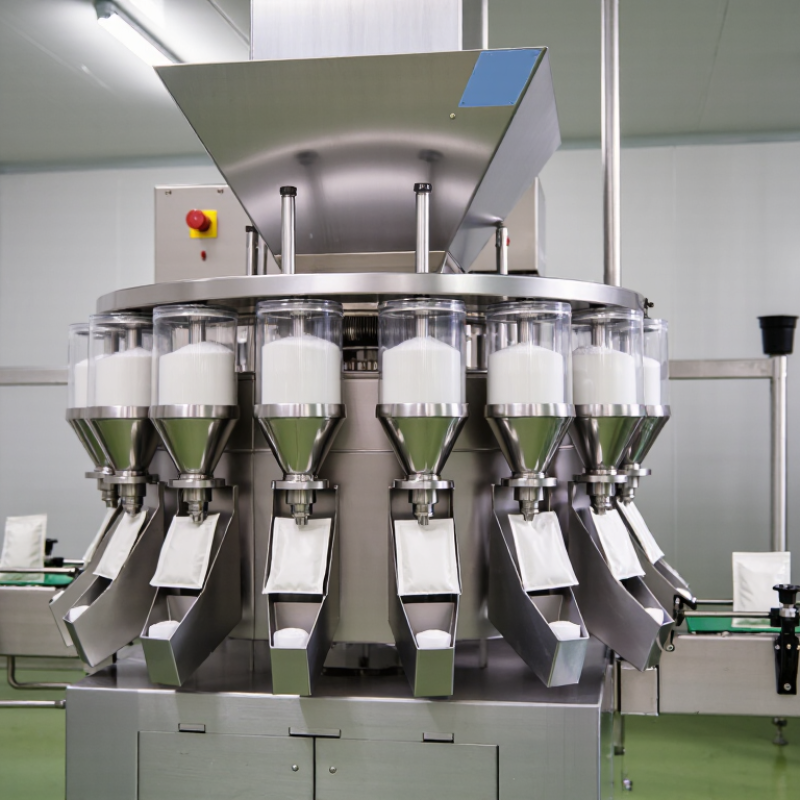
What Is a Multi-Lane Powder Packing Machine? Up to 20 Lanes Explained
A multi-lane powder packing machine forms, fills, and seals several sachets in parallel. Each lane usually includes a dosing tube, forming collar, sealing jaws, and film sensor. An auger filler measures powder by volume and controlled rotation. Servo-driven systems can improve repeatability when density changes.
Lane count defines potential output, not guaranteed production. For example, 20 lanes running at 30 sachets per minute can produce 600 sachets per minute before rejects. Real output falls with film changes, cleaning, powder bridging, and occasional seal faults. This distinction matters. More lanes also mean tighter alignment, more sensors, and harder maintenance access. A 12-lane machine may outperform a 20-lane model when the powder flows poorly.
Future Market Insights projects the powder packaging machine market to grow at approximately 5.8% CAGR from 2024 to 2034. PMMI industry reports also identify labor efficiency, automation, and quality control as major packaging investment drivers. In practical testing, operators should check fill-weight variation, dust extraction, seal strength, and changeover time. A machine that reaches its brochure speed but creates unstable weights is not efficient. I would specify 20 lanes only after product trials, because fine powders can behave unpredictably. Small errors multiply quickly.
What Is a Multi-Lane Powder Packing Machine?
A multi-lane powder packing machine forms and fills several sachets in parallel during each machine cycle. This chart shows the theoretical sachet output for 1 to 20 lanes at a benchmark speed of 30 cycles per minute, assuming one sachet is produced per lane in every cycle. Actual production depends on powder flowability, dose size, sealing temperature, film properties, and machine speed.
How Multi-Lane Fillers Reach 30–120 Bags/Min with ±1% Accuracy
Top Multi Lane Powder Packing Machine Manufacturers
How Multi-Lane Fillers Reach 30–120 Bags/Min with ±1% Accuracy
Multi-lane powder fillers combine several dosing channels inside one compact machine. Each lane measures powder while film moves through forming tubes and sealing jaws. Depending on product flow, lane count, and bag size, output can reach 30–120 bags per minute. Speed alone means little. Stable dosing matters more.
Experienced manufacturers use servo-driven augers, load-cell feedback, and independent lane control. An auger turns powder into measured portions. Sensors check film position, seal temperature, and bag length. Operators usually begin with slow test runs, then increase speed after checking sample weights. A clean hopper also reduces buildup around the dosing screws.
The ±1% target is demanding. Powder density can change between batches, especially with fine particles or uneven humidity. Small errors become visible after hundreds of bags. In practice, teams often recalibrate each lane during production, rather than trusting one initial setting. That takes time.
Dust control also affects reliability. Sealed enclosures, extraction points, and gentle powder handling help protect sensors and seals. A practical factory test should record speed, average weight, weight variation, and rejected bags. One overlooked detail can weaken the result. Even a well-built filler may need adjustment when the powder changes.
Top Manufacturers Compared by Lane Count, Speed, and Powder Compatibility
Selecting a multi-lane powder packing machine requires more than comparing headline speed. Lane count, dosing accuracy, and powder behavior must be assessed together.
Industry data supports this careful approach. Grand View Research valued the global packaging machinery market at approximately USD 52.8 billion in 2023, with growth expected through 2030. PMMI reports that automation and flexible production remain major investment priorities. In practical terms, a four-lane machine may deliver higher output than a two-lane model, but only when the powder flows consistently. Fine flour, mineral blends, and hygroscopic powders can bridge inside the hopper or cling to auger surfaces. More lanes do not automatically mean better production.
Speed claims also need context. A supplier may quote 120 packs per minute, while real output falls after pouch sealing, weighing checks, and cleaning time. Powder compatibility should include auger design, dust control, contact materials, and fill-volume range. A 2024 report from MarketsandMarkets identifies automation, accurate dosing, and hygienic design as important packaging machinery trends. Those findings match factory experience, though reports often simplify difficult operating conditions. Ask for test runs using your actual powder, target weight, and pouch film. Measure rejects, changeover minutes, and dust levels. The fastest machine can become the least efficient choice.
Key Compliance Standards: GMP, CE, ISO 9001, and 21 CFR Part 11
Choosing a multi lane powder packing machine manufacturer requires more than comparing output rates. In production audits, I look for documented controls, traceable materials, and practical operator training. GMP principles should shape hygienic design, cleaning access, dust control, and batch separation. Small gaps become expensive. A polished frame is not enough.
CE marking indicates conformity with applicable European safety requirements, but it does not replace risk assessment or technical documentation. Ask for the declaration, machinery safeguards, electrical tests, and emergency-stop validation. ISO 9001 adds a quality-management structure, including corrective actions, supplier control, and calibration records. These records reveal whether a manufacturer manages problems consistently or merely reacts during inspections. That distinction matters on a busy filling line.
For electronic batch records, 21 CFR Part 11 expectations include controlled access, secure audit trails, validated software, and reliable electronic signatures. Password rules alone are insufficient. Test data integrity during interruptions, recipe changes, and rejected pouches. I have seen teams overlook time synchronization and backup recovery. That is a real weakness.
Manufacturers should support documented validation protocols, change control, and clear service responsibilities. Review sample records before purchase, and involve quality, engineering, and operators in the assessment. Compliance is strongest when daily machine behavior matches its paperwork.
How to Select a Manufacturer Using OEE, Service, and Total Cost Data
Top Multi Lane Powder Packing Machine Manufacturers
Selecting a multi-lane powder packing machine requires more than comparing purchase prices. OEE should be measured across availability, performance, and quality. An 80% OEE line may outperform a faster machine running at 55%. The OEE Foundation identifies 85% as a world-class reference, but powder lines often face dust, bridging, and changeover losses. Ask manufacturers for verified production records, not optimistic demonstrations.
Service evidence matters. PMMI’s 2023 Packaging Automation in the U.S. report highlights labor shortages and the growing need for easier maintenance and automation support. Request response-time targets, spare-parts availability, remote diagnostics, and technician coverage in your region. Test the support process before signing: send a technical question and record the reply time. Small details reveal a lot.
Total cost of ownership should include tooling, compressed air, rejected packs, cleaning labor, software updates, and planned downtime. A 2024 Deloitte manufacturing survey reported that unplanned downtime can create substantial production losses, making reliability data commercially important. Require a cost model using your powder, pack size, shifts, and annual volume. Include a sensitivity test for slower speeds and higher waste. The spreadsheet may still lie. Real factory trials are better. Also check whether quoted OEE excludes sanitation, product refilling, or film changes. Those exclusions can quietly distort the investment decision.
Top Multi Lane Powder Packing Machine Manufacturers - How to Select a Manufacturer Using OEE, Service, and Total Cost Data
| Anonymous Manufacturer Profile | Typical Lane Range | Reported OEE Range | Changeover Time | Service Response Target | Critical Spare Parts Lead Time | Estimated 5-Year Total Cost Index | Best-Fit Application | Selection Assessment |
| Profile A — High-Speed Specialist | 8–16 lanes | 82–88% | 25–40 minutes | Remote response within 4 hours | 2–5 business days | 100 | High-volume, stable powder products | Strong when throughput is the priority |
| Profile B — Flexible Production Builder | 4–12 lanes | 76–84% | 15–30 minutes | Remote response within 8 hours | 3–7 business days | 94 | Frequent product and format changes | Strongest flexibility-to-cost balance |
| Profile C — Regional Service Partner | 4–10 lanes | 74–81% | 20–35 minutes | On-site support within 24–48 hours | 1–3 business days | 97 | Operations where local support is essential | Low downtime risk in supported regions |
| Profile D — Entry-Cost Supplier | 2–8 lanes | 65–75% | 35–60 minutes | Remote response within 24 hours | 7–14 business days | 91 | Lower-volume lines with limited SKU variety | Attractive purchase price; validate downtime exposure |
| Profile E — Integrated Automation Provider | 6–14 lanes | 80–87% | 20–35 minutes | Remote response within 4 hours | 2–6 business days | 108 | Lines requiring checkweighing, inspection, and data integration | Best for traceability and centralized controls |
| Profile F — Custom Engineering Partner | 6–16 lanes | 78–85% | 30–50 minutes | Application engineer within 1 business day | 3–8 business days | 113 | Difficult-to-handle powders and specialized formats | Higher investment justified by process customization |
OEE Evaluation
Compare availability, performance, and quality separately. Request production records from comparable powder products rather than relying only on nameplate speed.
Service Evaluation
Confirm response-time commitments, technician coverage, preventive-maintenance training, remote diagnostics, and regional spare-parts inventory.
Total Cost Evaluation
Include purchase price, installation, utilities, labor, film waste, maintenance, spare parts, software, training, and the financial impact of unplanned downtime.
Data note: The table uses anonymized supplier-profile benchmarks for screening purposes. OEE ranges and cost indices should be validated through site references, acceptance-test results, service-level agreements, and a five-year total-cost-of-ownership calculation before purchase.