Top 10 Industrial Compressor Types You Need to Know?
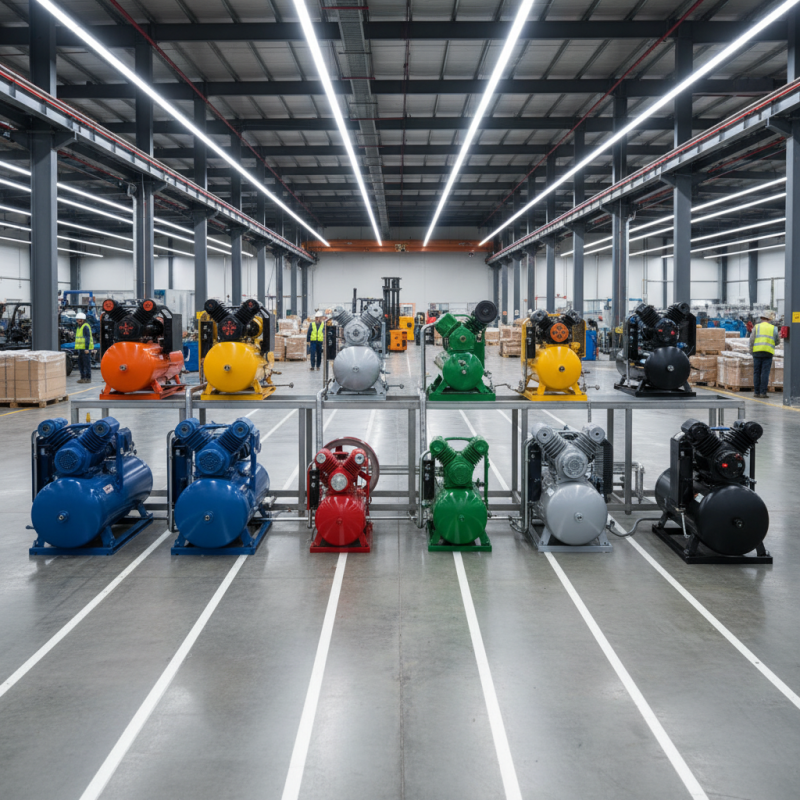
Industrial compressors play a vital role in various sectors, driving efficiency and productivity. These machines compress gases and provide necessary pressure for different applications. Understanding the types of industrial compressors is essential for making informed decisions. Each type has unique features and benefits, suitable for specific needs.
Selecting the right compressor can be challenging. There are many factors to consider, from efficiency to maintenance. A poorly chosen compressor may lead to energy wastage. It might also increase operational costs. This can be frustrating for business owners and operators alike.
In this exploration, we outline the top ten types of industrial compressors. Each type offers distinct advantages. Whether you require a rotary screw compressor or a reciprocating one, knowing your options is crucial. Discover which compressors can enhance your operations and meet your production goals effectively.
Types of Industrial Compressors: An Overview
Industrial compressors are essential in various sectors. They compress gases to create high-pressure air or other gases. This process is vital for operations in manufacturing, refrigeration, and HVAC systems. Understanding the types of compressors can greatly impact efficiency and cost.
There are several main types of industrial compressors. **Reciprocating compressors** use pistons to compress gases. They are known for their high efficiency, particularly in low-flow applications. **Rotary screw compressors** use rotating elements to compress air. They are more suited for continuous operation and can handle larger volumes. According to the Compressed Air and Gas Institute, around 70% of industrial facilities rely on rotary screw compressors due to their reliability and lower maintenance costs.
**Centrifugal compressors** use high-speed rotating impellers to increase gas pressure. They are efficient for large-scale operations. However, their initial investment can be high. **Scroll compressors** are often used in smaller applications, like refrigeration. They are compact and have fewer moving parts, but this might limit their capacity. Each type offers unique benefits and drawbacks, making it crucial to assess specific needs before choosing.
Positive Displacement Compressors: Function and Applications
Positive displacement compressors are essential in several industries. They function by trapping a specific volume of air or gas and reducing its volume to increase pressure. This mechanism results in a constant flow, regardless of the discharge pressure. Various reports indicate that these compressors account for approximately 60% of the industrial compressor market.
Different types of positive displacement compressors serve numerous applications. Rotary screw compressors, for instance, are known for their efficiency in continuous operation. They are widely used in manufacturing, construction, and pneumatic tools. On the other hand, reciprocating compressors are often employed in refrigeration and air conditioning systems due to their high pressure capability. Industry data suggests a growing demand for these compressors, with projections indicating a yearly growth rate of about 4.5% through 2028.
However, one must consider maintenance costs as a critical factor. Some positive displacement compressors require regular servicing, which can be both time-consuming and expensive. Additionally, operational inefficiencies can arise if not properly calibrated. Users should reflect on the long-term investment versus the immediate savings, as each type brings its unique challenges. Balancing efficiency and cost remains a point of contention in many organizations.
Dynamic Compressors: Working Principles Explained
Dynamic compressors are essential in various industrial applications. They work by increasing the kinetic energy of gas through high-speed rotors. This energy then converts to pressure when gases are decelerated in a diffuser. The design allows for continuous air movement. It's used in refrigeration, air conditioning, and gas industry processes. However, these compressors need careful maintenance to ensure efficiency.
One common type is the centrifugal compressor. It uses radial force to compress gases. The rapid spinning impeller moves gas outward. The pressure buildup is significant, but efficiency can drop if not properly aligned.
Another type is the axial compressor, operating on a similar principle but with air flowing parallel to the rotor axis. While offering high flow rates, these compressors require precise engineering. Misalignment can lead to vibrations and reduced lifespan.
Dynamic compressors have their pros and cons. They offer high efficiencies and compact designs. Yet, their sensitivity to operating conditions can be challenging. Regular checks and monitoring are crucial for optimal performance. Even minor issues can lead to significant losses in output and efficiency.
Comparative Analysis: Rotary vs. Reciprocating Compressors
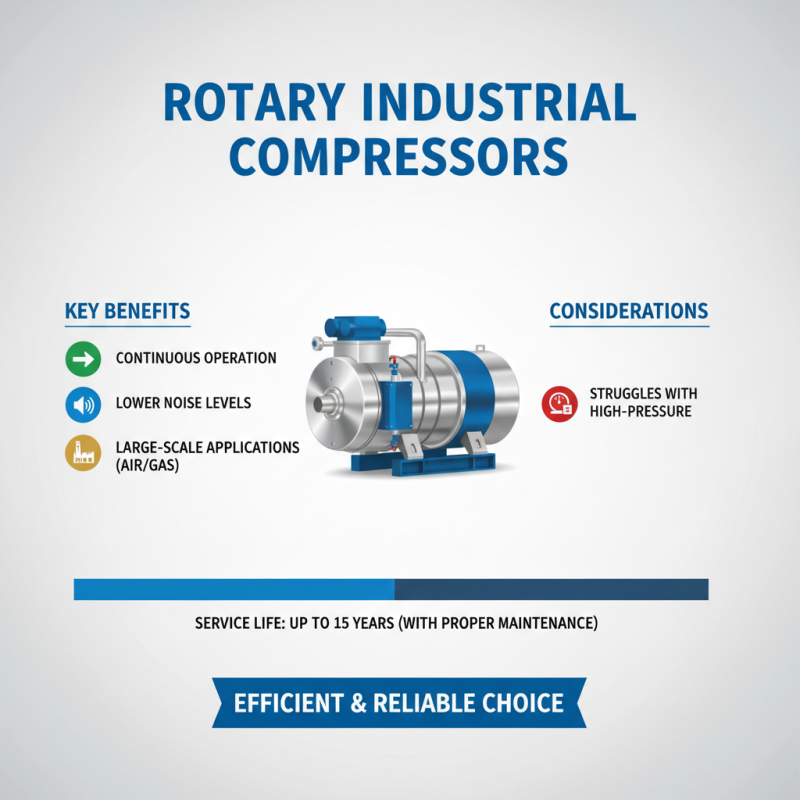
When considering industrial compressors, rotary and reciprocating types stand out. Rotary compressors are known for their continuous operation and lower noise levels. They are efficient for large-scale applications, handling air and gas compression seamlessly. According to industry reports, rotary compressors can achieve a service life of up to 15 years with proper maintenance. However, they may struggle with high-pressure requirements, emphasizing the need for thoughtful application selection.
On the other hand, reciprocating compressors excel in high-pressure scenarios. They offer high compression ratios and adapt well to varying conditions. In fact, these compressors can deliver pressures exceeding 200 PSI, making them invaluable in sectors like refrigeration. However, they can be noisy and less energy-efficient compared to rotary options. A recent study highlighted that reciprocating compressors had a higher operational cost due to frequent maintenance demands. This raises questions about long-term sustainability and efficiency in energy consumption.
In conclusion, both compressor types have unique strengths and challenges. Rotary compressors prioritize quiet operation and energy efficiency, while reciprocating compressors focus on high-pressure output. Selecting the right type requires careful consideration of specific operational needs and potential long-term impacts.
Factors Influencing Compressor Selection for Industrial Use
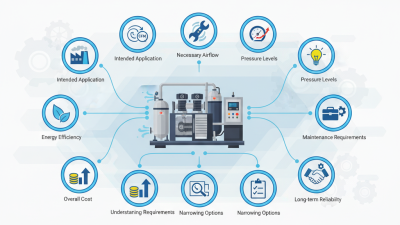
When selecting industrial compressors, several factors come into play. One of the most critical is the application type. Different industries have unique pressure and flow requirements. For instance, a report from the International Compressor Association noted that oil and gas operations require high compression ratios. In contrast, food processing may need lower pressures but stricter hygiene standards.
Energy efficiency is another significant element. According to the U.S. Department of Energy, compressed air systems can account for nearly 30% of total energy usage in some facilities. This highlights the importance of choosing compressors that are designed for energy efficiency. Variable speed drives and advanced control systems can help reduce energy consumption. While some may overlook these features, they can lead to substantial savings over time.
Maintenance and uptime are also vital. Certain types of compressors may require more frequent servicing. This can lead to unexpected downtime and increased operational costs. Understanding the specific maintenance needs of each type can help avoid these pitfalls. A comprehensive evaluation of all these factors is essential for optimal compressor selection.
Top 10 Industrial Compressor Types You Need to Know
| Compressor Type |
Typical Applications |
Advantages |
Disadvantages |
| Reciprocating Compressor |
Natural gas, refrigeration |
High efficiency, good for high pressure |
High maintenance, noise level |
| Rotary Screw Compressor |
Industrial air compression |
Continuous operation, compact size |
Higher initial cost |
| Centrifugal Compressor |
HVAC, gas pipeline |
High flow rates, reliability |
Low efficiency at low flow |
| Scroll Compressor |
Refrigeration, air conditioning |
Quiet operation, compact |
Limited capacity |
| Diaphragm Compressor |
Laboratory, medical applications |
No contamination, precise pressure |
Limited volume flow |
| Vane Compressor |
Automotive, machine shops |
Low operation cost, good for medium pressure |
Lower efficiency than others |
| Lobe Compressor |
Water treatment, pneumatic conveying |
High reliability, no internal compression |
Limited compression ratio |
| Rotary Piston Compressor |
Air tools, paintball |
Versatile applications, low initial cost |
Higher noise emissions |
| Air-Driven Compressor |
In remote locations |
Portable, safe for flammable atmospheres |
Limited power and efficiency |