1-800-868-2450
My Account | Cart | Checkout
Choosing among the top 304 Stainless Steel Plate Suppliers worldwide requires more than comparing prices. Buyers must examine mill capacity, production consistency, surface finish, certification, and delivery performance. A polished plate may look identical to another, yet its chemistry, flatness, or passivation quality can differ significantly.
Tim Collins, former Director General of the International Stainless Steel Forum, has said, “Stainless steel is a material for the future.” His observation reflects the material’s lasting role in food processing, chemical equipment, construction, transport, and energy projects. However, 304 Stainless Steel Plate is not automatically the right choice for every environment. Chloride exposure, high temperatures, fabrication methods, and cleaning chemicals can change its performance.
Reliable suppliers usually provide mill test certificates, heat numbers, dimensional records, and traceable inspection data. They also explain whether the plate meets ASTM, EN, JIS, or other project requirements. Strong suppliers can discuss 2B, BA, No. 1, and brushed finishes with practical clarity. They should answer technical questions without hiding behind marketing language.
This guide compares established suppliers by quality control, manufacturing experience, export capability, customization, and customer support. It also considers details that buyers sometimes overlook, such as protective film, edge condition, packaging strength, and moisture prevention during ocean transport. No supplier is perfect. Delivery delays happen, and certificates may require careful checking. That is why independent verification remains valuable before a large purchase. The best choice combines consistent metallurgy, transparent communication, and dependable after-sales support.
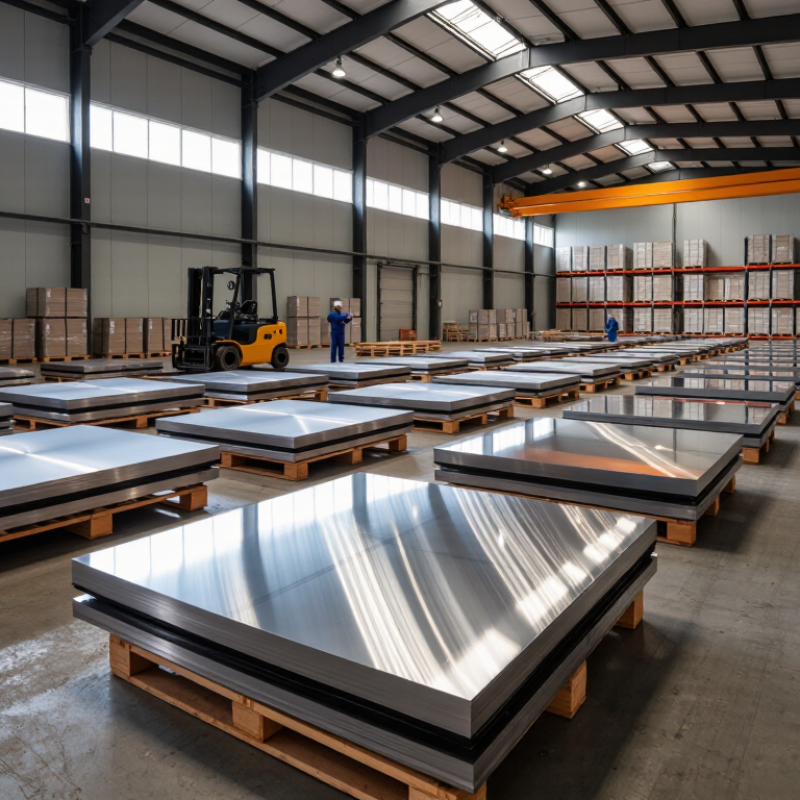
304 stainless steel plate is a flat, rolled sheet made from an austenitic stainless steel grade. It typically contains about 18% chromium and 8% nickel. Chromium forms a passive surface layer, while nickel improves toughness and formability. The result is a plate that resists ordinary atmospheric corrosion and handles many industrial environments.
It is not rust-proof.
In workshops, 304 plate is valued for its smooth finish, easy fabrication, and reliable welding performance. It can be cut, bent, drilled, and formed into tanks, kitchen equipment, guards, brackets, and architectural panels. Its non-magnetic condition is common after annealing, although cold working may create some magnetism. Thickness, surface finish, and flatness should match the application.
A practical mistake is treating every 304 plate as equally suitable. Saltwater, coastal spray, and warm chloride solutions can cause pitting. For these conditions, a more resistant grade may be necessary. I would also avoid judging quality by appearance alone. A bright surface can hide incorrect chemistry or poor processing.
Buyers should review the material certificate, heat number, dimensions, and applicable testing standard. Common checks include chemical composition, tensile properties, hardness, and corrosion-related requirements. In my experience, clear documentation prevents more problems than attractive pricing. Still, certificates require careful review. A small mismatch in grade or thickness can affect welding, service life, and total project cost.
304 stainless steel plates remain a practical choice for many industrial projects because they balance corrosion resistance, strength, and fabrication cost. Their typical composition includes about 18% chromium and 8% nickel. Chromium creates a passive surface layer, while nickel improves toughness and formability. The result is a plate that performs well in humid indoor areas and many mildly corrosive environments.
Fabricators value 304 stainless steel for its clean cutting, bending, and welding behavior. It is widely used in food-processing tables, storage tanks, kitchen equipment, architectural panels, and chemical handling systems. Smooth finishes help reduce residue buildup. However, surface appearance alone does not prove quality. Plate thickness, flatness, weld condition, and heat treatment records require careful inspection. A reliable supplier should provide traceable mill certificates and support material testing when specifications are demanding.
304 stainless steel is not flawless. Chloride-rich water can cause pitting, especially near coastal facilities or cleaning zones. Higher temperatures may also reduce its corrosion performance. This is where project judgment matters. A plate that works well in a food plant may fail prematurely in a salt-processing area. I have seen buyers focus on price while overlooking finish quality and edge damage. That mistake becomes expensive during installation. Comparing international suppliers requires attention to standards, tolerances, packaging, and delivery consistency, not only catalog descriptions. Small details matter.
Top 304 Stainless Steel Plate Suppliers Worldwide
How to Evaluate Global 304 Stainless Steel Plate Suppliers
Choosing a 304 stainless steel plate supplier requires more than comparing prices. A polished website proves little. Request recent mill test certificates for every relevant heat number. Check chemical composition, tensile strength, yield strength, and elongation against the agreed standard. ASTM A240 and EN 10088 references can help, but the purchase specification must control.
Ask how the supplier manages thickness tolerance and surface finish. A 2B plate should look even, without deep scratches, edge cracks, or rolling marks. For critical orders, request independent PMI testing or arrange a pre-shipment inspection. Traceability matters. Each bundle should connect clearly to its heat number, inspection record, and packing list. Small labeling mistakes can create expensive delays.
Study production capacity, not only claimed capacity. Ask for realistic monthly output, minimum order quantities, and lead times during busy periods. Examine packaging photographs showing waterproof wrapping, corner protection, and secure steel strapping. A reliable supplier explains what happens when plates fail inspection. Their answer should include replacement terms, evidence requirements, and response times. References from similar industries are useful, though they are not perfect proof. I would also test communication with a small trial order. Some suppliers answer quickly before payment, then slowly afterward. That uncomfortable detail deserves attention. A transparent supplier admits limitations, documents changes, and keeps technical promises measurable.
How to Evaluate Global 304 Stainless Steel Plate Suppliers
Use the Type 304 chemical composition limits as an initial supplier-screening benchmark. Ask suppliers for heat or batch certificates and verify that chromium, nickel, carbon, manganese, silicon, phosphorus, sulfur, and nitrogen values comply with ASTM A240/A240M Type 304 requirements. Chemical compliance should be evaluated together with plate thickness tolerance, surface finish, mechanical properties, traceability, and inspection documentation.
Reference benchmark: commonly specified ASTM A240/A240M Type 304 chemical composition limits, expressed as mass percentage.
Top 304 Stainless Steel Plate Suppliers Worldwide
East Asian production centers are known for high-volume 304 stainless steel plate manufacturing. Large mills often combine melting, continuous casting, hot rolling, and cold finishing in one supply chain. This structure supports stable thickness control and competitive lead times. Automated surface inspection is common. However, volume does not always guarantee consistent flatness, so buyers should review inspection records.
European suppliers often emphasize process traceability and precise finishing. Their facilities may offer brushed, polished, and mechanically leveled plates for architectural and industrial use. Many producers maintain detailed heat-lot records, chemical analysis, and dimensional reports. These documents help engineers confirm chromium and nickel content before fabrication. Smaller order quantities may receive careful technical attention. Delivery can be slower during capacity restrictions.
North American manufacturers commonly serve energy, food-processing, construction, and heavy equipment projects. Their strengths include custom cutting, regional inventory, and responsive technical support. Some facilities provide ultrasonic testing for demanding applications. Indian production regions also offer broad plate sizes and flexible export services, supported by expanding melting and rolling capacity. Quality can vary between mills. A practical buyer should verify mill certificates, surface condition, tolerances, and packing methods before placing a large order. That step feels obvious, yet it is often skipped.
Selecting a 304 stainless steel plate supplier requires more than comparing price per ton. Ask for the material specification, production origin, available thicknesses, and realistic lead times. Confirm whether the plate is hot rolled, cold rolled, pickled, or polished. These details affect fabrication, surface appearance, and cost.
Request a mill test certificate for every shipment. Check chemical composition, tensile strength, yield strength, elongation, thickness tolerance, and heat number. Match the heat number with the plate markings and packing list. A polished certificate alone is not proof of quality. Independent inspection can verify dimensions, surface defects, flatness, and corrosion resistance before dispatch. Do not skip the basic checks.
International shipping adds practical risks. Use moisture-resistant wrapping, edge protection, and strong wooden supports for ocean transport. Photograph the plates before loading. Confirm the HS code, commercial invoice, packing list, certificate of origin, and agreed Incoterm. Insurance should reflect the cargo value and route. Port congestion can change delivery estimates, even with careful planning. A supplier may promise a short lead time, but production, inspection, customs clearance, and inland delivery need separate allowances. Recheck the destination country’s import requirements before payment. Small documentation errors can delay an entire container.
| Sourcing Region | Typical Supplier Profile | Common 304 Plate Supply | Applicable Standards | Typical Thickness Range | Ordering Considerations | Recommended Quality Checks | International Shipping Notes |
|---|---|---|---|---|---|---|---|
| East Asia | Large integrated mills, service centers, and export stockists | Hot-rolled and cold-rolled plates; 2B, No. 1, brushed, and polished finishes | ASTM A240/A240M, ASME SA-240, EN 10088-2, JIS G4304 | Approximately 0.5–150 mm, depending on rolling route and mill capability | Confirm minimum order quantity, coil-to-plate cutting capability, tolerances, edge condition, and packing method | Review heat numbers, material certificates, PMI results, thickness mapping, surface condition, and flatness | Compare container loading limits, moisture protection, seaworthy packing, bill of lading details, and import duties |
| South Asia | Export-oriented mills, processors, and custom-cut plate distributors | 304 and 304L plate, cut-to-size sheets, laser-cut blanks, and fabricated components | ASTM A240/A240M, EN 10088-2, ISO 9444, and project-specific specifications | Commonly 1–100 mm for stock and project orders | Specify whether 304L chemistry is required for welding, along with cut dimensions and dimensional tolerances | Check carbon content, chromium and nickel values, tensile properties, impact requirements where applicable, and weldability documentation | Allow time for pre-shipment inspection, export documentation, fumigation certificates for wood packaging, and port congestion |
| Europe | Certified producers, regional service centers, and engineering-grade distributors | Cold-rolled sheet-to-plate products, hot-rolled plate, precision-cut parts, and surface-finished material | EN 10088-2, EN 10204, ASTM A240/A240M, and CE or project requirements when applicable | Typically 0.4–120 mm, with tighter tolerances available for qualified orders | Define EN material designation 1.4301, surface finish, tolerance class, inspection document type, and delivery term | Request EN 10204 3.1 certificates, verify dimensions against EN 10029 or the agreed standard, and inspect surface defects | For intra-European shipments, confirm customs status, delivery terms, pallet requirements, and applicable carbon-reporting obligations |
| North America | Domestic mills, service centers, and import-stock distributors | 304/304L plate, polished plate, precision blanks, and heavy-gauge hot-rolled plate | ASTM A240/A240M, ASME SA-240, ASTM A480/A480M, and AMS specifications where required | Common stock range is approximately 0.018–6 inches, subject to inventory | State inch or metric dimensions, ASTM edition, surface finish, certification level, and whether material is for pressure service | Verify ASTM chemistry and mechanical requirements, plate thickness, ultrasonic testing if specified, and heat traceability | For imports, calculate duties and tariffs by classification, confirm customs broker requirements, and use corrosion-resistant packaging |
| Middle East | Regional stockists and project-focused metal suppliers serving construction and energy sectors | Heavy plate, cut-to-size components, checker plate, and corrosion-resistant architectural finishes | ASTM A240/A240M, ASME SA-240, EN 10088-2, and client or oil-and-gas project specifications | Approximately 3–100 mm for commonly stocked plate | Confirm heat-treatment condition, project-approved documentation, cut-plan approval, and resistance to local storage conditions | Inspect for chloride contamination, rust staining, protective film condition, PMI compliance, and complete material traceability | Use sealed packaging, desiccants, and clear marking; account for high temperatures, port handling, and extended outdoor storage |
| Southeast Asia | Import distributors, fabricators, and regional warehouse suppliers | General-purpose 304 plate, decorative finishes, food-processing plate, and fabrication blanks | ASTM A240/A240M, JIS G4304, EN 10088-2, and local project standards | Typically 0.6–50 mm for readily available stock | Check actual warehouse availability, surface-protection film, cut-size tolerance, and replacement policy for damaged material | Measure thickness at multiple points, compare heat and grade markings, perform PMI, and photograph packaging before dispatch | Protect against condensation during sea transport with vapor-resistant wrapping, desiccants, and elevated container flooring |
| Oceania | Importers, local service centers, and project-stock distributors | 304 plate for food, architectural, marine-adjacent, and general fabrication applications | AS/NZS 3678 or AS/NZS 4673 where applicable, ASTM A240/A240M, and EN 10088-2 | Commonly 1.2–80 mm, depending on local inventory and imported mill sizes | Confirm metric dimensions, local compliance requirements, marine-exposure limitations, and available replacement stock | Check certificates, surface cleanliness, pitting or salt contamination, straightness, and compliance with the specified Australian or New Zealand standard | Plan for longer transit times, container availability, quarantine rules for timber packaging, and inland freight from major ports |
| Latin America | Regional distributors, fabricators, and import-based metal centers | 304/304L plate, cut-to-size sheets, industrial flooring plate, and fabricated parts | ASTM A240/A240M, EN 10088-2, ISO 9444, and national procurement specifications | Approximately 1–100 mm, subject to local stock and import schedules | Clarify language on certificates, metric dimensions, tax documentation, lead time, and responsibility for customs clearance | Confirm grade by PMI, review chemical and mechanical certificates, inspect edges and flatness, and verify quantity by weight and piece count | Evaluate port-to-door logistics, customs brokerage, currency exposure, cargo insurance, and protection from humid storage conditions |
I&M Industrials Inc.
10 Akron Drive
Greenville SC 29605
Phone: 864-277-2450
GSA Number – GS07F0379Y