1-800-868-2450
My Account | Cart | Checkout
Containerized Energy Storage System deployments are moving from pilot projects toward a core role in modern power infrastructure. The International Energy Agency’s Batteries and Secure Energy Transitions report estimates that global battery storage capacity must expand sixfold by 2030, reaching 1,200 GW in its net-zero pathway. That target gives the 2026 market a clear direction. It also exposes practical pressure points: grid congestion, limited land, thermal management, and permitting timelines.
As Dr. Imre Gyuk, former Energy Storage Program Manager at the U.S. Department of Energy, has stated, “Energy storage is the key to unlocking the full potential of renewable energy.” His observation remains highly relevant to containerized systems, where batteries, power conversion equipment, cooling, monitoring, and fire protection share one compact enclosure. This article examines the leading types expected in 2026, including LFP lithium-ion, NMC lithium-ion, vanadium redox flow, sodium-ion, and hybrid storage systems.
No single chemistry wins every site. LFP may dominate many stationary projects because of its cost, cycle life, and thermal stability. Flow batteries may suit longer-duration applications, despite larger footprints and higher upfront complexity. Sodium-ion technology could improve supply flexibility, but commercial deployment still needs closer field validation. BloombergNEF’s energy storage research also indicates continuing cost reductions, although project economics vary sharply by region and connection conditions. The details matter. A container beside a solar plant faces different demands from one supporting a dense urban substation. This overview therefore considers performance, safety, duration, lifecycle value, and deployment maturity—not just nameplate capacity.
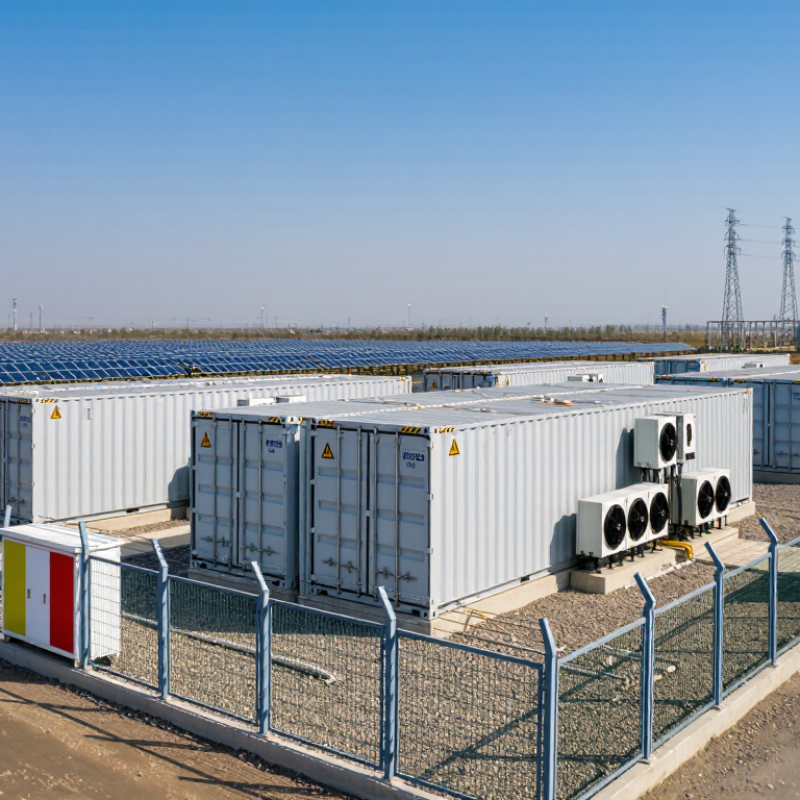
A containerized energy storage system places batteries and supporting equipment inside a reinforced shipping-style enclosure. The container commonly houses battery racks, a battery management system, power conversion equipment, cooling units, sensors, and fire protection. This arrangement supports faster installation than building separate equipment rooms. It also creates a controlled environment for temperature, humidity, and access.
During charging, the power conversion system changes incoming alternating current into direct current. Battery cells then store energy through controlled electrochemical reactions. During discharge, the converter reverses this process and supplies usable electricity to a facility or grid. The energy management system coordinates charging schedules, power output, reserve capacity, and protective limits.
A small sensor failure can still affect system availability. That detail deserves attention.
Common configurations include lithium-based battery containers, long-duration flow battery systems, and hybrid units combining different storage technologies. Selection depends on discharge duration, site temperature, fire separation, cycling frequency, and maintenance access. Engineers should verify cell spacing, ventilation paths, emergency shutdown points, and cable ratings before commissioning.
A container may look compact, but heat can build quickly inside a crowded rack. Field testing should confirm alarm signals, isolation devices, cooling response, and safe shutdown behavior under realistic loads.
Main Battery Chemistries Used in Containerized Energy Storage Systems
Lithium iron phosphate, or LFP, is widely selected for containerized energy storage systems. Its stable crystal structure supports strong thermal safety and long cycle life. A 40-foot container may hold battery racks, cooling equipment, fire detection, and control units. LFP usually offers lower energy density than nickel-rich lithium chemistries. However, many stationary projects value predictable operation over compactness. Field experience shows that heat, charging speed, and installation quality still affect service life.
Nickel manganese cobalt, known as NMC, stores more energy in less space. This can benefit sites with limited land or demanding power schedules. Its higher energy density requires careful thermal monitoring and robust protection systems. Cell aging may accelerate under high temperatures or frequent deep cycling. The chemistry looks efficient on paper. Real operating data matters more. Project engineers should examine usable capacity, not only the advertised nameplate figure.
Sodium-ion batteries are gaining attention for stationary applications. They can reduce dependence on certain critical minerals and may perform reliably in colder conditions. Their energy density remains lower than many lithium-ion options, so containers may require more space. Lead-acid systems remain practical for limited backup duties, but their shorter cycle life can increase replacement work. Flow batteries use liquid electrolytes and may suit long-duration storage, although pumps and larger footprints add complexity. No chemistry wins every site. A careful assessment should include temperature, fire protection, maintenance access, degradation, and local safety requirements.
| Battery Chemistry | Typical Cell Nominal Voltage | Typical Gravimetric Energy Density | Typical Cycle-Life Range | Thermal Runaway Risk | Key Advantages | Main Limitations | Common Containerized ESS Applications |
|---|---|---|---|---|---|---|---|
| Lithium Iron Phosphate (LFP) | Approximately 3.2 V | Approximately 90–160 Wh/kg | Approximately 3,000–8,000 cycles | Lower than most nickel-rich lithium-ion chemistries, but not zero | Good thermal stability, long service life, strong power capability, and widely available materials | Lower energy density than nickel-rich lithium-ion cells; performance can decline in cold conditions | Grid-scale storage, renewable-energy integration, peak shaving, frequency regulation, and microgrids |
| Nickel Manganese Cobalt Oxide (NMC) | Approximately 3.6–3.7 V | Approximately 150–250 Wh/kg | Approximately 1,500–4,000 cycles | Higher than LFP and requires robust thermal and electrical protection | High energy density, compact footprint, and good balance between power and energy performance | Higher thermal-management requirements, greater sensitivity to abuse, and reliance on nickel and cobalt supply chains | Space-constrained installations, high-energy applications, backup power, and fast-response systems |
| Nickel Cobalt Aluminum Oxide (NCA) | Approximately 3.6–3.7 V | Approximately 180–270 Wh/kg | Approximately 1,000–3,000 cycles | Higher than LFP; careful monitoring and cooling are essential | Very high energy density and strong power performance | More demanding safety controls, higher material cost exposure, and generally less preferred for long-duration stationary storage | High-power backup, mobile or space-limited systems, and applications where enclosure size is critical |
| Lithium Titanate (LTO) | Approximately 2.3–2.4 V | Approximately 50–90 Wh/kg | Approximately 10,000–30,000 cycles | Very low relative to many conventional lithium-ion chemistries | Extremely long cycle life, very fast charging, high power capability, and good low-temperature performance | Low energy density and higher cost per stored kilowatt-hour | High-cycle-frequency services, rapid charging, power quality, transit-related storage, and harsh-climate applications |
| Vanadium Redox Flow Battery (VRFB) | Not applicable; electrochemical cell voltage is typically about 1.26 V at open circuit | Approximately 10–35 Wh/kg for the complete system | Typically 10,000–20,000 cycles, with low capacity fade when properly operated | Very low; the electrolyte is aqueous and generally nonflammable | Independent power and energy scaling, deep-discharge capability, long duration, and low fire-propagation risk | Low energy density, pumps and auxiliary systems are required, and higher initial footprint and cost may apply | Long-duration renewable storage, daily energy shifting, microgrids, and utility-scale applications |
| Sodium-Ion | Approximately 2.8–3.3 V, depending on the cell design | Approximately 90–160 Wh/kg | Approximately 2,000–5,000 cycles, depending on materials and operating conditions | Generally lower than nickel-rich lithium-ion chemistries; system-level protection remains necessary | Uses abundant sodium resources, can offer good low-temperature performance, and avoids lithium in the active ion | Lower energy density than many lithium-ion cells and a less mature supply chain and deployment base | Stationary storage, low-temperature environments, renewable integration, and cost-sensitive installations |
| Lead-Carbon | Approximately 2.0 V | Approximately 30–50 Wh/kg | Approximately 1,000–3,000 cycles, depending on depth of discharge and temperature | Low direct thermal-runaway risk compared with lithium-ion, but ventilation and hydrogen management may be required | Established recycling infrastructure, relatively low upfront cost, and improved partial-state-of-charge performance compared with conventional lead-acid | Heavy, bulky, lower usable energy density, and shorter life than many modern lithium-ion systems | Backup power, telecom infrastructure, off-grid systems, and cost-sensitive stationary storage |
Note: Figures are indicative industry ranges rather than guaranteed product specifications. Actual performance varies with cell design, depth of discharge, charge and discharge rate, ambient temperature, thermal management, and system operating strategy.
Containerized energy storage systems in 2026 are becoming more specialized.
Lithium iron phosphate systems remain a leading choice for daily cycling and grid support. They offer stable thermal performance, practical energy density, and predictable maintenance needs. A typical 20-foot container may include battery racks, cooling equipment, fire detection, and power conversion units. Safety comes first.
Sodium-ion systems are gaining attention where cost, cold-weather operation, and material availability matter. Their energy density is lower, but some projects can accept larger footprints. Flow battery containers suit longer-duration applications, especially when discharge periods extend beyond four hours. Their liquid electrolyte supports deep cycling with limited capacity loss. Not every site fits.
Hybrid systems combine different storage technologies or pair batteries with renewable generation controls. They can respond quickly while preserving energy for longer events. During commissioning, engineers should verify ventilation, emergency shutdowns, cable routing, and remote monitoring under realistic loads.
Weather affects performance more than many early plans suggest. Dust does too.
In coastal areas, corrosion protection deserves closer review. I have seen layouts look efficient on paper but become difficult to service after installation.
Clearance, drainage, and technician access should be measured before delivery, not corrected afterward.
Regulatory approval, fire separation, and end-of-life planning also influence the best containerized system type.
A containerized energy storage unit is more than batteries inside a steel box. Its architecture determines safety, service life, and usable capacity. A typical system combines battery racks, a battery management system, power conversion equipment, an energy management system, HVAC, fire detection, and protection devices. Busbars, disconnects, sensors, and auxiliary power complete the electrical path. Small omissions can create large maintenance problems.
The configuration should match the application. AC-coupled systems suit existing solar plants and simplify independent battery deployment. DC-coupled systems can reduce conversion steps and capture more solar energy, but controls become more demanding. Air cooling may lower initial cost, while liquid cooling usually offers better temperature uniformity in high-power designs. The IEA reported nearly 42 GW of global battery storage additions in 2023, almost triple the previous year. In the United States, the Energy Storage Association and Wood Mackenzie recorded about 8.7 GW and 25.6 GWh of new storage in 2023. These figures show strong demand, not automatic project success. A 20-foot container is not a complete design.
Tips: Check rack spacing, ventilation paths, cable bending limits, and emergency access before ordering equipment. Confirm round-trip efficiency at the intended temperature, not only at laboratory conditions. Leave inspection space. It is often ignored. Also review degradation assumptions against local cycling patterns. A neat datasheet can still hide weak thermal planning.
Selecting a containerized energy storage system starts with the application, not the container size. A two-hour system may suit peak shaving at a factory with predictable afternoon demand. A four-hour system can better support solar shifting after sunset. Start with the load. Review hourly demand, outage history, local temperature, and available grid capacity. These details prevent expensive oversizing. In practice, incomplete load data often produces a technically sound but poorly matched design.
For emergency backup, prioritize response time, black-start capability, fire protection, and maintenance access. A hospital may need rapid transfer and strict redundancy. A remote microgrid may value fuel reduction, islanded operation, and simple controls. Industrial sites with fluctuating loads should examine power rating separately from energy capacity. The largest battery is not always the safest choice. Thermal management also deserves close attention in hot, dusty, or coastal environments.
During evaluation, compare usable energy, round-trip efficiency, degradation assumptions, warranty conditions, and monitoring functions. Ask how the system performs at partial load, not only in laboratory conditions. Confirm clearance for service teams and emergency responders. Cybersecurity and communication compatibility should be tested before commissioning. I would also request independent test records and realistic performance data. One limitation remains: future electricity prices and operating patterns can change, making a perfect forecast impossible. A flexible control strategy may therefore matter more than a marginal efficiency gain.
I&M Industrials Inc.
10 Akron Drive
Greenville SC 29605
Phone: 864-277-2450
GSA Number – GS07F0379Y