1-800-868-2450
My Account | Cart | Checkout
A CCS Busbar is more than a strip of conductive metal. In a battery pack, the cell contacting system can combine busbars, voltage-sensing connections, insulation, and supporting components. Its design affects electrical performance, assembly consistency, and the space available around battery cells. Small details matter: joint geometry, material thickness, insulation placement, and the route of sensing wires.
China’s manufacturing base includes suppliers with different strengths, from precision stamping and copper or aluminum processing to assembly and customized battery components. This guide to the Top 10 CCS Busbar Manufacturers in China 2026 offers a starting point for comparing them. It considers product focus, engineering support, production capabilities, quality management, and available company information. These factors can help buyers form better questions, but they cannot replace a factory audit or sample evaluation.
No list is perfect. Supplier capabilities, product ranges, and certifications can change, and public information may not show how a company performs on a specific project. Readers should confirm materials, tolerances, testing procedures, traceability, and production capacity directly with each manufacturer. Ask for drawings and sample parts. Then compare them against your pack requirements. The best fit is not always the largest supplier; it is the one that can consistently meet the application’s technical needs and communicate clearly when a design needs adjustment.
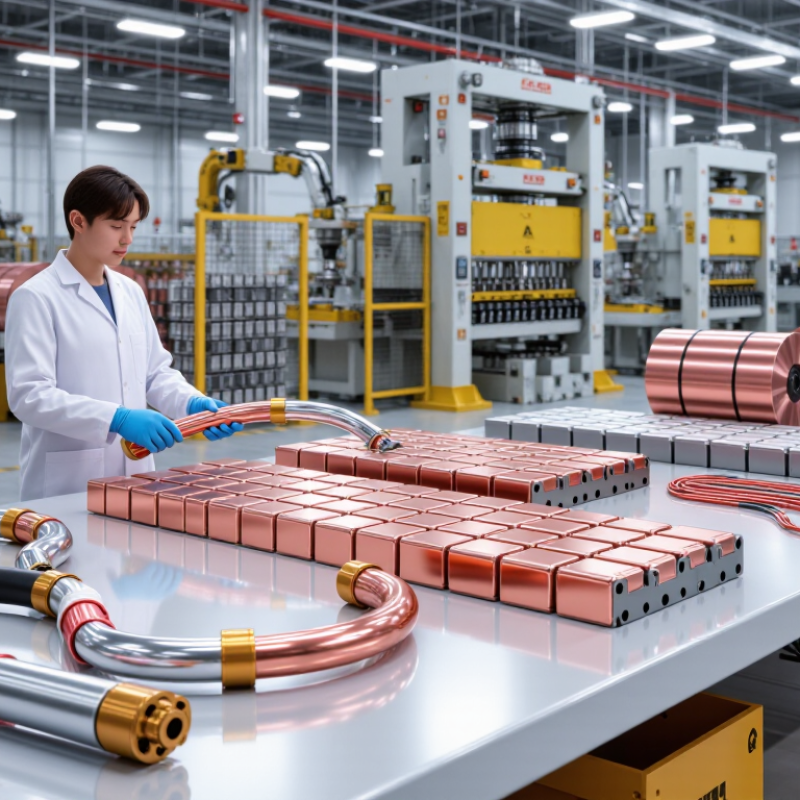
A CCS busbar, or cell connection system, links battery cells electrically while helping organize sensing connections. It typically combines conductive metal with an insulating carrier, and may include circuits for cell-voltage or temperature monitoring. In a battery module, the busbar routes current between cell terminals and onward to the power system.
Small part. Big consequences.
The design affects resistance, heat, insulation, and assembly space. Engineers therefore check conductor dimensions, joint quality, insulation clearances, and sensor placement against the pack’s current and thermal requirements. During operation, sensing circuits can report cell conditions to the battery management system, which uses that information to monitor performance. The exact arrangement varies by pack design.
One caveat: “CCS” is not used identically by every supplier, so technical drawings and test specifications matter more than the label.
Demand makes these details increasingly relevant. The International Energy Agency’s Global EV Outlook 2024 reports that electric-car battery demand reached about 750 GWh in 2023, roughly 40% higher than in 2022. That figure reflects a fast-growing market, not a guarantee of uniform product quality.
Buyers should request evidence for current capacity, temperature rise, insulation performance, and vibration durability. A neat-looking assembly is not enough.
Even minor contact resistance can create localized heating under sustained load.
When evaluating CCS busbar manufacturers in China, look beyond a polished catalog. Ask how the supplier turns your cell layout, current targets, and thermal limits into a production drawing. A capable engineering team should explain conductor material, thickness, joining method, insulation, and tolerance choices in plain terms. Request a sample built to your actual geometry, not merely a similar part. Small mismatches matter. Details matter.
Inspect samples at practical points: weld appearance, burrs, insulation coverage around bends, and alignment with cell terminals. Ask for dimensional inspection records and electrical or thermal test data tied to the same design revision. Confirm how revisions are controlled, how raw materials are traced, and what happens when results fall outside limits. A certificate alone cannot show process consistency.
Production readiness deserves equal attention. Discuss capacity, tooling ownership, lead times, and how the factory handles design changes. If possible, review the production area or arrange an independent audit; compare stated controls with actual records. Clear answers are useful, but hesitation is not always a warning sign. Some details need engineering review. Still, vague replies about tolerances or traceability should prompt follow-up. No supplier is perfect, and buyer requirements can also be incomplete. Record open questions before making a decision.
Supplier-neutral evaluation framework for comparing manufacturers of cell connection systems (CCS) and battery busbar assemblies. The suggested weightings are a buyer’s scoring model, not a published industry ranking.
| No. | Evaluation Dimension | Suggested Weight | What to Verify | Useful Evidence or Measurement |
|---|---|---|---|---|
| 1 | Electrical design and current-carrying performance | 15% | Confirm that conductor material, cross-section, joint design, and connection layout meet the battery system’s specified current and voltage requirements. | Approved drawings; resistance measurements using a documented method; current and temperature-rise test results under stated operating conditions. Do not compare temperature-rise figures without matching test conditions. |
| 2 | Thermal performance | 12% | Check temperature distribution at busbars, welds, terminals, and other electrical interfaces during representative operation. | Test report specifying current, ambient temperature, test duration, sensor locations, and acceptance limits; thermal imaging may support, but does not replace, defined measurements. |
| 3 | Mechanical and connection reliability | 10% | Assess resistance to vibration, shock, deformation, and connection loosening according to the battery application and customer requirements. | Application-specific vibration or mechanical test reports; weld or joint inspection records; dimensional inspection against controlled drawings. |
| 4 | Material selection and compliance | 10% | Verify conductor, insulation, carrier, and adhesive specifications, as applicable. Confirm that declarations match the exact materials and product configuration supplied. | Material certificates and traceable declarations for applicable requirements, such as RoHS Directive 2011/65/EU (as amended) and relevant REACH obligations. Compliance depends on the product and destination market. |
| 5 | Manufacturing process control | 10% | Review controls for cutting, forming, insulation application, welding or joining, assembly, and final inspection, as relevant to the design. | Process flow, control plan, inspection records, equipment-maintenance records, and documented procedures for handling nonconforming product. |
| 6 | Quality management system | 8% | Check whether the supplier’s quality system is appropriate to the intended market and is certified by an accredited certification body where certification is required. | Valid certificate scope and expiry date. ISO 9001 is a general quality-management standard; IATF 16949 is an automotive quality-management standard and is not a substitute for product-specific qualification. |
| 7 | Engineering and customization capability | 8% | Evaluate design-for-manufacturing support, tolerance review, material selection, and ability to work from customer drawings and interface requirements. | Design review records, revision-controlled drawings, tolerance analysis, sample evaluation plan, and documented change-control process. |
| 8 | Prototype and production readiness | 7% | Confirm that prototype approvals, production validation, capacity planning, and ramp-up controls align with the buyer’s launch schedule and demand forecast. | Sample and pilot-build records; stated capacity assumptions; production-readiness checklist; delivery performance measured over an agreed period. |
| 9 | Traceability and corrective action | 7% | Determine whether supplied parts can be linked to relevant material batches, production records, inspection results, and engineering revisions. | Example lot-traceability record; retention policy; documented complaint and corrective-action process, including root-cause analysis and effectiveness checks. |
| 10 | Commercial terms and customer support | 13% | Compare total landed cost, lead-time commitments, minimum order quantities, warranty terms, communication, and support for technical issues. | Comparable quotations based on the same specification and Incoterms; written lead-time and warranty terms; named escalation process and after-sales response commitments. |
Scoring note: Apply the suggested weights to a consistent 1–5 rating scale, using the same drawings, test conditions, compliance requirements, and commercial assumptions for every supplier. A score is a screening aid, not proof of product qualification; confirm critical requirements through audits, samples, and application-specific testing.
The ten profiles examine Chinese CCS busbar manufacturers through production capability, engineering support, and quality control—not marketing claims alone. The International Energy Agency’s Global EV Outlook 2024 reports nearly 14 million electric cars sold worldwide in 2023, around 18% of all car sales. That growth raises demand for battery components, including cell-connecting systems. Still, market growth does not prove that every supplier can meet demanding specifications.
For each manufacturer, buyers should check conductor materials, insulation consistency, weld quality, and dimensional tolerances. A useful factory assessment follows a part from incoming copper or aluminum sheet to finished assembly. Ask for process-control records, sample inspection results, and evidence of traceability. Look closely at edge finishing and insulation around contact points. Small defects matter. Public information is often incomplete, so these profiles distinguish verified capabilities from details that require direct confirmation. That limitation deserves attention.
Tips: Request a sample and its inspection report. Compare stated tolerances with your drawing, then confirm testing conditions and production capacity before shortlisting suppliers.
Electrical conductivity is shown as a percentage of the International Annealed Copper Standard (IACS): annealed copper is the 100% reference, while pure aluminum is approximately 61%. These are material benchmarks, not specifications for any manufacturer’s CCS busbar product.
A useful 2026 comparison of China’s CCS busbar manufacturers should look beyond catalogue size. Product ranges may include copper or copper-clad steel bars, flexible links, insulated assemblies, and custom terminals. Check conductor dimensions, plating options, bend radius, joint design, and documented resistance testing. Small differences matter: a poorly controlled interface can create a hot spot inside a battery enclosure. Details are not always easy to compare.
Demand is expanding with vehicle electrification. The International Energy Agency’s Global EV Outlook 2024 reported nearly 14 million electric-car sales worldwide in 2023, about 18% of total car sales. China’s 2024 figures from the China Association of Automobile Manufacturers recorded 12.866 million new-energy vehicle sales. These trends make application fit important: busbars for battery packs face different space, vibration, and thermal demands than those used in charging equipment or industrial power distribution.
Compare manufacturing capability through material traceability, stamping or machining precision, insulation consistency, and repeatable joining processes. Ask for sample inspection records and temperature-rise results under stated current and ambient conditions. A supplier with broad capacity may suit high-volume programs; a specialist may handle unusual geometries more carefully. Neither claim proves performance by itself. Test assemblies under realistic loads, and treat unverified cycle-life promises cautiously.
China’s CCS busbar industry is being shaped by faster electrification, tighter packaging, and demand for dependable thermal performance. The International Energy Agency’s Global EV Outlook 2024 reports that China sold about 8.1 million electric cars in 2023, a 35% annual increase. It also estimates global EV battery demand reached roughly 750 GWh that year. These figures do not measure CCS busbar demand directly, but they show the scale of the systems busbars must serve.
Designers are pursuing lighter conductors and compact layouts without sacrificing current capacity or connection reliability. In practical terms, that means closer attention to copper-aluminum bonding, joint resistance, insulation, and heat dissipation under repeated load. More battery-pack integration also pushes suppliers toward customized shapes, precise forming, and consistent inspection. Small defects matter. A poorly bonded interface can become a hot spot inside a tightly packed module. Yet lightweighting is not an automatic win: material savings must be weighed against conductivity, durability, and production consistency. That trade-off remains easy to underestimate. The IEA’s data describes market growth, not a guaranteed shift to any one busbar material, so buyers still need application-specific testing.
I&M Industrials Inc.
10 Akron Drive
Greenville SC 29605
Phone: 864-277-2450
GSA Number – GS07F0379Y