1-800-868-2450
My Account | Cart | Checkout
Choosing among the top Aluminum Profiles manufacturers is not just a price comparison. Buyers need to check alloy consistency, dimensional tolerances, surface finish, production capacity, and delivery reliability. A polished sample matters. So does the batch behind it.
The International Aluminium Institute and CRU projected that global aluminium demand could rise by nearly 40% from 2020 levels, reaching 119 million tonnes by 2030. That forecast covers aluminium broadly, not profiles alone, but it signals growing pressure on suppliers. For buyers, supplier evaluation should therefore look beyond catalogue claims. Ask how manufacturers control extrusion temperatures, inspect die wear, and document each production run. These details can affect whether a long frame arrives straight, anodizes evenly, and fits the assembly line.
Miles Prosser, Secretary General of the International Aluminium Institute, has emphasized aluminium’s importance to the energy transition. That perspective is useful, but it is not a substitute for factory evidence. Request test records, material specifications, and clear answers about recycled content and sourcing. Compare lead times against actual capacity, not optimistic promises. One uncomfortable point: even a well-known manufacturer may not be the right fit for every order. This guide examines leading suppliers through practical criteria, helping global buyers weigh quality, customization, communication, and total landed cost before choosing a partner.
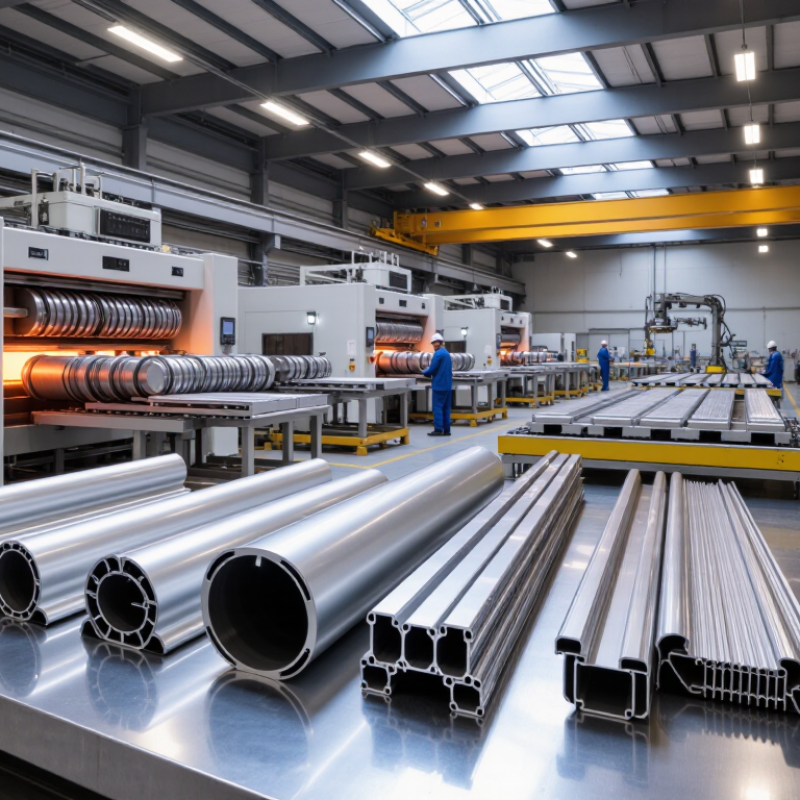
An aluminum profile is a component with a consistent cross-section, such as a window frame, rail, or heat sink. Many are made by extrusion. A heated aluminum billet is pressed through a shaped steel die, producing a continuous length with the die’s cross-section. The profile is then cooled, stretched to correct distortion, cut, and often heat-treated to reach its required temper. Simple in outline. Not always simple to specify.
Alloy, wall thickness, die design, and cooling conditions affect strength, straightness, and dimensional accuracy. A thin-walled channel may save material, but it can also warp more easily during production. Buyers should check tolerances and temper requirements, not just the outer dimensions. Surface finishing, such as anodizing or powder coating, may follow fabrication. The International Aluminium Institute’s report Aluminium: The Element of Sustainability states that about 75% of all aluminum ever produced remains in use. That figure reflects aluminum’s long service life and recyclability; it does not guarantee that any particular profile will be recovered. A practical question remains: can the chosen design be manufactured consistently at the required volume?
Aluminum profiles are made by heating an aluminum billet and forcing it through a shaped die. The extruded profile is then cooled and may be artificially aged to achieve the required properties. Temperatures vary by alloy, profile, and production method; the ranges shown are indicative.
Top Aluminum Profile Manufacturers for Global Buyers?
How to Evaluate Aluminum Profile Manufacturers
A reliable evaluation starts with the profile itself, not a polished catalog. Share a drawing with dimensions, alloy, temper, and intended use, then ask how the supplier controls each requirement. Request sample pieces and measure wall thickness, straightness, and critical dimensions with suitable tools. Ask for inspection records tied to the production batch. Ask for evidence.
Surface finish needs equally careful review. Compare samples under consistent lighting, and check for scratches, color variation, dents, or uneven coating around corners. A sample can look excellent while a long production run varies. Details matter. Ask how defects are recorded and what happens when a batch falls outside the agreed specification.
Production capability should match your order, including tooling, machining, finishing, and packaging. Confirm who performs each step and whether inspection covers finished profiles, not just raw extrusions. Clear answers about lead times, minimum quantities, and packing methods help prevent surprises; wooden supports or separators can reduce rubbing during transit. Communication is part of quality, too. A thoughtful supplier will clarify unclear drawings rather than guess, though even a thorough review cannot remove every risk. Check references where practical, and keep approved samples and specifications for comparison during repeat orders.
Notable aluminum profile manufacturers are found across Asia, Europe, and North America, where strong extrusion capacity supports construction, transport, and industrial demand. China and India serve large-volume markets, while Germany, Italy, Turkey, and the United States offer established manufacturing bases and specialized processing. These are regional patterns, not a ranking. A buyer still needs to check each supplier’s alloy range, press capacity, tooling control, and finishing options.
The market is expanding, but the figures need careful reading. Grand View Research estimated the global aluminum extrusion market at about US$87.3 billion in 2023 and projected 7.3% annual growth from 2024 to 2030. The estimate covers more than architectural profiles, so it cannot show which supplier is best. Ask for recent inspection records, dimensional tolerances, and sample profiles; a clean showroom tells little about a production run.
Sustainability is another practical comparison point. The International Aluminium Institute reports that roughly 75% of all aluminum ever produced remains in use, reflecting the metal’s recyclability and long service life. Still, recycled content varies by alloy and application. That detail matters. Request a documented recycled-content figure and clarify whether it applies to the billet, the finished profile, or both. A small ambiguity can complicate a project later.
Aluminum profile manufacturers differ well beyond catalogue size. The International Aluminium Institute reported 70.6 million tonnes of global primary aluminum production in 2023, reflecting a large, complex supply chain. Buyers should compare alloy and temper options, extrusion tolerances, and finishing controls—not just price per kilogram. Ask for sample inspection records, dimensional reports, and clear descriptions of anodizing or powder-coating processes. A profile may look flawless under showroom lights, yet reveal uneven coating or dimensional drift after installation. That matters.
Quality systems are more useful when backed by traceable checks. Request mill certificates, batch identification, and documented testing for coating thickness and mechanical properties. Export services also separate capable suppliers: reliable firms confirm packaging dimensions, moisture protection, labeling, and shipping documents before production ends. The Aluminum Association notes that recycled aluminum production uses about 95% less energy than primary production. That figure makes recycled content worth discussing, but buyers should still verify the declared share and its effect on alloy performance. A certificate alone is not proof of consistent quality. I would also ask how the manufacturer handles rejected parts; this detail is easy to overlook, and it can reveal whether corrective action is routine or merely promised.
Global buyers should define the application before comparing aluminum profile manufacturers. Specify alloy, temper, dimensions, tolerance, finish, annual volume, and delivery destination. A window frame and a heat-sink profile need different performance checks. Small omissions matter. A missing temper designation can change machining behavior or strength.
The International Aluminium Institute’s Aluminium Recycling report states that recycled aluminum uses about 5% of the energy required for primary production. If low-impact material matters, request documented recycled-content figures and traceability records, not a broad sustainability claim. Verify each supplier’s mill certificates against the ordered alloy and temper. Ask for recent dimensional inspection results, coating-thickness readings, and test samples from the same production route. For critical projects, use an independent laboratory to confirm mechanical properties and surface treatment. Check whether the supplier can explain its measurement method, calibration schedule, and corrective-action process. A tidy certificate is not proof by itself. Factory audits can reveal whether extrusion presses, dies, and inspection equipment match the promised capacity. Review lead times using actual shipment records where possible; capacity statements are often optimistic. I would still keep one uncertainty visible: a successful sample does not guarantee every production batch will match. Request batch-level records and agree on acceptance criteria before placing a large order.
| Evaluation Dimension | What to Look For | How to Verify | Buyer’s Practical Check |
|---|---|---|---|
| Extrusion capability | Press capacity, available billet sizes, and ability to produce the required profile geometry. | Request an equipment list, capability limits, and examples of comparable profile sections. | Confirm that the supplier can make the largest circumscribing circle and wall sections required by the drawing. |
| Alloy and temper control | Clear specification of alloy, temper, and applicable material standard for each order. | Review material test certificates and match the reported chemistry and mechanical properties to the purchase specification. | Specify the required alloy and temper in the drawing or purchase order; do not rely on a generic “aluminum profile” description. |
| Dimensional quality | A documented inspection plan for critical dimensions, straightness, twist, and cut length. | Ask for a sample inspection report and verify measurement methods and instruments for key features. | Identify critical-to-function dimensions and agree on tolerances before tooling or production begins. |
| Surface finishing | Relevant finishing options, such as anodizing, powder coating, or mill finish, with defined appearance and performance requirements. | Request finish specifications, sample panels, inspection criteria, and test records applicable to the order. | Approve a representative sample and define color, gloss, coating thickness, and acceptable surface defects where relevant. |
| Quality management | Documented procedures for incoming materials, production inspection, nonconformities, and corrective action. | Check the scope and validity of any claimed quality-management certification with the issuing certification body. | Ask how complaints are recorded, investigated, and resolved, and request an example of a corrective-action process. |
| Tooling and sampling | Defined die ownership, tooling charges, sample approval steps, and procedures for tool maintenance or replacement. | Review the tooling agreement and inspect first-article samples against the approved drawing. | Confirm who owns the die, where it is stored, and whether it can be transferred if the commercial relationship ends. |
| Production and delivery planning | A realistic production schedule that accounts for sampling, finishing, inspection, packing, and shipping. | Request a written schedule and clarify what events trigger the lead-time calculation. | Treat quoted lead times as order-specific; confirm capacity and shipment dates before placing repeat orders. |
| Export documentation | Ability to prepare the commercial invoice, packing list, transport documents, and certificates required for the destination and contract. | Check a redacted sample document set and confirm document responsibilities in the quotation or contract. | Verify destination-specific import requirements with your customs broker; requirements vary by country and shipment. |
| Commercial transparency | Itemized pricing for profiles, tooling, finishing, packaging, freight, and applicable surcharges. | Compare written quotations using the same alloy, temper, finish, tolerances, order quantity, and delivery terms. | Clarify payment milestones, quotation validity, minimum order quantity, and the process for price changes. |
| Supplier verification | A traceable legal entity, consistent business details, and verifiable manufacturing or quality information. | Check business registration through relevant official sources and arrange a live video or third-party factory audit where appropriate. | Match the contracting entity, invoice details, payment beneficiary, and shipping documents before transferring funds. |
Note: Requirements and capabilities vary by supplier, product, and destination. Confirm all specifications and verification evidence for the specific order.
I&M Industrials Inc.
10 Akron Drive
Greenville SC 29605
Phone: 864-277-2450
GSA Number – GS07F0379Y