1-800-868-2450
My Account | Cart | Checkout
Sourcing bird stained glass suncatchers in 2026 requires more than finding attractive product photos. Buyers must examine craftsmanship, supplier reliability, material details, and changing customer preferences. A colorful bird may look beautiful online, yet its solder lines can appear uneven in daylight. Small flaws matter when customers expect handmade quality.
This guide explores practical sourcing methods based on supplier evaluation, sample testing, and clear production communication. Look for studios that explain their glass type, copper foil or lead-free solder options, hanging hardware, and finishing process. Request close-up photographs before ordering. Better still, inspect a physical sample. Check whether the beak, wings, and tail remain visually balanced when sunlight passes through the glass. Confirm dimensions, weight, packaging layers, minimum order quantities, and replacement policies. Those details protect both your budget and your reputation.
Reliable sourcing also involves asking uncomfortable questions. Can the supplier maintain color consistency across batches? Are product descriptions accurate? How are fragile pieces protected during international delivery? Documentation may be incomplete, especially with small artisan workshops. That does not automatically mean poor quality, but it requires careful follow-up. No supplier is perfect. I have learned that a beautiful sample can hide inconsistent packaging or delayed communication. Treat each order as a test, not a promise. With patient verification and honest comparisons, retailers can build a dependable collection of bird stained glass suncatchers that feels handcrafted, giftable, and commercially practical.
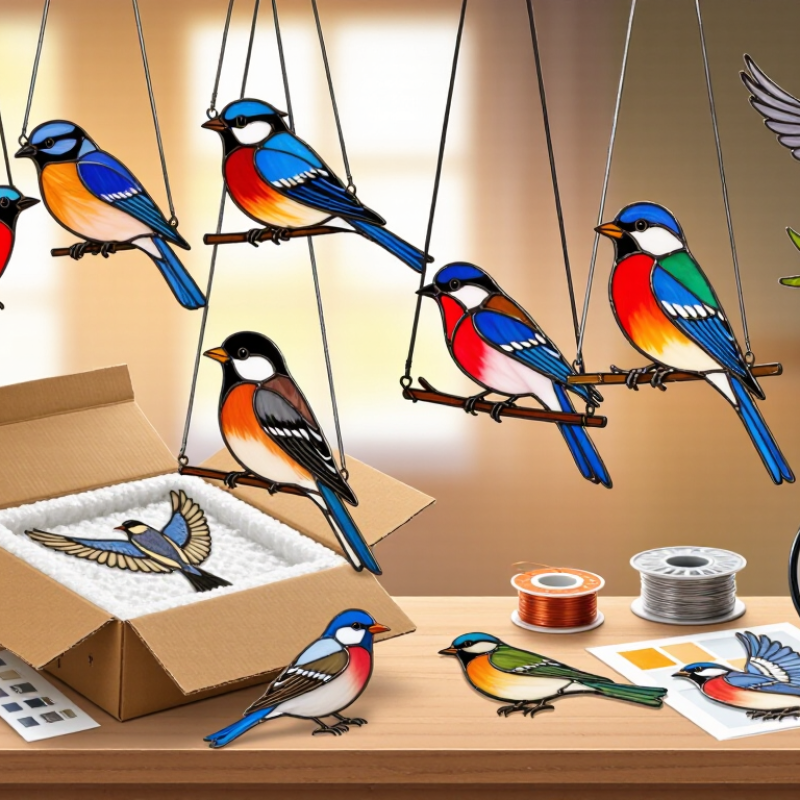
Before sourcing a bird stained glass suncatcher in 2026, define its visual style. Decide whether the bird should look realistic, geometric, vintage, or softly whimsical. A realistic heron may suit a quiet study, while a bright songbird can energize a kitchen window. Examine the glass texture, lead lines, solder finish, and color balance. Too many intense colors can make sunlight feel harsh.
Size must match the window and viewing distance. Measure the glass area, then leave clear space around the piece. A small 6-inch bird works well in a narrow bathroom window. Larger designs, around 10 to 16 inches, need stronger hanging hardware and a wider visual field. Check the listed weight, hanging loop, and chain quality. I have seen attractive pieces arrive with weak loops, so this detail deserves more attention than expected.
Purpose changes the sourcing decision. A decorative suncatcher may prioritize color, while a memorial bird may require specific species, posture, or symbolic tones. For children’s rooms, avoid sharp exposed edges and choose secure placement away from reachable areas. Ask the maker about handmade variations, cleaning instructions, and indoor use. Handmade glass is rarely perfect. A slightly uneven feather line can add character, but it should not hide poor construction. Photograph the intended window before ordering, and compare the design against morning and afternoon light.
Reliable sourcing begins with the seller’s identity, not the product photograph. Check a complete business name, physical contact details, return terms, and secure payment options. Ask how each bird suncatcher is made. Skilled sellers can explain glass cutting, copper foil or lead came, soldering, and hanging hardware clearly. Vague answers deserve caution.
Review recent customer feedback across independent platforms. Look for comments about color accuracy, sharp edges, packaging, and delivery damage. Request photos of the actual piece near a window, not only polished studio images. A clear invoice and written care instructions also suggest professional practice. I once trusted a beautiful profile with many followers, but the seller could not provide a current workshop photo. That mistake changed my checking process.
Tips: Compare three sellers before ordering. Use reverse image search to detect copied listings. Ask whether the bird design is handmade, assembled, or printed. Confirm the glass dimensions, weight, hanging length, and protective packaging. Examine close-up images for uneven solder lines, loose wire, or exposed edges. A small flaw may be charming, but a safety issue is different. Save messages, payment records, and promised specifications. Seller history matters more than a dramatic discount. Also, do not treat every review as proof; some may be old, vague, or difficult to verify.
When sourcing bird stained glass suncatchers in 2026, inspect glass quality before comparing prices. Request close-up photos under natural light, not heavily edited images. Look for even color, clean edges, and bubbles that suit the design. Small handmade variations can add charm. Large cracks cannot.
Craftsmanship shows in the copper foil or lead lines, solder joints, and hanging hardware. The bird should feel balanced when suspended near a window. Check whether the solder is smooth and securely finished. Ask for production samples and packaging tests. That matters.
A low quote means little if wings arrive bent or glass pieces rub together. I have found that clear specifications prevent costly misunderstandings, though even careful sourcing cannot remove every production mistake.
Compare prices by listing every cost: sample fees, custom artwork, mold or setup charges, packing, shipping, and replacement terms. Customization may include bird species, wing shape, glass texture, color combinations, size, and hanging length. Request a digital proof with exact measurements before production. Confirm minimum order quantities and delivery timing in writing. A cheaper option may use thinner glass or simpler finishing. However, higher pricing does not automatically prove better workmanship. Ask practical questions, keep inspection records, and leave room for revision when the first sample feels attractive but not quite right.
How to Source Bird Stained Glass Suncatchers in 2026?
A sample order should come before any large purchase. Hold the suncatcher near a window and inspect every edge, joint, and hanging loop. Smooth solder lines matter. Sharp glass corners do not. Ask the supplier for material disclosures and safety test records, especially for pigments, coatings, and metal components. Confirm whether the product is designed for indoor use only. A sunny window can heat some finishes faster than expected.
Packaging deserves practical testing. The piece should sit inside a protective sleeve, surrounded by fitted foam or molded pulp. Loose paper is rarely enough. Request photos of the packed carton, not only the finished product. A double-wall box, corner protection, and clear fragile labeling can reduce breakage. For repeated orders, request a drop-test report or conduct a small trial shipment. My first packaging review would probably miss moisture protection, so I now check whether inner wrapping remains dry after delivery.
Shipping terms must state processing time, tracking, insurance, and damage responsibility. Confirm who handles customs documentation and unexpected carrier fees. Keep delivery photos and open the carton carefully. Return policies should specify the claim period, acceptable evidence, refund timing, and replacement process. A fair policy covers concealed damage, not just visibly crushed boxes. Read the exclusions closely. “Final sale” language can create avoidable risk, particularly when colors or dimensions differ from the listing. Ask for a written answer before payment, and save every specification.
Before placing an order, confirm the bird suncatcher’s exact dimensions, glass type, hanging method, and color arrangement. Ask for recent photographs, not only styled product images. Check whether the piece uses lead-free solder, secure hanging hardware, and protective corner packaging. Request a written invoice with quantity, unit price, shipping terms, and expected dispatch date. Small details prevent expensive misunderstandings.
Do not rush. I once ordered a suncatcher after checking its design but missed the stated size. It arrived beautifully made, yet too small for the intended window. That mistake still influences my inspection routine. Photograph the unopened parcel from every side. Record crushed corners, moisture, or loose tape before opening it. Use clean gloves if the surface feels sharp.
Inspect each glass section under natural light. Look for cracks, chips, cloudy areas, weak solder joints, and bent hanging loops. Compare the actual colors and measurements with the approved order details. Gently test the hanger, but never force it. Keep all packaging until the condition is confirmed. If damage appears, photograph it beside the shipping label and contact the seller promptly. Avoid washing the piece immediately, because moisture can hide fine fractures and complicate a fair assessment. My process is careful, but not perfect; lighting can change how red and amber glass appear, so I now check both daylight and indoor light.
| Inspection Stage | Item to Check | Recommended Requirement | Verification Method | Acceptable Result | Action if Nonconforming |
|---|---|---|---|---|---|
| Before Ordering | Bird design and color layout | Confirm bird species, glass colors, hanging orientation, and any customized pattern in the approved artwork. | Compare the order sheet with the final drawing or approved digital proof. | All visible design elements match the approved proof. | Request a corrected proof before production or payment of the remaining balance. |
| Before Ordering | Overall dimensions | Record width, height, and approximate thickness; a common decorative size is 15–30 cm wide and 15–35 cm high. | Confirm the dimensional specification in writing and measure the sample if available. | Finished dimensions remain within the agreed tolerance, normally ±3 mm for a small handmade panel. | Place the order on hold and obtain a revised specification or written approval. |
| Before Ordering | Glass and metal construction | Specify the glass type, soldered joint finish, lead came or copper-foil construction, and protective coating if used. | Review the written product specification and close-up production photographs. | Materials and construction method match the agreed specification without undisclosed substitutions. | Ask for written confirmation and revised photos before approving production. |
| Before Ordering | Hanging hardware | Include a securely attached hanging ring, chain, or wire suitable for the stated product weight. | Confirm hardware material, attachment point, and rated load where applicable. | Hardware is centered, firmly attached, and free from sharp exposed ends. | Request replacement hardware or a corrected item before shipment. |
| Order Placement | Quantity and carton plan | List total quantity, packed quantity per carton, carton dimensions, gross weight, and spare-piece policy. | Check the purchase order, packing list, and commercial invoice for matching figures. | All quantities and shipping details are consistent across order documents. | Correct the documents before dispatch to reduce receiving and customs discrepancies. |
| Order Placement | Packaging specification | Use individual wrapping, cushioning on both faces, edge protection, and a rigid outer carton with limited internal movement. | Approve a packing photo or packaging sample before bulk shipment. | The suncatcher cannot contact another piece or the carton wall during normal handling. | Require stronger cushioning, separators, or a smaller carton void. |
| Before Dispatch | Pre-shipment quality sample | Inspect a representative sample from the finished batch, including front, back, edges, solder joints, and hardware. | Use dated photographs, a video, or an independent inspection report. | No cracks, loose components, visible sharp points, or major color deviations are found. | Quarantine affected units and agree on rework, replacement, or credit before shipment. |
| Upon Arrival | Outer carton condition | Check for crushing, punctures, water stains, opened seams, and impact marks before signing for delivery. | Photograph all sides of the carton and record visible damage on the delivery receipt. | Carton is dry, sealed, and structurally intact. | Mark the receipt as damaged or subject to inspection and notify the carrier promptly. |
| Upon Arrival | Quantity and identification | Match carton labels, product codes, quantities, and packing-list details with the purchase order. | Count cartons and individual pieces in a clean receiving area. | Received quantity and product variation match the order documents. | Separate discrepancies and issue a written shortage or overage report. |
| Upon Arrival | Glass condition | Inspect every piece under bright, even light for cracks, chips, deep scratches, clouding, and loose glass segments. | View both sides and gently rotate the item; do not apply force to the glass. | No cracks or chips; minor handmade surface variation does not affect safety or appearance. | Photograph and isolate defective pieces; do not display or reship them. |
| Upon Arrival | Frame, foil, and solder joints | Check that joints are continuous, stable, reasonably smooth, and free from loose foil or large untreated gaps. | Perform a visual inspection and gently test each non-glass attachment point by hand. | No movement, open joint, sharp protrusion, or detached decorative component is present. | Place the item in a safe area for professional rework or replacement. |
| Upon Arrival | Dimensions and flatness | Verify finished size against the order specification and check that the panel sits without excessive twist. | Use a ruler or caliper and place the item on a flat, padded surface. | Dimensions are within the agreed tolerance and the item remains stable when laid flat. | Record the measurement and request replacement or written acceptance of the variance. |
| Upon Arrival | Hanging safety | Confirm the hanging point is secure and that the product can be suspended without tilting or stressing the glass. | Inspect the connection visually and perform a gentle, controlled pull on the hardware only. | Hardware remains attached and the suncatcher hangs level under its own weight. | Do not install; replace or repair the hanging assembly before use. |
| Final Acceptance | Color and finish consistency | Compare the received piece with the approved sample, allowing for normal handmade variation and lighting differences. | Review under daylight-balanced or natural light from multiple angles. | Bird silhouette, primary colors, patina, and visible finish are commercially acceptable and match the approved design. | Classify as accepted, rework-required, replacement-required, or credit-required. |
| Final Acceptance | Records and claim deadline | Keep the order, packing list, delivery receipt, inspection checklist, measurements, and defect photographs together. | Complete the receiving report immediately after inspection and follow the agreed claim period. | Each issue is traceable to a carton, item quantity, photograph, and inspection date. | Submit a documented claim with the requested remedy before the contractual deadline. |
I&M Industrials Inc.
10 Akron Drive
Greenville SC 29605
Phone: 864-277-2450
GSA Number – GS07F0379Y