Why Choose Ball Valves for Industrial Applications?

Industrial piping rarely fails at a convenient moment. A sticky valve can interrupt a filling line, slow a pump, or leave maintenance staff tracing a problem through hot, noisy equipment. Ball Valves are widely used because a quarter-turn handle or actuator moves a bored sphere between open and closed positions quickly. The design is compact, familiar, and often straightforward to inspect. In suitable services, low flow resistance and tight shutoff can support dependable operation.

That does not make every ball valve the right choice. A water line, a steam system, and a process carrying abrasive solids place different demands on seats, seals, and body materials. Engineers should check pressure and temperature limits, fluid compatibility, connection type, operating frequency, and required shutoff performance. These details matter more than a polished product photograph. Installation counts too: a valve mounted where its handle cannot turn is a poor solution, however robust its construction. Small details matter.

This guide examines why industries select ball valves, where their strengths are useful, and what trade-offs deserve attention. It also considers manual and actuated designs, maintenance needs, and questions buyers can discuss with a qualified supplier. Performance depends on the full system, not the valve alone. That distinction is easy to overlook. Careful selection can reduce avoidable downtime, but no component eliminates inspection or routine maintenance. Check manufacturer data and site requirements before specifying a model. A little skepticism helps.
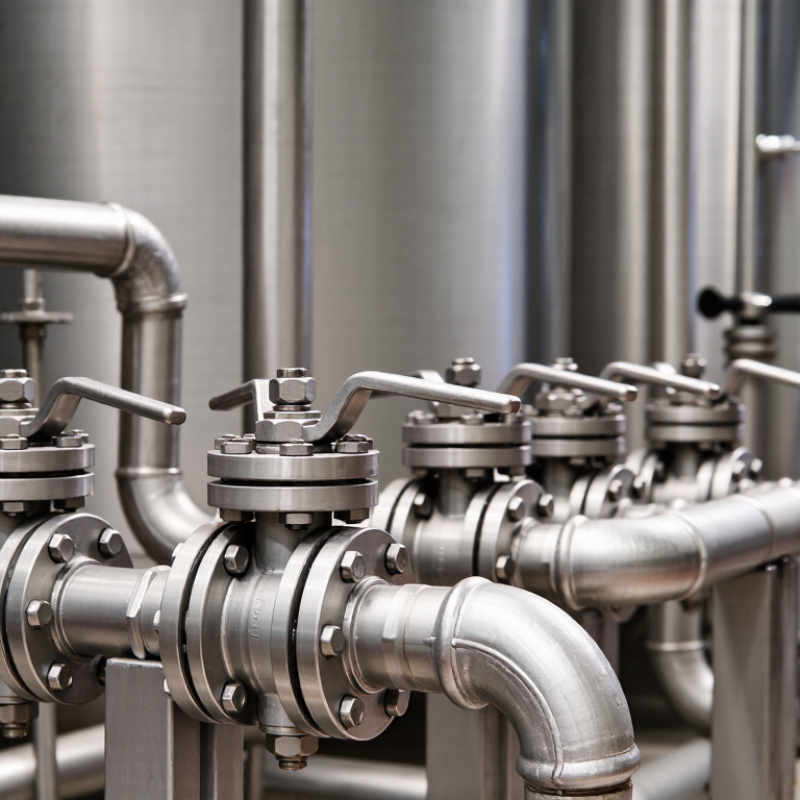
Why Choose Ball Valves for Industrial Applications?

How Ball Valves Control Flow in Industrial Systems

A ball valve controls flow by rotating a bored sphere inside the valve body. When the bore aligns with the pipe, fluid passes through with little obstruction. A quarter-turn brings the solid side across the passage and stops flow. The movement is quick and easy to automate. In a process line, an actuator can respond to pressure or flow signals, positioning the ball as operating conditions change. That makes ball valves useful. But a standard on-off valve is not automatically a precise control valve.

For continuous adjustment, engineers may select a characterized or V-port ball, then pair it with a suitable actuator and positioner.

The U.S. Department of Energy’s Improving Pumping System Performance sourcebook reports potential energy savings of 20–50% from pumping-system improvements. That figure is not a saving attributable to ball valves alone. It highlights the value of matching flow control to the wider system.

Poor sizing can waste energy, while excessive throttling may cause noise, vibration, or seat wear. Check the fluid, pressure range, and required shutoff before selection. Small details matter. In practice, control behavior can differ from calculations, so commissioning measurements deserve attention.

Key Components and Materials Used in Ball Valve Design

A ball valve’s performance depends on more than its outer body. Inside, a drilled ball turns against seats to control flow, while the stem transfers motion from a handle or actuator. Seals around the stem help limit leakage. Small details matter. Seat alignment and surface finish can affect operating torque and shutoff, especially after many cycles.

Material selection should match the fluid, pressure, temperature, and operating environment. Stainless steel often suits corrosive service, while carbon steel is common in many general-purpose systems. Brass may fit some lower-pressure applications. The ball and stem need strength and corrosion resistance; seats may use PTFE, reinforced polymers, or metal, depending on heat and wear. No single combination works everywhere.

It is easy to focus on the body material and overlook the seats. That can be a design blind spot. A polymer seat may seal well under suitable conditions but can degrade if temperatures exceed its limits. Metal seats tolerate harsher service, though they may require closer attention to sealing needs. Engineers should check material compatibility against actual process data, not just a valve catalogue. I have seen specifications look complete while leaving out cleaning chemicals or temperature swings; those details can change the choice.

Operational Benefits of Ball Valves in Industrial Settings

Why Choose Ball Valves for Industrial Applications?

Operational Benefits of Ball Valves in Industrial Settings

In industrial systems, a valve should respond predictably when operators need to isolate a line. Ball valves use a rotating ball with a bore to open or block flow. A quarter turn. This simple motion can make routine shutoff faster than operating some multi-turn valve designs, especially where access is limited.

When fully open, the bore typically allows a relatively direct flow path. This can help reduce pressure loss compared with more restrictive designs, though actual performance depends on valve size and system conditions. Tight shutoff is another practical advantage when the valve is correctly selected and maintained. In a processing area, that may mean isolating a pump for inspection without draining an entire section of piping. The benefit is real, but it is not automatic.

Materials, seat design, pressure, temperature, and the fluid itself all affect service life. Abrasive particles can wear sealing surfaces, while unsuitable materials may corrode or fail under heat. Operators should check the valve’s ratings against actual process conditions, not just the pipe diameter. Regular inspection also matters. A stiff handle or a small leak deserves attention, even if the valve still appears to work. Ball valves are efficient tools, but they are not universal solutions.

Why Choose Ball Valves for Industrial Applications? – Operational Benefits in Industrial Settings

Operational Dimension Ball Valve Characteristic Potential Industrial Benefit Selection Consideration
Opening and closing speed Many manually operated ball valves use a quarter-turn mechanism. Enables quick shutoff and straightforward operation where frequent on/off control is required. Rapid closure can cause pressure surges in some systems; assess the piping and operating procedure.
Flow capacity Full-bore designs have a flow passage close to the adjoining pipe’s internal diameter. Can reduce flow restriction and pressure loss compared with more restrictive valve designs of similar size. Reduced restriction depends on valve bore, size, flow conditions, and installation; reduced-bore designs behave differently.
Shutoff performance A ball and seat arrangement can provide tight shutoff when correctly specified and maintained. Helps isolate equipment or process sections during maintenance and routine operation. Leakage performance depends on valve design, seat material, pressure, temperature, fluid compatibility, and condition.
Actuation and automation Quarter-turn operation can be paired with manual, pneumatic, or electric actuation. Supports remote operation and integration into automated process-control systems. Actuator sizing should account for required torque, differential pressure, operating frequency, and fail-safe needs.
Maintenance access Some designs allow internal components such as seats and seals to be inspected or replaced. Serviceable construction can help reduce replacement needs when the valve is suitable for repair. Repairability varies by construction; confirm access, spare-part availability, and the manufacturer’s maintenance instructions.
Range of process duties Available configurations and materials support a variety of liquids, gases, and process conditions. Allows the valve type to be considered across applications such as isolation, utilities, and process lines. Verify pressure and temperature ratings, materials, fluid compatibility, and applicable safety requirements for the specific service.
Throttling and flow control Standard ball valves are primarily intended for on/off service; specialized control or characterized designs are available. A purpose-designed control ball valve can provide modulating control in suitable applications. Prolonged throttling with a standard ball valve may damage seats or cause unstable control; select a control valve when modulation is required.
Special safety features Fire-safe, antistatic, and blowout-resistant stem features are available in some designs. Can address specific risks in demanding industrial services when included in the selected valve design. These features are not universal; verify design details, testing, certification, and suitability for the application.

Application note: Select a ball valve based on the process fluid, operating pressure and temperature, required flow characteristics, shutoff duty, and applicable codes. Performance depends on the specific design and installation.

Industries and Processes That Commonly Use Ball Valves

Ball valves are common in industries that need dependable isolation and quick operation. Their quarter-turn action can close a line with a short handle movement. That matters. Operators may need to isolate a pump, tank, or instrument during routine maintenance.

In oil and gas facilities, ball valves control flows in process lines and storage systems. Chemical plants use them for compatible liquids and gases, with material selection matched to the media. Water-treatment sites use them around filtration units, pumps, and chemical dosing lines. In food and beverage processing, suitable designs can support hygienic service, though cleaning requirements vary by process. A valve is not automatically sanitary because it is a ball valve.

Compressed-air systems and building services also use ball valves for shutoff. Their simple operation is useful at equipment connections, where staff need clear access. Still, they are not the right choice for every task. Frequent throttling can wear seats or create unstable flow, depending on the design. Check pressure, temperature, fluid compatibility, and maintenance access before specifying one. I have seen selection discussions focus on pipe size alone; that detail rarely tells the whole story.

Factors to Consider When Selecting an Industrial Ball Valve

Why Choose Ball Valves for Industrial Applications?
Factors to Consider When Selecting an Industrial Ball Valve

Start with process conditions, not nominal pipe size alone. Record the fluid, operating pressure, temperature range, and possible spikes during startup or cleaning. A valve rated for normal conditions may not suit every operating event. Check whether the fluid is corrosive, abrasive, viscous, or carries solids. Small details matter. Slurry can wear valve seats faster than clean water.

Material compatibility deserves careful review. Compare the body, ball, stem, and seat materials with the process fluid and temperature. Seat materials affect sealing, operating torque, and service life. A soft seat may seal tightly, but it may not tolerate high temperatures or abrasive particles. Metal seats can handle tougher conditions, though they may need more attention to achieve reliable shutoff. Confirm pressure and temperature limits using technical data, not appearance.

Then consider flow capacity, connection type, and operation. A reduced-port valve can restrict flow, while an oversized valve may make control less predictable. Choose manual, pneumatic, or electric actuation based on access, cycle frequency, and shutdown requirements. Check the pressure-temperature chart and applicable industry standards. In practice, a specification can look complete and still overlook maintenance access. That is easy to miss. Review the selection with operating and maintenance staff before purchase.

Why Choose Ball Valves for Industrial Applications?

Factors to Consider When Selecting an Industrial Ball Valve

Most ball valves use a quarter-turn, or 90-degree, movement between fully open and fully closed. When selecting one, check the working pressure and temperature, fluid compatibility with the body and seat materials, bore size, end connections, actuation requirements, and applicable industry standards. A mid-travel position does not indicate a proportional flow rate; standard ball valves are generally intended for on/off service unless designed for control.

Article Source: