China Top 10 Thermal Expansion Vessel Suppliers
China’s thermal equipment sector has become an important sourcing base for heating, cooling, and domestic hot-water components. The Thermal Expansion Vessel is small, but its role is not minor. It absorbs pressure changes when water expands during heating. Without suitable sizing, valves may discharge repeatedly, pumps may suffer, and system life can shorten.
The International Energy Agency reported that global heat-pump sales nearly doubled in 2021. Its analysis also highlights the growing need for efficient, reliable heating equipment. UNEP’s 2023 Global Status Report for Buildings and Construction states that buildings consume about 30% of global energy and create roughly 26% of energy-related emissions. These figures strengthen demand for better hydronic-system control. They also make vessel quality more significant than its modest physical size.
This guide reviews ten Chinese suppliers using practical purchasing criteria. These include diaphragm materials, steel quality, welding consistency, pressure testing, corrosion protection, production capacity, and export experience. Relevant technical references may include EN 13831, EN 12828, PED requirements, and applicable ASME practices, depending on the destination market. Certification alone is not enough. Factory audits, batch records, warranty terms, and sample testing can reveal important differences.
The ranking is not an official global certification. It is a structured market comparison. Some supplier information changes quickly, and public data is not always complete. That limitation deserves attention. Buyers should verify current certificates, working pressures, connection sizes, and temperature ratings before placing orders. A reliable supplier should explain those details clearly, not hide behind attractive brochures. Good evidence matters.
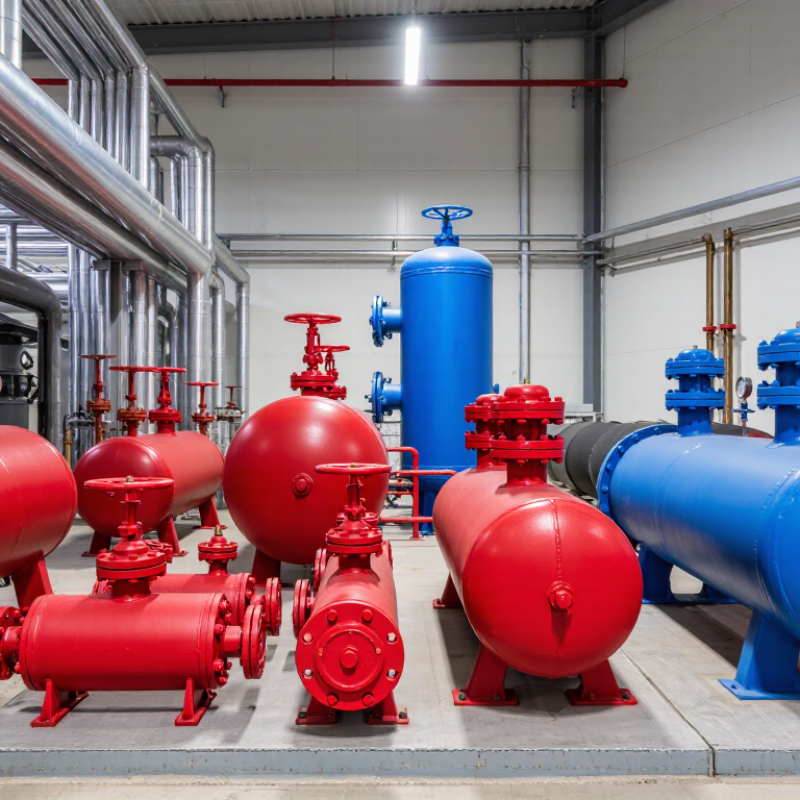
What Is a Thermal Expansion Vessel?
A thermal expansion vessel is a pressure-control component used in closed heating and hot-water systems. When water heats, it expands and needs somewhere to move. The vessel provides that space. Inside, a flexible diaphragm or bladder separates system water from compressed air or nitrogen. As pressure rises, the gas chamber compresses and absorbs the extra water volume.
This simple action protects pipes, valves, pumps, and heat exchangers from repeated pressure spikes. A correctly selected vessel depends on system volume, operating temperature, maximum pressure, and the vessel’s pre-charge setting. A larger vessel is not automatically better. Incorrect sizing can still cause unstable pressure and frequent safety-valve discharge. That detail is often underestimated.
Installation quality matters as much as capacity. The connection should remain accessible, and the vessel must suit the system’s temperature and pressure range. Technicians should check the pre-charge with the water side depressurized, following applicable technical requirements. During field inspections, a flat diaphragm, corrosion, or waterlogged vessel may explain pressure changes that seem mysterious. It is not always the vessel’s fault. A failed safety valve, trapped air, or incorrect filling pressure can create similar symptoms.
Regular inspection gives the clearest evidence of condition. Record pressure readings, unusual noise, leakage, and changes in heating performance. Small differences can become expensive failures. Supplier comparisons should therefore consider tested materials, documented specifications, service support, and clear installation guidance, rather than price alone.
China Top 10 Thermal Expansion Vessel Suppliers - What Is a Thermal Expansion Vessel?
A thermal expansion vessel is a closed pressure vessel containing a gas cushion and a flexible diaphragm or bladder. It absorbs the volume increase of heated water, helping stabilize system pressure and reduce pressure fluctuations in heating, cooling, solar thermal and domestic hot-water systems.
| No. | Supplier Profile | Common Application Focus | Typical Capacity Range | Typical Working Pressure | Typical Temperature Range | Typical Diaphragm / Bladder Material | Common Compliance References |
|---|---|---|---|---|---|---|---|
| 01 | Anonymous Supplier Profile 01 | Residential heating and hydronic systems | 2–500 L | 3–10 bar | −10 to 100°C | EPDM or butyl rubber | EN 13831; GB/T 150; ISO 9001 manufacturing systems |
| 02 | Anonymous Supplier Profile 02 | Domestic hot-water and sanitary-water systems | 5–300 L | 6–10 bar | 5–99°C | Food-grade butyl or EPDM | PED 2014/68/EU; EN 13831; WRAS-type material requirements where applicable |
| 03 | Anonymous Supplier Profile 03 | Solar thermal water-heating systems | 8–500 L | 6–10 bar | −20 to 130°C | High-temperature EPDM or specialized butyl | EN 13831; PED 2014/68/EU; applicable solar-thermal specifications |
| 04 | Anonymous Supplier Profile 04 | Commercial HVAC chilled-water systems | 8–2,000 L | 6–16 bar | −10 to 70°C | Butyl bladder or EPDM diaphragm | EN 13831; ASME Section VIII, Division 1; PED where required |
| 05 | Anonymous Supplier Profile 05 | Booster pump and water-pressure systems | 8–1,000 L | 8–25 bar | 5–70°C | Butyl or EPDM, depending on water quality | PED 2014/68/EU; ASME Section VIII; applicable potable-water requirements |
| 06 | Anonymous Supplier Profile 06 | Industrial process heating and cooling | 50–5,000 L | 10–25 bar | −20 to 100°C | EPDM, butyl or application-specific elastomer | GB/T 150; ASME Section VIII; PED 2014/68/EU when exported |
| 07 | Anonymous Supplier Profile 07 | Fire-fighting and water-supply equipment | 24–2,000 L | 10–25 bar | 5–70°C | Heavy-duty butyl or EPDM bladder | ASME Section VIII; CE/PED where applicable; local fire-system requirements |
| 08 | Anonymous Supplier Profile 08 | OEM and private-label vessel production | 2–1,000 L | 3–16 bar | −10 to 100°C | Custom EPDM, butyl or replaceable bladder | EN 13831; PED 2014/68/EU; customer-specific inspection plans |
| 09 | Anonymous Supplier Profile 09 | Compact residential and light-commercial systems | 2–100 L | 3–10 bar | −10 to 100°C | EPDM diaphragm or fixed butyl bladder | EN 13831; GB/T 150; ISO 9001 quality systems |
| 10 | Anonymous Supplier Profile 10 | Export-oriented customized pressure vessels | 10–5,000 L | 6–25 bar | −20 to 130°C | Application-specific EPDM, butyl or high-temperature elastomer | PED 2014/68/EU; ASME Section VIII; EN 13831; GB/T 150 |