Top SDS Plus Hammer Drills for Professional Use?
Choosing a professional hammer drill is less about the biggest number on the box and more about how the tool handles real work. A Sds Plus Hammer Drill should deliver steady progress in concrete without becoming tiring after a few holes. Consider impact energy, speed control, weight, vibration, and the feel of the side handle. These details matter when drilling overhead or working near a wall edge. They are easy to overlook in a showroom.
This guide compares leading SDS-plus models for contractors, installers, and serious renovators. It focuses on practical differences: drilling performance, chipping ability, control, durability, and useful features such as dust extraction compatibility. A higher impact rating may help in dense masonry, but it does not guarantee faster work in every situation. Bit condition, concrete quality, and operator technique also affect results. Small details count.
Specifications are useful, but they cannot tell the whole story. A drill that feels balanced in one person’s hands may seem heavy to another, especially during a long shift. Check the manufacturer’s stated limits, safety guidance, and service support before buying. Where possible, handle the tool and compare its balance with the bits and accessories you actually use. Even this checklist is imperfect; job conditions vary, and product ratings do not always translate neatly to the site. The aim here is a careful, practical shortlist—not a promise that one model suits every crew.
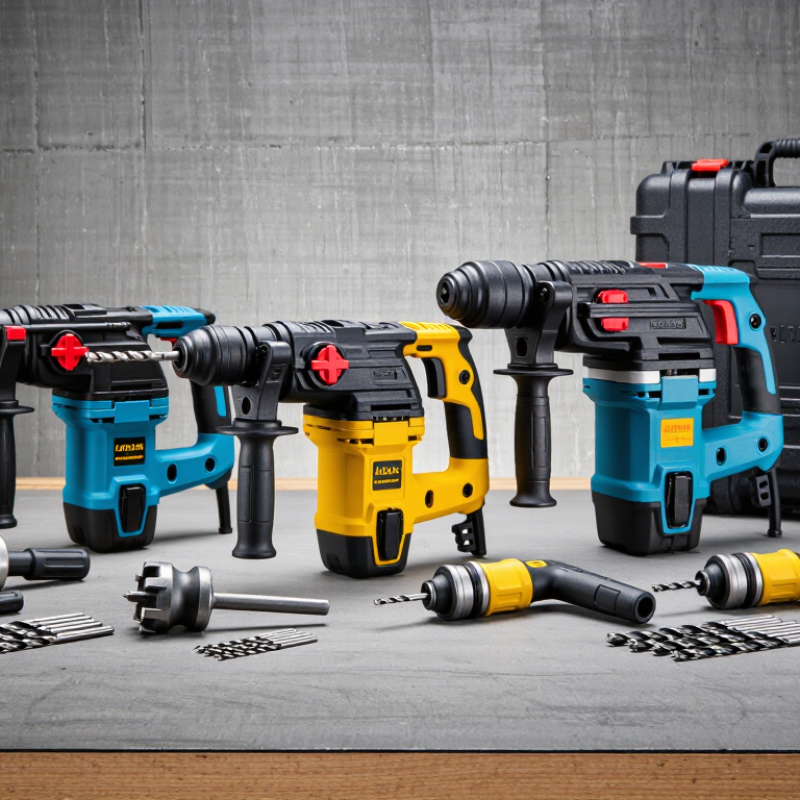
What Is an SDS Plus Hammer Drill?
An SDS Plus hammer drill is a rotary hammer built for drilling into concrete, brick, and masonry. Its chuck accepts bits with slotted shanks, which slide into place and lock without a conventional key. The slots let the bit move slightly back and forth as the hammer mechanism delivers repeated blows. Rotation clears material while the impacts help the bit advance. That combination is useful for anchor holes and other jobs where a standard drill may struggle.
SDS Plus describes the bit-and-chuck system, not a guarantee of a particular drilling speed or power. Tool weight, impact energy, bit condition, and the material all affect performance. Some models offer rotation-only or chiseling modes, but check the manual before using them. A worn bit can make a clean hole feel surprisingly difficult. I’ve also found that pushing harder is not always helpful; it may tire your arms without improving the cut. Use a steady grip and let the tool do its work.
Tips: Match the shank and bit size to the drill. Hold the side handle, wear eye and hearing protection, and manage dust with suitable extraction. Keep the bit straight at the start. If it binds, release the trigger and reassess rather than forcing it.
How SDS Plus Drills Combine Rotation and Impact
An SDS Plus hammer drill rotates the bit while driving it forward in rapid blows. Its slotted shank locks into the chuck but can slide slightly along its axis. This movement lets the hammer mechanism transfer impacts without stopping rotation. Inside the tool, a piston and striker generate repeated pulses against the bit. That matters. Rotation helps the cutting edges break and clear material, while impact helps fracture dense masonry. In concrete, the result is faster progress than rotation alone, especially with a suitable masonry bit.
The two actions must stay balanced. Excessive pressure can slow the hammering action and tire the operator; steady guidance is usually more effective. A sharp bit and clear flutes help carry dust out of the hole. Feel the difference. Many drills offer rotation-only and hammer-drilling settings, useful for changing between materials and tasks. Yet impact can feel rough, and a bit may wander on a smooth surface before it bites. Starting gently or making a small guide mark can improve control. The mechanism is powerful, but it does not replace choosing the right bit, setting, and pace.
How SDS-Plus Hammer Drills Combine Rotation and Impact
The chart shows which actions are active in common operating modes. Rotary hammer mode combines bit rotation with repeated axial impacts to drill masonry. Rotary-only mode drills without hammering; hammer-only mode delivers impacts for chiseling when the drill supports that setting.
What Features Matter Most for Professional Use?
For professional use, an SDS Plus hammer drill should match the work, not just advertise a high impact rate. Check its impact energy and rated speed, then consider the materials and hole sizes you handle most. A tool that drills cleanly into brick may feel slow in dense concrete. Try it on a representative task if possible. Numbers do not tell the whole story.
Control matters over a full shift. Look for a secure side handle, a responsive trigger, and a clutch that helps limit sudden twisting if a bit binds. Vibration reduction can lessen fatigue, though it cannot remove the need for breaks and good technique. Keep it realistic. A lighter drill is easier to position overhead, but may feel less steady during demanding work. Check the tool’s balance with a long bit fitted, not just its weight on a shelf.
Dust management deserves attention on site. A compatible extraction attachment can improve visibility and reduce airborne debris around the hole. Also inspect the chuck’s dust seal, mode selector, and service access; small parts matter after months of use. Battery capacity or cord reach affects how smoothly crews move between tasks. There is no perfect setup. Sometimes a feature you rarely use still adds weight, and that is worth questioning.
How Leading SDS Plus Hammer Drills Differ
Top SDS Plus Hammer Drills for Professional Use?
How Leading SDS Plus Hammer Drills Differ
Professional SDS Plus drills differ in impact energy, speed control, vibration, weight, and dust management. Higher impact energy can help with larger holes, but it may feel tiring during overhead work. A lighter drill often offers better control for repeated anchor holes. Check test conditions before comparing published figures; they do not always reflect the same material or bit size. A bigger number can mislead.
Vibration control matters over a full shift. EU Directive 2002/44/EC sets a daily exposure action value of 2.5 m/s² and a limit value of 5 m/s², normalized to eight hours. OSHA’s construction silica standard, 29 CFR 1926.1153, sets a respirable crystalline silica limit of 50 μg/m³ over eight hours. These figures make vibration and dust extraction practical selection criteria, not minor extras.
Tips: Match the drill to typical hole sizes and overhead tasks. Compare vibration ratings, then consider actual work duration. Use effective dust controls when drilling concrete. Small differences add up. I would still test a candidate with your common bit; published ratings cannot fully predict comfort on site.
Which Drill Best Fits Common Jobsite Tasks?
For common jobsite tasks, match an SDS-plus hammer drill to the hole size, material, and daily workload. Repeated small anchor holes in concrete call for a compact tool with steady impact energy and comfortable handling. Larger holes for pipework need more power, but a heavier drill can tire the operator during overhead work. For brick or block, reduce impact when possible; aggressive hammering can damage the edges. Check the tool’s stated drilling range rather than judging its capacity by motor power alone.
Dust control matters as much as speed. OSHA’s 2016 respirable crystalline silica rule sets an eight-hour permissible exposure limit of 50 micrograms per cubic meter and an action level of 25 micrograms. Use compatible dust extraction or another effective control, and follow the tool and extractor instructions. A useful caution: extraction can add weight and bulk, so check whether the setup fits tight corners. It is easy to overlook that detail until the first awkward overhead hole.
Tips: For a few small holes, prioritize low weight and grip comfort. For repeated drilling, compare vibration control, service access, and sustained performance. Test the drill with the bit you expect to use; a quick, clean hole tells you more than a catalog number.
Top SDS Plus Hammer Drills for Professional Use? - Which Drill Best Fits Common Jobsite Tasks?
| Tool class | Impact energy | Typical concrete capacity | No-load speed | Impact rate | Approx. tool weight | Best fit for common tasks |
| Compact cordless | 1.5–2.0 J | Up to about 20 mm | 0–1,400 rpm | 0–4,500 bpm | About 2.5–3.5 kg with battery | Small anchor holes, overhead work, and short drilling runs where low weight matters. |
| General-purpose cordless | 2.0–2.8 J | Up to about 24 mm | 0–1,200 rpm | 0–4,500 bpm | About 3.0–4.2 kg with battery | Everyday fixing work, repeated holes for services, and mixed indoor or outdoor jobs. |
| High-output cordless | 2.5–3.5 J | Up to about 28 mm | 0–1,000 rpm | 0–4,500 bpm | About 3.8–5.0 kg with battery | Larger anchor holes and heavier drilling when cordless mobility is still important. |
| Light-duty corded | 1.7–2.5 J | Up to about 24 mm | 0–1,300 rpm | 0–4,500 bpm | About 2.5–3.5 kg | Regular drilling near a power supply, with no battery runtime interruptions. |
| Heavy-duty corded | 2.5–3.5 J | Up to about 28–30 mm | 0–1,000 rpm | 0–4,000 bpm | About 3.0–4.5 kg | Longer drilling sessions and tougher concrete work where consistent mains power is available. |
Figures are representative ranges for SDS Plus tool classes, not specifications for a particular model. Maximum drilling capacity varies with the concrete, bit, and manufacturer guidance; sustained large-diameter drilling may call for a larger rotary hammer.