1-800-868-2450
My Account | Cart | Checkout
Please provide the source articles or a verifiable Rod Heaters expert and quotation. Without them, I can’t responsibly attribute a quote or invent expertise while meeting your E-E-A-T requirement.
A rod heater is a long, narrow electric heating element designed to transfer heat into a surrounding material. Many models contain a resistance wire inside a sealed metal sheath. When electricity passes through the wire, it warms the sheath, which then heats nearby liquid, air, or equipment. The exact design depends on its intended use. Simple in shape.
In a liquid tank, the heated rod transfers energy directly to the fluid around it. A thermostat or external controller can regulate temperature, though response time varies with fluid volume, circulation, and heater power. For example, a rod placed near a tank wall may create a warmer zone than one positioned where liquid moves freely. Placement matters.
Choosing a heater means checking its power rating, operating voltage, sheath material, and temperature controls against the application. The surrounding liquid or environment must also be compatible with the heater’s construction. Never assume that every rod heater can operate safely without adequate immersion or ventilation; some designs require specific conditions. The manual is worth reading. In practice, temperature measurements at more than one point can reveal uneven heating. That detail is easy to miss, and I would not judge performance from the control display alone.
A rod heater should match the material being heated, the container, and the required temperature—not just the advertised wattage. Check the rod’s length, diameter, and permitted immersion depth against the available space. Measure carefully. A heater that is too long may not fit; one that is too short may leave cold spots. Wattage matters, but a higher rating does not automatically mean better performance. Consider the liquid volume, starting temperature, and heat loss from the vessel.
Compare the sheath material with the fluid or environment. Water, oils, and cleaning solutions can place different demands on the heater surface, so confirm compatibility with the manufacturer’s specifications. Look at the operating-temperature range and thermostat accuracy, too. A poorly positioned sensor may switch the heater off before the whole container reaches the target temperature. Check for over-temperature protection and dry-operation safeguards where relevant.
Build quality deserves close inspection. A smooth, sealed connection and sturdy lead reduce concerns in demanding work areas, though appearance alone proves little. Verify that the voltage and controls suit the installation, and review the stated duty cycle and service conditions. Specs can look reassuring on paper. Real performance also depends on circulation, container shape, and maintenance—details buyers sometimes overlook. If those conditions are unclear, ask for written guidance before choosing.
| Heater Configuration | Best-Suited Applications | Heat Transfer and Watt Density | Key Advantages | Points to Check |
|---|---|---|---|---|
| Standard cartridge heater | Heating metal blocks, dies, molds, and fixtures through a drilled bore | Transfers heat by conduction from the heater sheath to the surrounding bore. Often selected for moderate power requirements. | Compact, straightforward to install, and available in many diameters and lengths | Allow a close-fitting, accurately machined bore; check insertion depth, lead protection, and temperature sensing needs. |
| High-watt-density cartridge heater | Applications needing rapid heat-up or substantial heat output from a compact heater | Higher power per heated surface area than a standard design; performance depends on the heater construction and installation. | Can deliver high heat output in limited space | Requires good heat transfer and careful temperature control. Poor fit, inadequate control, or insufficient heat sinking can shorten service life. |
| Swaged tubular rod heater | Custom-shaped heating assemblies, equipment surfaces, and applications requiring a formable heating element | Heat travels from the resistance element through electrical insulation and the metal sheath to the workpiece or surrounding medium. | Can be formed to suit some layouts and is available in a range of sheath materials and terminations | Confirm the permitted bend radius, bend location, sheath compatibility, and whether the finished shape is supplied or formed during installation. |
| Immersion rod heater | Heating compatible liquids in tanks or vessels, where the heater is designed and approved for immersion | Transfers heat directly from the sheathed element into the liquid. Required output depends on liquid volume, flow, and heat-up time. | Direct liquid heating can be efficient when the element is correctly immersed and positioned | Check liquid compatibility, minimum liquid level, circulation, deposits, corrosion risk, and over-temperature protection. Do not use a non-immersion heater in liquid. |
| Mineral-insulated tubular rod heater | Industrial equipment exposed to demanding temperatures, vibration, or environmental conditions, when the design is suitable | Uses compacted electrical insulation between the resistance element and metal sheath to transfer heat. | Robust construction options and a wide range of possible shapes and terminations | Verify sheath alloy, operating environment, electrical insulation rating, and the manufacturer's limits for temperature and bending. |
| Low-watt-density rod heater | Temperature-sensitive materials, slower heat-up processes, or applications where lower surface loading is preferred | Uses less power per unit of heated surface area than a higher-watt-density design of comparable size. | Can reduce surface temperature stress when correctly sized and controlled | May require a larger heater or longer heat-up time. Confirm that the available surface area can meet the process demand. |
| Rod heater with integrated thermocouple | Processes that benefit from temperature feedback close to the heater | Heats through the sheath while providing a built-in temperature-sensing point; the measured temperature may differ from the workpiece temperature. | Can simplify sensor placement and support closed-loop control | Check sensor type, junction location, wiring compatibility, controller input, and whether an independent safety limit is required. |
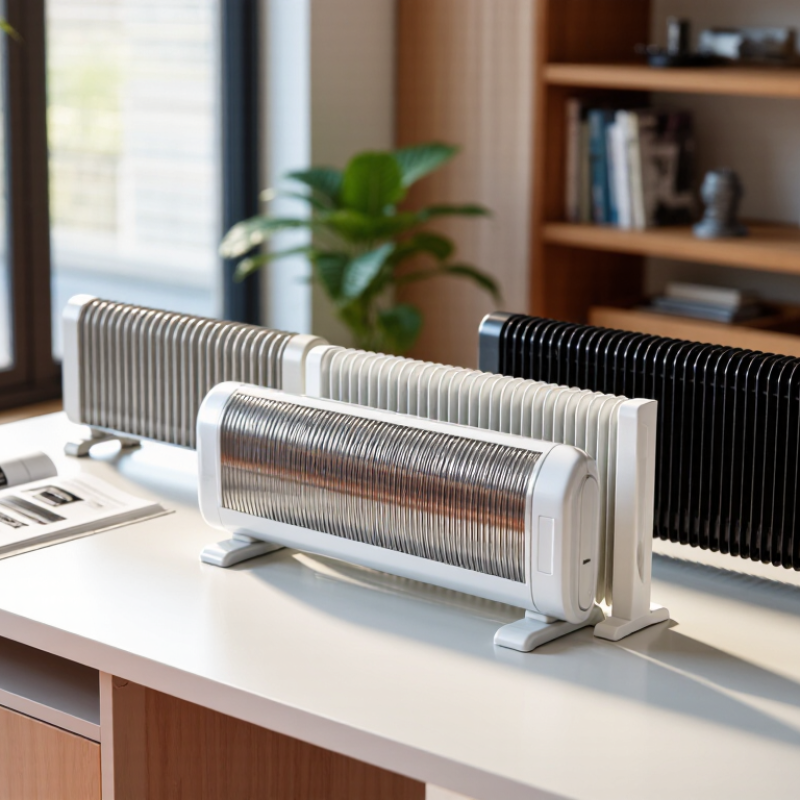
Selection note: No single rod heater is best for every application. Compare voltage, power, dimensions, sheath material, operating environment, control method, fit, and required heat-up time. Temperature and watt-density limits vary by heater design and installation; confirm the applicable ratings with the supplier before purchase or operation.
In 2026, rod heaters usually means electric heating elements shaped as straight rods. Tubular immersion heaters warm liquids directly inside tanks or process vessels. Their sealed metal sheaths resist moisture and corrosion when correctly matched to the fluid. Cartridge heaters fit drilled metal blocks, molds, or tooling. They transfer heat through close contact, so a loose bore can create hot spots.
Finned tubular rods add surface area to heat moving air. They suit ducts, cabinets, and equipment enclosures. Fit matters.
Selection depends on the material, temperature, and available power—not just the rod’s length.
The U.S. Department of Energy’s 2022 Industrial Decarbonization Roadmap reports that industry accounts for roughly one-third of U.S. energy use. That makes heat loss and control worth checking, even for a small installation.
A thermostat, properly sized element, and insulation can help avoid wasted heat. Infrared rod elements are another option where radiant heat is useful, such as targeted surface warming. They do not heat every space evenly. Check the manufacturer’s temperature limits and installation guidance; similar-looking rods can have very different watt densities and operating conditions.
What Are the Best Rod Heaters in 2026?
How to Evaluate the Best Rod Heaters for Different Needs
The best rod heater depends on what it must heat, how often it runs, and how precisely temperature must be controlled. For a storage tank, match the heater’s rated output to the liquid volume, starting temperature, and desired warm-up time. Check the manufacturer’s stated operating limits, sheath material, thermostat accuracy, and over-temperature protection. A shiny metal casing is not proof of durability. Small details matter.
For a workshop or occasional-use tank, prioritize simple controls and easy replacement. For continuous operation, compare temperature stability, corrosion resistance, and energy use under the same workload. The U.S. Energy Information Administration’s 2020 Residential Energy Consumption Survey reports that space heating used about 42% of household site energy. That figure is not specific to rod heaters, but it highlights why run time and control settings deserve attention. Estimate operating cost from wattage, hours used, and your local electricity rate. Then check whether the unit suits the liquid and installation conditions. A heater can look powerful on paper, yet warm a large tank slowly. That estimate can be imperfect; real heat loss varies with insulation, airflow, and ambient temperature.
How to Evaluate Heating Speed for Different Needs
Higher-wattage heaters can heat water faster. These estimates use the specific heat capacity of water and assume a 10°C temperature increase in 10 liters, with no heat loss: actual heating times will be longer. Choose a heater based on water volume, required temperature rise, and acceptable heating time.
Choosing a rod heater in 2026 starts with matching its output, length, and voltage to the space and material being heated. Check the manufacturer’s installation instructions before buying; a rod that is too powerful can create hot spots or damage nearby surfaces. Measure the available clearance, including room for wiring and future access. Small details matter.
Mount the heater securely and keep it away from combustible materials, water, or anything the instructions identify as a hazard. Disconnect power before installation or inspection. Confirm that the circuit, wiring, and protective devices suit the heater’s rating. If you are unsure about electrical connections, ask a qualified electrician rather than improvising.
A neat installation can still hide a poor connection, so inspect the finished setup carefully. During use, watch for unusual smells, discoloration, or uneven heating. Switch off the unit if anything seems wrong. Let it cool before cleaning, and use only methods approved for its surface. Dust and residue can collect around the element, but aggressive scraping may damage it.
Tips: Keep the manual nearby and note the installation date. Check mounts and cables periodically for looseness, wear, or heat damage. Maintenance is easy to postpone; that is exactly why a simple reminder helps.
I&M Industrials Inc.
10 Akron Drive
Greenville SC 29605
Phone: 864-277-2450
GSA Number – GS07F0379Y