Top 10 Benefits of Using an Oil Free Compressor for Your Projects
In recent years, the demand for efficient and sustainable tools has surged, pushing many projects toward oil free compressors. This innovative technology offers numerous benefits that can significantly enhance performance. Unlike traditional compressors, oil free compressors ensure cleaner air supply without the risk of oil contamination.
Many industries, from manufacturing to healthcare, now rely on these compressors. They operate quietly, reducing noise pollution in sensitive environments. Additionally, their design minimizes maintenance needs, saving time and costs for project managers. However, it's essential to recognize the limitations. While they excel in cleanliness, their initial investment may be higher, prompting some teams to hesitate.
Embracing an oil free compressor can lead to a more environmentally friendly approach. This choice reflects a commitment to both efficiency and sustainability. Yet, projects should assess specific needs before diving in. Balancing the benefits with potential drawbacks is crucial for making informed decisions that align with project goals.
Key Advantages of Oil Free Compressors in Various Industries
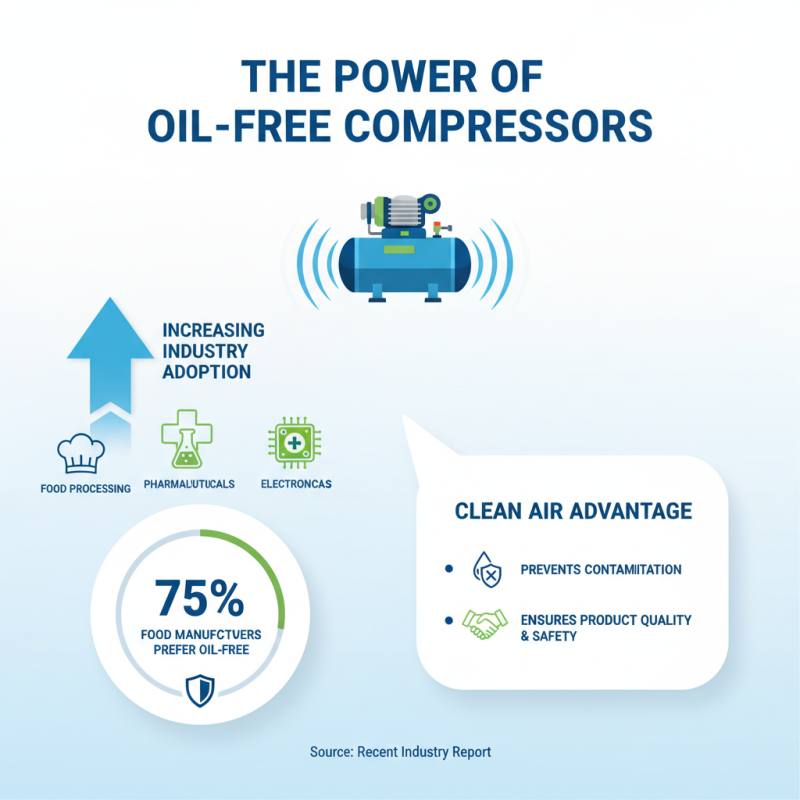
Oil-free compressors are increasingly popular across various industries. One significant advantage is their ability to deliver clean air. This is crucial in food processing, pharmaceuticals, and electronics. According to a recent industry report, 75% of food manufacturers prefer oil-free solutions to prevent contamination. Clean air ensures product quality and safety, impacting consumer trust.
Moreover, oil-free compressors require less maintenance. A study indicates businesses can save up to 30% on maintenance costs. Reduced downtime leads to higher productivity levels. In manufacturing, a downtime reduction of even a few hours can lead to substantial financial savings. However, not every application is suited for oil-free technology. High-pressure requirements in certain industries may still rely on traditional compressors.
Sustainability is another compelling factor. Oil-free compressors are often more energy-efficient. Reports show they can use up to 15% less energy than their oil-lubricated counterparts. This efficiency can lower operational costs over time. However, companies must consider initial investment costs. Decision-makers need to weigh long-term benefits against upfront expenses.
Environmental Impact: Reducing Pollution with Oil Free Technology
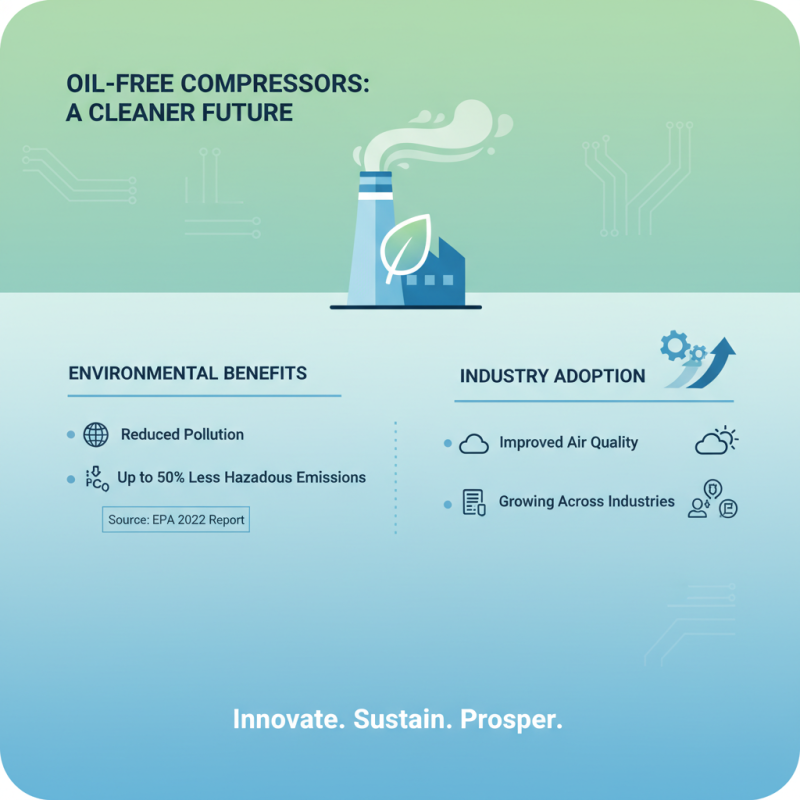
Oil-free compressors are gaining traction in various industries. These machines significantly reduce environmental pollution compared to their oil-lubricated counterparts. According to a 2022 report from the Environmental Protection Agency, oil-free technology can reduce hazardous emissions by up to 50%. This makes a noticeable difference in air quality around industrial sites.
The importance of reducing pollution cannot be overstated. Many companies are now adopting oil-free compressors to comply with stricter environmental regulations. In fact, a study from the International Association of Compressed Air Users noted that oil-free compressors help eliminate oil carryover, which is a major pollutant. Not using oil not only safeguards the environment but also improves product safety in sensitive industries like food and pharmaceuticals.
Cost considerations also come into play. While the initial investment might be higher, the long-term benefits are clear. The energy efficiency of oil-free systems tends to be greater, leading to lower operational costs. However, some projects may still overlook the potential benefits. This brings to light the need for more education in environmental management practices, as companies continue to weigh their options.
Cost Efficiency: Long-Term Savings of Oil Free Compressors
Oil-free compressors offer substantial cost savings for various projects. These compressors eliminate the need for oil filtration and regular oil changes. Maintenance is significantly reduced. Studies reveal that businesses can save around 30% on maintenance costs. This is crucial for companies aiming to optimize their expenditures.
Moreover, oil-free compressors typically have lower energy consumption. A report by the Compressed Air and Gas Institute states that oil-free compressors can be up to 15% more energy efficient. This efficiency translates to lower utility bills over time. For industries with high air quality standards, using oil-free compressors avoids costly cleanup processes and potential product contamination.
However, it's essential to assess initial investments carefully. Oil-free models may be pricier upfront. Companies must weigh that against long-term savings on maintenance and energy. Some might find the trade-off challenging. Understanding the full lifecycle costs of compressors is vital for informed decision-making.
Maintenance Benefits: Simplifying Upkeep with Oil Free Systems
Oil-free compressors are gaining traction in various industries due to their substantial maintenance benefits. Traditional compressors often require regular oil changes and filter replacements. However, oil-free systems minimize these upkeep requirements. In fact, reports suggest that companies could reduce maintenance costs by nearly 30% when opting for oil-free solutions. This reduction translates to fewer resources spent on labor and materials.
Tips: Regularly check filters and connections to ensure optimal operation. Even oil-free systems can benefit from routine attention.
Another advantage is the improved hygiene of oil-free compressors. These systems eliminate the risk of oil contamination. This is crucial in industries like food and pharmaceuticals. Contaminated air can lead to severe quality control issues. According to industry experts, businesses can enhance product safety by selecting oil-free options.
Tips: Schedule periodic inspections to detect potential leaks early. Staying proactive can save resources later on.
While oil-free compressors simplify maintenance, they still require diligent care. Neglecting maintenance, even in oil-free systems, can lead to unexpected failures. It's essential to develop a proper maintenance schedule to avoid complications. Even a small oversight can lead to larger issues over time.
Applications: Ideal Scenarios for Oil Free Compressor Use
Oil free compressors are increasingly popular in various applications. Their unique design eliminates oil contamination, making them essential in industries like food processing and pharmaceuticals. According to the Compressed Air and Gas Institute, nearly 10% of compressors used in these sectors are oil-free. This statistic highlights their growing importance.
In environments where cleanliness is critical, oil free compressors shine. For instance, in hospitals, maintaining air purity is vital. Oil-free technology prevents harmful oil particles from entering the air supply, ensuring the highest safety standards. In food production, any contamination can lead to costly recalls. Utilizing oil free compressors reduces the risk of such events.
Moreover, they are excellent for sensitive applications like electronics manufacturing. Dust and oil can damage delicate components. An oil free compressor helps maintain a controlled environment. However, some users may overlook the higher upfront costs. This investment can lead to savings in the long run due to less maintenance. Industry reports indicate that switching to oil free technology can save facilities up to 25% on maintenance costs over time.
While the advantages are clear, the choice to switch should be well considered. Understanding specific project needs is crucial. The benefits must outweigh the drawbacks in any decision-making process.
Top 10 Benefits of Using an Oil Free Compressor for Your Projects
| Benefit |
Description |
Ideal Applications |
| Environmentally Friendly |
No oil leaks or emissions, reducing environmental impact. |
Food and Pharmaceutical Industries |
| Lower Maintenance Costs |
Fewer parts to replace and lower upkeep requirements. |
Manufacturing Facilities |
| Versatility |
Suitable for a wide range of applications and environments. |
Construction and Automotive Industries |
| Improved Air Quality |
Produces clean and dry air free from oil contaminants. |
Healthcare Facilities |
| Increased Efficiency |
Higher performance due to the absence of oil-related inefficiencies. |
Packaging and Printing Industries |
| Compact Design |
Smaller footprint allowing for easier installation in tight spaces. |
Laboratories and Workshops |
| Noise Reduction |
Quieter operation compared to oil-lubricated compressors. |
Indoor Environments |
| Faster Start-Up Time |
Quickly reaches operational pressure without pre-heating. |
Event and Mobile Applications |
| Safety Enhanced |
Reduced risk of fire, slip hazards, and contamination. |
Food Processing Plants |
| Consistent Performance |
Reliable air supply for critical operations without fluctuations. |
Research and Development Centers |