What Is a Barometric Chamber and How to Find One for Sale?

A barometric chamber controls pressure inside a sealed space, allowing researchers and engineers to study how equipment and materials respond to changing atmospheric conditions. The basic idea is simple. The details are not. Chamber size, pressure range, control accuracy, and test purpose all affect which model is suitable. A unit designed for small components may not fit a full instrument or a demanding test schedule.

A useful scientific starting point comes from Robert Boyle, whose work established the relationship between gas pressure and volume. A modern paraphrase of that principle is: “At constant temperature, a gas’s pressure rises as its volume decreases.” This is a paraphrase, not a verbatim historical quotation. It helps explain why pressure control matters, but it cannot replace a chamber’s technical specifications. Ask suppliers for calibration records, operating limits, safety features, and service history.

Searching for a Barometric Chamber For Sale can bring up new, used, and custom-built equipment. Compare the stated performance with your actual test conditions. Check the chamber’s internal dimensions, pressure uniformity, data logging, and available installation support. Request a live demonstration when possible. A clean exterior tells you very little. Even a detailed specification sheet may leave unanswered questions about wear or maintenance. That deserves a closer look.

This guide explains what a barometric chamber does and how to assess options before buying. It also highlights practical checks that can prevent an expensive mismatch. One limitation remains: no listing can confirm suitability without a clear test plan and verified performance data.
What Is a Barometric Chamber and How to Find One for Sale?

What a Barometric Chamber Is

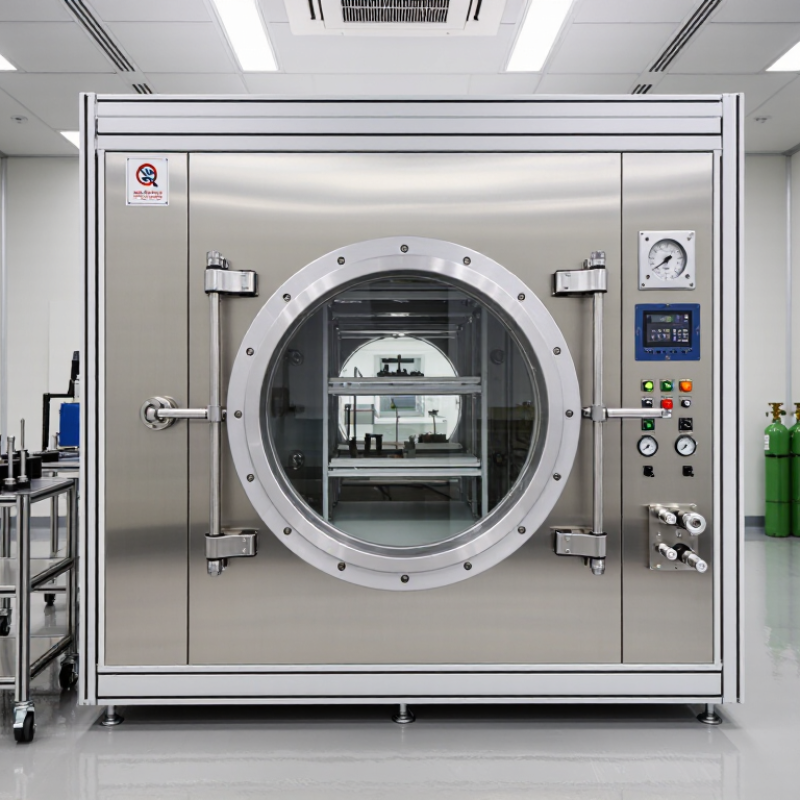
A barometric chamber is a sealed enclosure that changes air pressure in a controlled way. It helps technicians test barometers, altimeters, and pressure sensors under repeatable conditions. The instrument sits inside while a pump or pressure controller adjusts the chamber pressure. A reference gauge provides a comparison, showing whether the test instrument reads accurately. Some chambers are small enough for a workbench; others accommodate larger equipment.

Pressure changes are usually monitored in steps, with readings recorded at each level. This can reveal drift, slow response, or inconsistent measurements. A chamber does not automatically recreate every outdoor condition. Temperature and humidity may need separate controls, and a pressure test alone cannot confirm every aspect of an instrument’s performance. That distinction is easy to overlook.

Tips: Check the required pressure range, chamber size, and control stability before buying. Ask for calibration records and a leak-test result. For used equipment, inspect seals, ports, and controls closely. A shiny casing proves little. Keep enough room for the instruments and reference gauge you plan to test.

How a Barometric Chamber Works

A barometric chamber controls air pressure inside a sealed space. A pump removes air to lower pressure; a valve can admit air to raise it. Sensors track the pressure, while a controller holds the selected level. The chamber can help test how instruments, components, or packages respond to pressure changes. Small leaks matter. A door seal that looks sound may still shift the readings.

Pressure is often set to represent an altitude, but the relationship is not linear. The U.S. Standard Atmosphere, 1976, published by NOAA, NASA, and the U.S. Air Force, gives standard pressure as 101.325 kPa at sea level and about 26.5 kPa at 10,000 metres. These reference values help set test conditions; actual weather can differ. Pressure alone does not reproduce altitude: temperature and humidity may need separate control. That distinction is easy to miss. When evaluating a chamber for sale, check its usable pressure range, sensor accuracy, chamber volume, and calibration records. Ask how quickly it reaches a setpoint, too. A large chamber may take longer to stabilize, and the displayed value may not match pressure at every point inside.

Types and Common Applications of Barometric Chambers

Barometric chambers create controlled pressure conditions for testing, calibration, or training. Common types include altitude chambers, pressure-calibration chambers, and environmental chambers that combine low pressure with temperature changes. Aerospace teams use altitude chambers to assess equipment and simulate reduced-pressure conditions. Electronics and packaging manufacturers test whether products, seals, and enclosures perform reliably when pressure changes. Calibration chambers help technicians check pressure sensors against a controlled reference.

The U.S. Standard Atmosphere, 1976, published by NOAA, NASA, and the U.S. Air Force, gives standard pressure at 10 kilometres as about 26.5 kPa, compared with 101.3 kPa at sea level. That difference shows why a chamber’s operating range matters. Small details matter. A chamber designed for altitude simulation may not suit precision sensor calibration. When looking for one for sale, check usable volume, pressure range, control accuracy, temperature capability, calibration records, and service history. Ask for recent test data, not just a brochure.

Tips: Match the chamber to the test protocol and the size of the items being tested. Request a demonstration at your target pressure, and confirm how quickly the unit reaches and holds that setpoint. I’d also inspect door seals and controller logs; wear can be easy to miss in photos.

Features to Check Before Buying a Barometric Chamber

Before buying, match the chamber’s usable pressure range to your test profile. MIL-STD-810H, Method 500.6, includes an altitude condition of 15,240 metres, corresponding to about 11.6 kPa. The U.S. Standard Atmosphere, 1976, gives roughly 54 kPa at 5,000 metres, compared with 101.3 kPa at sea level. These figures help frame the required range; they do not replace your test specification. Check pressure stability, ramp-rate control, and recovery time with the intended load inside. Ask for recorded performance, not just the empty-chamber specification. That matters.

Inspect the usable test volume, door seal, viewing window, cable feedthroughs, and sensor placement. A large chamber can be awkward. Extra empty volume may increase pump-down time, depending on the pump and test load. Confirm that pressure sensors have traceable calibration records, and ask how often calibration is due. Check the data logger’s sampling rate and whether it exports time-stamped pressure readings. For practical use, review alarm limits, emergency venting, interlocks, and routine maintenance access. Request a factory acceptance or site acceptance test record showing pressure uniformity and leak performance across the operating range. One detail is easy to miss: a chamber may reach the target pressure but struggle to hold it during a long test. Ask the seller to demonstrate both conditions.

Barometric Chamber Pressure vs. Standard-Atmosphere Altitude

Approximate absolute pressure at selected altitudes in the International Standard Atmosphere.

Use the pressure range needed for your tests to compare chamber specifications. Before buying, also check chamber volume, pressure-control stability, available feedthroughs, and safety interlocks. These figures are standard-atmosphere reference values, not a rating for any specific chamber.

How to Find and Evaluate a Barometric Chamber for Sale

A barometric chamber controls air pressure to reproduce conditions such as reduced-pressure environments. Its purpose can vary: some chambers test products, while others support specialized research. Confirm the intended use before comparing listings. A chamber designed for small electronic components may not fit a full-size assembly or suit repeated production cycles.

Write down the pressure range, usable chamber dimensions, and required pressure-change rate. Ask the seller for operating records, maintenance history, sensor calibration documents, and leak-test results. Inspect door seals for cracks and check that pressure controls, alarms, and safety interlocks work as specified.

Small details matter. Request a demonstration under load, not just an empty-chamber power-on. For a used unit, ask why it is being sold and whether replacement parts remain available. I would still treat polished photographs cautiously; they cannot show worn seals or unstable readings.

Compare delivery, installation, ventilation, and electrical requirements with your facility before agreeing to a price. A clear written specification makes mismatched equipment easier to spot.