What is an air pressure gauge and how does it work?
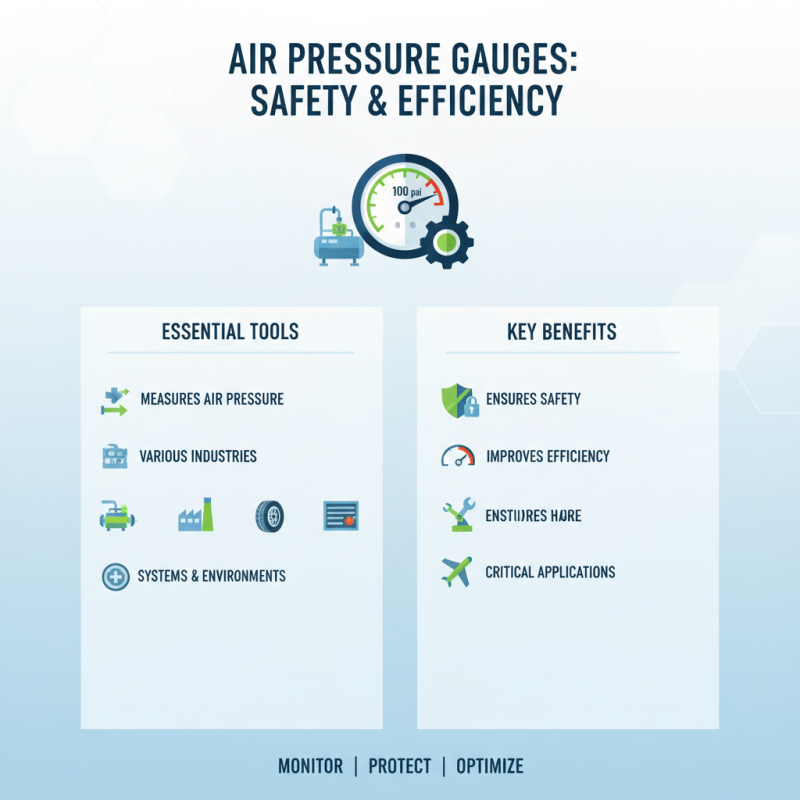
An air pressure gauge is a crucial tool in various applications, from engineering to automotive industries. Understanding its operation is essential for safety and efficiency. According to the International Society of Automation, accurate measurements can reduce equipment failure by 30%. A precise air pressure gauge can help maintain optimal pressure levels, preventing costly downtime.
This device measures air pressure in different situations. In pneumatic systems, knowing the right air pressure is vital. For instance, in HVAC systems, incorrect pressure readings can lead to energy waste, affecting overall performance. On average, improper pressure regulation can increase energy costs by 20%.
However, many users overlook the importance of regular calibration and maintenance of their air pressure gauges. Failure to do this may lead to inaccurate readings, risking product quality. In a recent technical report, a significant number of facilities reported using gauges that were over two years from their last calibration. This raises concerns about reliability and operational efficiency.
What is an Air Pressure Gauge?
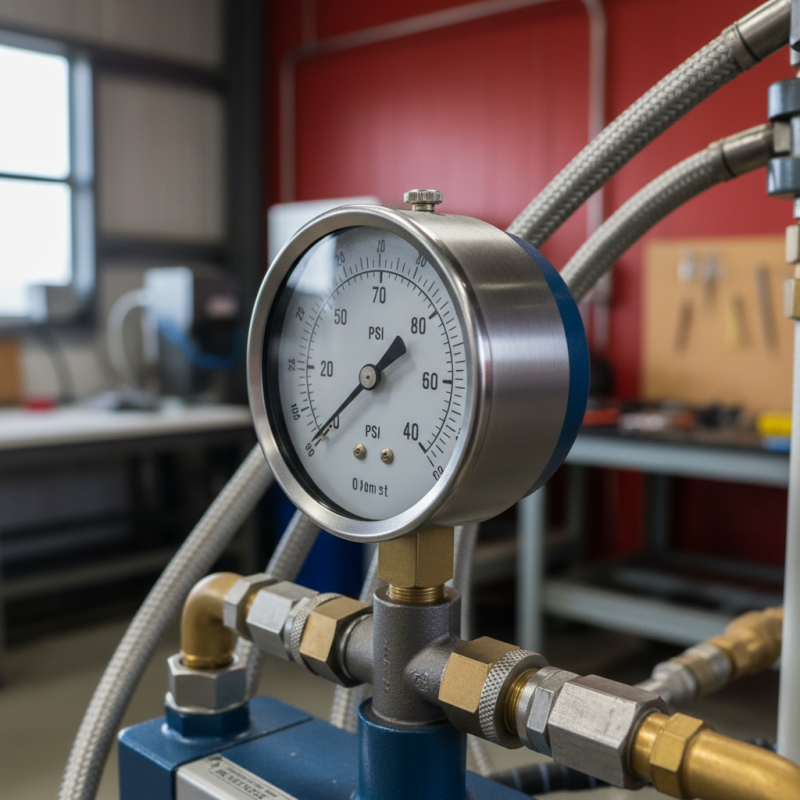
An air pressure gauge is a device that measures the pressure of gases. It is commonly used in various settings, from automotive applications to industrial machinery. These gauges are crucial for ensuring optimal performance and safety. For example, a tire pressure gauge helps maintain the right air pressure in vehicle tires, contributing to better fuel efficiency and safer driving.
The mechanism is relatively simple. Inside the gauge, a diaphragm or Bourdon tube reacts to changes in pressure. When the pressure rises, the tube bends, and this movement translates into a reading on the dial. However, sometimes the readings can be misleading. Environmental factors, like temperature changes, can affect accuracy. A gauge that hasn't been calibrated correctly might provide a false sense of security.
Knowing how to read and interpret these gauges is essential. Many people overlook the importance of regular checks, which can lead to problems. A poorly maintained air pressure gauge might become unreliable over time. It's vital to reflect on gauge accuracy and invest time in upkeep. Understanding these aspects can lead to better decision-making in various applications, ensuring safety and efficiency.
Air Pressure Gauge Measurements
This chart illustrates the variations in air pressure readings over a series of tests conducted at different temperatures. The data represents how air pressure may fluctuate with temperature changes, which can be critical for applications utilizing air pressure gauges.
Components of an Air Pressure Gauge
Air pressure gauges are essential tools used in various industries. These devices measure the pressure of gases or liquids within a system. Understanding the components of an air pressure gauge helps to appreciate its functionality.
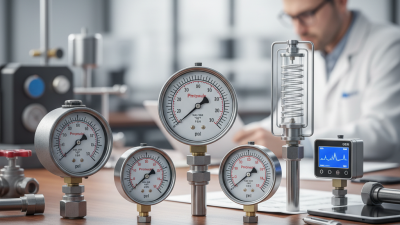
The main component is the sensing element. This part converts pressure into a mechanical movement. Bourdon tubes are commonly used here. They work by bending in response to pressure changes. Other components include the casing, which protects internal parts. Many gauges feature a display dial that shows pressure levels. This dial usually has clear markings for easy reading.
Accuracy is crucial. According to industry reports, many gauges are accurate within 1-2% of full scale. However, wear and tear can affect performance. Regular calibration is necessary. Proper maintenance ensures longevity and reliability. Ignoring these aspects can lead to errors. Some gauges may fail to register pressure accurately. This can pose safety risks in certain applications. Therefore, understanding the components and their functions is vital for optimal use.
How Does an Air Pressure Gauge Work?
An air pressure gauge measures the pressure of gases within a system. Understanding how this tool functions is crucial for various applications. These gauges encompass several components. Most commonly, they feature a Bourdon tube, diaphragm, or piezoresistive sensors.
When gas enters the gauge, it transforms physical shape or bends the tube. This change is proportional to the pressure exerted by the gas. According to recent industry reports, these gauges can read pressure as low as 0.5 PSI or as high as 10,000 PSI, depending on the design. The needle on the dial then reflects this pressure reading.
Calibration is essential for accuracy, yet many users overlook this. Improper calibration may lead to significant errors. A study revealed that nearly 30% of gauges used in critical applications are inaccurate due to lack of maintenance. Regular checks can prevent costly downtime and failures. Users should be aware of the limitations and ensure that their air pressure gauge is functioning correctly to avoid mishaps.
Applications of Air Pressure Gauges
Air pressure gauges are essential tools used in various industries. They measure the pressure of air in a system or a specific environment. These gauges play a pivotal role in ensuring safety and efficiency in many applications.
In automotive maintenance, air pressure gauges help check tire pressure. Proper tire inflation improves fuel efficiency. It also enhances vehicle safety, reducing the risk of blowouts. In HVAC systems, these gauges monitor air pressure to ensure balanced airflow. If the pressure is too low or too high, it affects system performance and energy consumption.
In manufacturing, air pressure gauges are vital in pneumatic systems. They help control the operation of machinery and tools. Accurate pressure readings prevent equipment damage and improve productivity. However, sometimes, users overlook regular maintenance of these gauges. This can lead to inaccurate readings and unforeseen issues down the line. It's crucial to understand the significance of proper calibration and routine checks.
Maintaining and Calibrating Air Pressure Gauges
Maintaining and calibrating air pressure gauges is crucial for accurate readings. Regular checks help prevent errors that can lead to safety risks. According to a report by the National Institute of Standards and Technology, about 20% of all pressure gauges are out of calibration. This statistic emphasizes the need for consistent maintenance practices.
Calibration should occur at least once a year. This frequency ensures that gauges remain within acceptable accuracy limits. Calibration involves comparing the gauge's reading against a known standard. If discrepancies arise, adjustments are necessary. Without calibration, reliance on outdated data could cause significant issues in industrial applications.
Routine maintenance is equally important. Dust and moisture can affect gauge performance. Cleaning should be part of the maintenance schedule. Additionally, inspecting seals for damage can prevent leaks. A gauge with a leak will not provide reliable results. Neglecting these tasks might seem harmless but can lead to costly mistakes over time. Regular attention mitigates risks and promotes a safer working environment.
What is an air pressure gauge and how does it work? - Maintaining and Calibrating Air Pressure Gauges
| Gauge Type |
Pressure Range |
Accuracy |
Calibration Frequency |
Common Applications |
| Analog Gauge |
0 - 100 psi |
±2% |
Yearly |
HVAC Systems, Pneumatic Tools |
| Digital Gauge |
0 - 150 psi |
±1% |
Every 6 Months |
Industrial Equipment, Automotive |
| Hydraulic Gauge |
0 - 2500 psi |
±1.5% |
Yearly |
Hydraulic Systems, Agricultural Equipment |
| Tire Pressure Gauge |
0 - 60 psi |
±3% |
As Needed |
Automobile Maintenance |