1-800-868-2450
My Account | Cart | Checkout
In the world of industrial machinery, screw compressors play a crucial role. Proper lubrication is essential for their longevity and efficiency. Screw compressor oil is not just a lubricant; it is a vital component for optimal performance. Choosing the right oil can significantly impact a compressor's effectiveness and lifespan.
Various options for screw compressor oil exist in the market today. Each type of oil offers distinct advantages and disadvantages. Manufacturers often provide specifications, yet understanding these can be overwhelming. It's essential to evaluate which oil suits specific operational conditions best. Without this assessment, issues like overheating or wear can arise, leading to costly repairs.
Furthermore, the environmental impact of compressor oil choices cannot be ignored. Selecting eco-friendly options must be part of the decision-making process. It’s a complex landscape where preferences and performance must align. Businesses may face imperfections in their choices, requiring ongoing reflection and adjustment for optimal outcomes in compressor operations.

Screw compressors play a critical role in various industries. They require effective lubrication to ensure optimal performance and longevity. In 2026, understanding lubrication needs is more essential than ever. Research reports highlight that inadequate lubrication can lead to a 20% decrease in efficiency.
The oil used in screw compressors must provide excellent thermal stability. Studies suggest that ideal lubricants should withstand temperatures over 100°C without breaking down. This is crucial for maintaining compressor performance. Moreover, the viscosity index of the oil impacts the compressor's adaptability to temperature changes. A lack of suitable oil might cause wear and tear, reducing the lifespan of the compressor significantly.
Water contamination is another concern. Reports indicate that even a small amount of water can reduce lubrication effectiveness. It’s important to monitor oil purity regularly. Many facilities overlook this aspect, leading to costly repairs and replacements. Therefore, investing in high-quality oil and regular maintenance is vital for screw compressors. Operators need to remain vigilant about lubrication standards.
| Oil Type | Viscosity Grade | Operating Temperature Range (°C) | Uses | Key Benefits |
|---|---|---|---|---|
| Synthetic Oil | ISO VG 68 | -20 to 120 | Heavy-duty compressors | Extended oil life, excellent heat stability |
| Mineral Oil | ISO VG 100 | 0 to 100 | General-purpose applications | Cost-effective, good lubrication properties |
| Esters | ISO VG 46 | -10 to 110 | High-performance compressors | Biodegradable, high lubricity |
| PAO (Polyalphaolefin) | ISO VG 32 | -20 to 120 | Low temperature applications | Excellent low-temperature performance |
| Additive-enhanced Oil | ISO VG 68 | 0 to 150 | Extreme conditions | Superior protection, reduced wear |
The performance of screw compressor oil is influenced by several critical factors. Viscosity is vital. It should match the operational requirements. An oil that is too thick can lead to inefficiencies. In contrast, a thin oil may not provide adequate protection and can increase wear. According to industry reports, optimal viscosity can enhance energy efficiency by up to 15%.
Additives in compressor oil also play a significant role. They improve performance by enhancing oxidation stability and reducing foaming. However, not all additives are suitable. Some may degrade under high temperatures. A study highlighted that the right balance of additives contributes to a 20% increase in compressor lifespan. Choosing the wrong type can lead to breakdowns and increased maintenance.
Temperature control is another crucial factor. Oil operates best within a specific temperature range. Extreme temperatures may cause oil breakdown. It also affects viscosity, impacting the oil’s overall performance. Machines can show signs of strain if oil fails to perform optimally. Monitoring temperature is essential for consistent operation. Understanding these aspects is key to achieving reliable performance from screw compressors.
When selecting the right screw compressor oil, various brands offer distinct features. These options can significantly impact the performance and longevity of your compressor. The best oils for 2026 are formulated to enhance efficiency while reducing maintenance needs. They often contain additives that improve thermal stability and protect against corrosion.
Some brands focus on high viscosity indices. This ensures the oil maintains its performance over a wide temperature range. Others may highlight their low volatility, which reduces oil loss and supports longer intervals between changes. The packaging often includes clear guidelines on suitable operating conditions. This helps users make informed decisions based on their equipment's requirements.
It's crucial to know that not all oils are created equal. Some may perform well initially but could degrade quickly under heavy use. Users must also consider environmental impact. Some oils meet specific eco-friendly standards, but the labeling can be misleading. Always verify claims before purchasing. The right oil choice is essential for optimal compressor performance and overall efficiency.
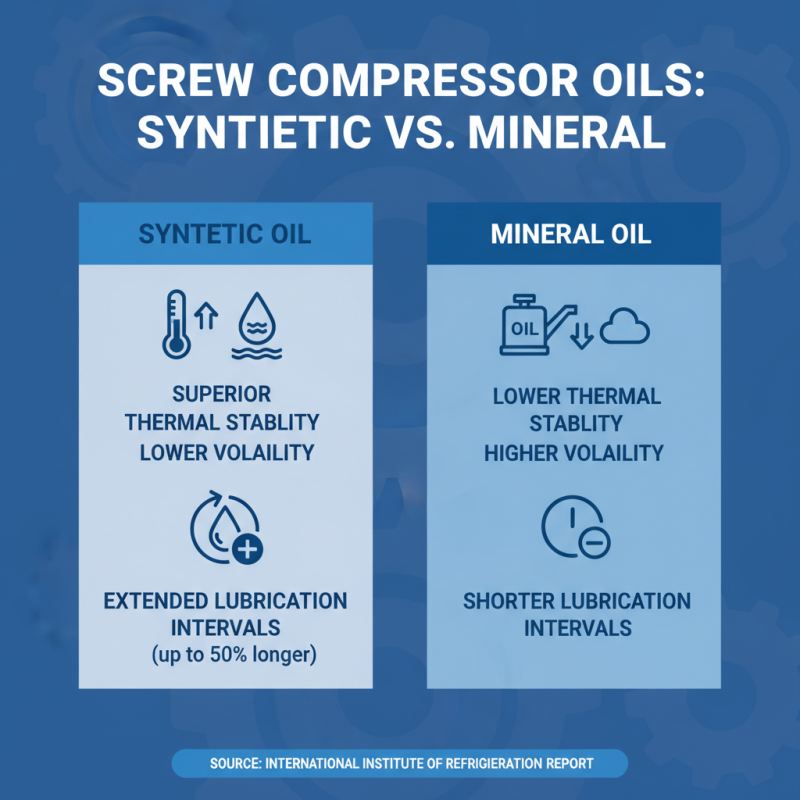
When it comes to screw compressors, the choice of oil plays a critical role in performance. A comparative analysis between synthetic and mineral oils shows notable differences. Synthetic oils often outperform their mineral counterparts with superior thermal stability and lower volatility. According to a report by the International Institute of Refrigeration, synthetic oils can extend lubrication intervals by up to 50%.
In contrast, mineral oils may be more economical upfront but fall short in long-term performance. The viscosity stability of synthetic oils ensures a consistent lubrication film, which can prevent wear and tear on critical components. However, some users may find synthetic options too advanced for basic operations. It highlights a gap in awareness regarding optimal oil selection.
While synthetic oils are efficient, their higher cost can be a sticking point for small operations. Many operators may stick with familiar mineral oils despite the potential drawbacks. Surveys show that around 35% of operators remain unaware of the benefits of synthetic oils. This indicates a need for better education on the long-term cost savings associated with synthetic options. Making informed choices remains a challenge in some sectors.
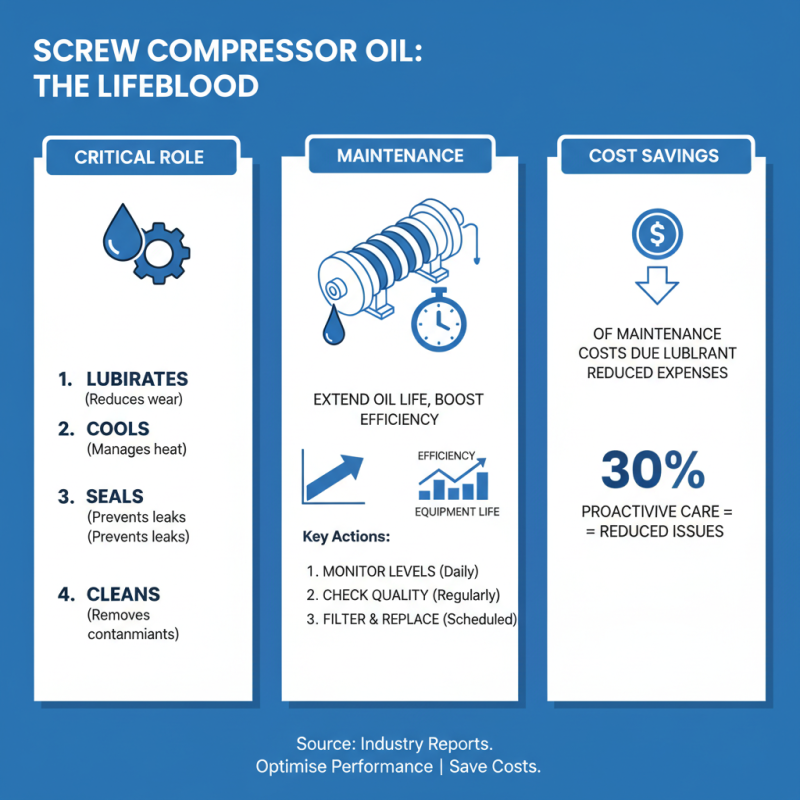
Screw compressor oil plays a critical role in maintaining optimal performance. Regular maintenance can significantly extend the life of compressor oil and improve efficiency. According to industry reports, up to 30% of maintenance costs can be attributed to lubricant issues. It’s crucial to monitor oil levels and quality closely.
One effective tip is to change the oil regularly. Keeping to a schedule prevents degradation. Oil loses its properties due to heat and contaminants over time. Performing cooler cleanings can reduce impurities in the system. Also, check for leaks frequently. This simple step can save a significant amount of oil over time.
Ensuring the right type of oil is used is also essential. Not all oils are created equal. The wrong oil can lead to premature wear. According to studies, using high-quality synthetic oils can improve performance by as much as 15%. Regularly test oil viscosity and condition. If issues arise, address them promptly. A proactive approach leads to better longevity.
I&M Industrials Inc.
10 Akron Drive
Greenville SC 29605
Phone: 864-277-2450
GSA Number – GS07F0379Y