2026 Best Pill Counting Machine for Buyers?
Choosing the 2026 Best Pill Counting Machine for Buyers? The answer depends on more than speed. A machine may count rapidly yet struggle with small tablets, static-prone capsules, or products with similar shapes. Buyers should compare counting accuracy, changeover time, cleaning access, operator controls, and the support available after installation. Ask vendors for performance data using products like yours. Request a demonstration, too.
Quality expert W. Edwards Deming is widely credited with the reminder, “In God we trust; all others must bring data.” That principle fits this purchase. A polished display and an impressive advertised rate are not proof of reliable performance. Look for documented test conditions, clear procedures for checking counts, and practical guidance on routine maintenance. For regulated production, confirm that equipment and records suit your facility’s quality system; requirements vary by application and location.
Details matter. Watch how the machine handles a change from round tablets to oblong capsules. Notice whether dust gathers near sensors, whether an operator can reach contact surfaces, and how rejected counts are signaled. Small points. They can shape daily work. Still, a short demonstration cannot predict every production issue, and vendor figures may not reflect your products or environment. That deserves a second look. This guide compares buyer-relevant features and trade-offs, helping readers identify a Pill Counting Machine that fits their throughput, staff, space, and validation needs—not just the highest number on a product sheet.
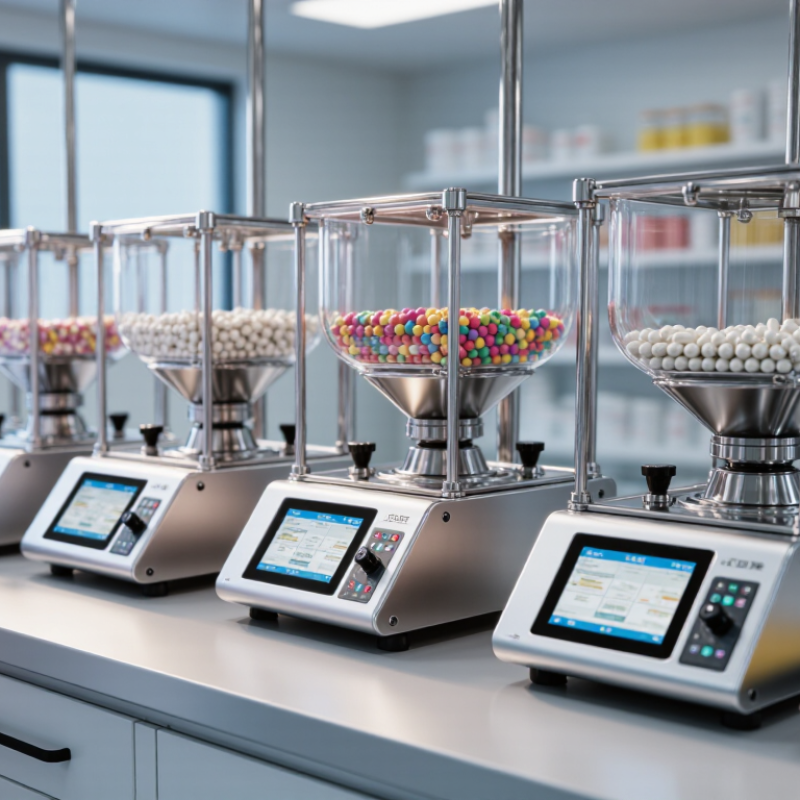
Define Pill Counting Machines: Batch Counting and Dispensing Basics
A pill counting machine converts a requested quantity into a batch, then releases it into a bottle or tray. Most systems feed tablets from a hopper across a vibrating track. An optical sensor detects each passing unit, and a controller stops the feed at the preset count. Simple idea. Not foolproof.
Batch counting means setting a target, such as 30 tablets, and confirming the machine registers that number. Dispensing adds the physical handoff: the counted units enter a container, often through a chute. Tablet shape, coating, static, dust, or overlapping units can affect detection. WHO’s 2017 Medication Without Harm report estimated annual global medication-error costs at US$42 billion. That estimate is not specific to counting equipment, but it shows why careful checks matter.
For buyers, inspect how the machine handles different tablet sizes, confirms a completed batch, and flags a mismatch. Ask for a trial with your actual products, not just uniform demonstration tablets. Compare displayed counts with a manual sample, especially after a changeover. A quiet run can still hide a missed tablet. I’d treat the display as evidence, not truth. Operators should record checks and investigate repeated count differences; speed alone does not prove accuracy.
Compare Manual, Semi-Automatic, and Automatic Counter Technologies
2026 Best Pill Counting Machine for Buyers?
Compare Manual, Semi-Automatic, and Automatic Counter Technologies
The right pill counter depends on daily volume, staffing, and the variety of tablets handled. Manual trays suit occasional, small batches and require little setup. But the operator must count, transfer, and verify each batch, so fatigue can slow work and invite mistakes. Small batches matter. Semi-automatic machines use sensors or counting plates to speed repetitive tasks while staff load and check the product. They can balance cost and throughput, though irregular shapes, static, or poor calibration may affect counts. Ask suppliers how the unit handles your actual tablets, not only standard samples.
Automatic counters can process repeated batches with less hands-on counting, but bring higher purchase, maintenance, and space requirements. The NCPA 2023 Digest reported that independent community pharmacies filled an average of about 60,000 prescriptions in 2022. That figure offers useful workload context, but it does not prove that every pharmacy needs automation. Compare expected batches per shift, changeover time, cleaning steps, count verification, and service availability. Request a trial with representative product and containers. Record miscounts and refill time. A machine that is fast in a demonstration may be awkward during a busy shift; that trade-off deserves attention.
Assess Throughput, Count Accuracy, Batch Size, and Supported Dosage Forms
2026 Best Pill Counting Machine for Buyers?
Assess Throughput, Count Accuracy, Batch Size, and Supported Dosage Forms
A machine’s advertised speed matters less than its steady output during a full shift. Ask suppliers to demonstrate throughput using your typical containers, operators, and batch sizes. Count accuracy deserves equal attention. Run repeated tests with different product lots, then compare machine counts against careful manual checks. Small errors add up. Record the results, not just the best run.
Batch size affects more than convenience. A system designed for large orders may waste time on frequent small runs. Check how quickly it handles recipe changes and clears leftover tablets between batches. Confirm which dosage forms it supports, including round tablets, oblong tablets, and capsules. Fragile or unusually shaped items may behave differently. That trade-off is easy to miss.
Tips: Test the awkward cases. Use the smallest and largest planned batches, and include products that vary slightly in shape or surface finish. Ask how cleaning, calibration, and routine maintenance affect usable production time. A short demonstration can look reassuring, but it may not reveal performance over a long run. Keep your own notes; supplier figures alone are not enough.
Check GMP Controls Under 21 CFR 211.68(b) and 21 CFR Part 11
2026 Best Pill Counting Machine for Buyers?
Check GMP Controls Under 21 CFR 211.68(b) and 21 CFR Part 11
A pill counting machine should do more than count accurately. Buyers should ask how its electronic controls support written procedures, routine checks, and reliable records. Under 21 CFR 211.68(b), applicable automated equipment controls need appropriate checks, calibration or inspection, and backup provisions. Ask for evidence, not just a feature list.
During a demonstration, watch a test count with a known quantity. Check whether the machine flags a jam, records an adjustment, and preserves data after a restart. Confirm who can change settings and whether those changes are documented. If electronic records are relied upon for regulated activities, assess whether Part 11 controls apply to that use. Review validation, access permissions, audit trails, and electronic signatures where relevant. A compliant-looking interface proves little. Small gaps count.
Tips: Request sample records and the supplier’s validation documentation. Confirm backup and restore procedures with your quality team. Test realistic interruptions, such as a power loss or rejected container. Procedures matter as much as equipment. One detail is easy to miss: software updates may affect validated functions, so define review and requalification steps before installation.
Select a 2026 Model by Workflow Fit, Changeover Time, and Total Cost of Ownership
In 2026, the best pill counting machine is the one that fits the real workflow, not the fastest brochure figure. Map your daily product mix, batch sizes, container types, and operator handoffs before comparing rated speeds. A machine may count quickly yet lose hours when a format change requires difficult tooling or repeated adjustments. Ask for a live changeover test using your smallest and largest containers. Time it from the last acceptable bottle to the first verified one. Small detail. Big cost.
Total cost of ownership includes labor, training, maintenance, spare parts, cleaning, and downtime. The U.S. Bureau of Labor Statistics reported that benefits made up 29.4% of private-industry compensation in March 2024, a reminder that staffing costs exceed wages alone. Deloitte and MAPI’s 2019 Smart Factory study found that 86% of surveyed manufacturers viewed smart-factory solutions as future competitiveness drivers. Treat that as context, not a guarantee. For a 2026 purchase, favor useful count records and clear downtime reporting over connectivity for its own sake. One caveat: quoted changeover times may not reflect your actual operators, products, or cleaning routine. Test the full workflow, then compare annual costs across realistic production hours.
Use throughput as an initial workflow filter: manual and tabletop counters suit smaller batches, while semi-automatic and inline systems are designed for higher-volume work. These broad planning ranges are not guaranteed machine specifications. Compare changeover and cleaning time, labor, maintenance, and expected output when calculating total cost of ownership; confirm performance with a supplier using your products and containers.