2026 Best Molded Circuit Breaker Manufacturers?
Choosing among the 2026 best Molded Circuit Breaker manufacturers takes more than comparing prices or product catalogs. A breaker must match the system’s voltage, current, fault level, and operating conditions. A mismatch can affect protection, equipment availability, and maintenance planning. Small details matter.
This guide considers manufacturers through practical selection factors, including published ratings, trip-unit options, product documentation, and technical support. Buyers should verify breaking capacity and coordination requirements against the actual installation, rather than relying on a headline specification. Look for clear datasheets, traceable test information, and guidance on selecting accessories or replacement units. Where applicable, confirm that products meet the standards required for the intended market and application.
Manufacturing capability also deserves attention. Consistent quality controls, dependable supply, and responsive engineering support can matter just as much as a broad product range. Ask how the supplier handles customization, delivery schedules, and service after purchase. A polished website alone is not proof of performance. Neither is a low quote.
The manufacturers discussed here offer a starting point for research, not a universal ranking for every project. Requirements vary across facilities, and public information may not reveal every production or service detail. That uncertainty is worth acknowledging. Use this overview to build a shortlist, then compare current specifications and request project-specific confirmation before making a selection.
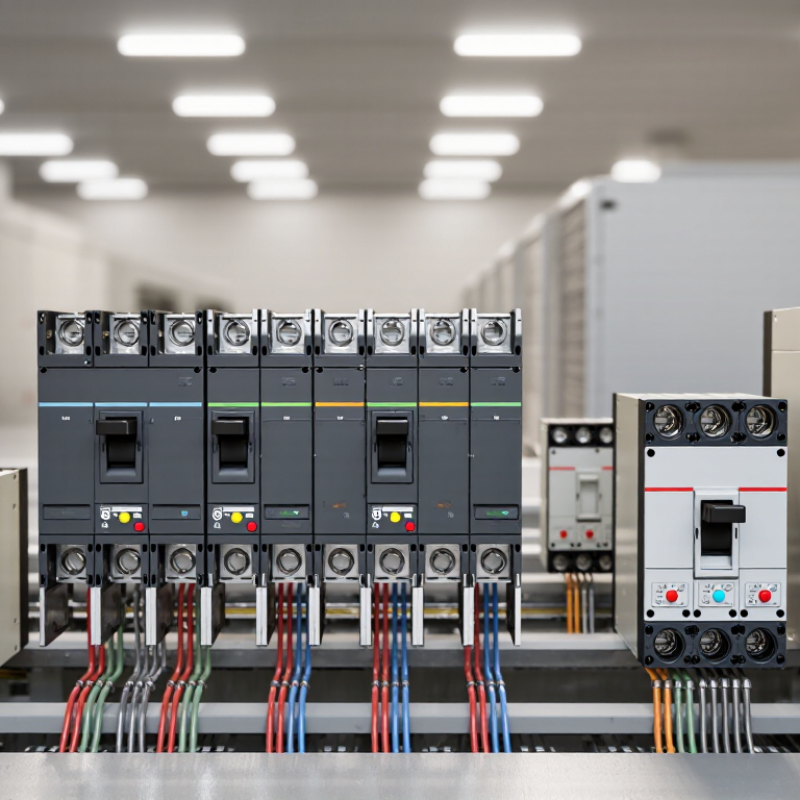
Define MCCBs: IEC 60947-2 Covers Up to 1,000 V AC / 1,500 V DC
2026 Best Molded Circuit Breaker Manufacturers? Understanding IEC 60947-2
A molded-case circuit breaker (MCCB) is a low-voltage protective device housed in an insulated, molded enclosure. IEC 60947-2 applies to circuit breakers with rated voltages up to 1,000 V AC or 1,500 V DC. Those figures define the standard’s voltage scope; they do not mean every MCCB can operate safely at either limit. Check the specific product’s rated voltage, current, and short-circuit breaking capacity. A breaker must also suit the system’s available fault current and coordination requirements. Small details matter.
The International Energy Agency reported that global electricity demand grew 2.2% in 2023 and forecast average annual growth of 3.4% for 2024–2026 in its Electricity 2024 report. More electrified buildings and industrial loads make dependable circuit protection increasingly important, but demand figures alone cannot determine breaker suitability. Compare test documentation, trip settings, operating conditions, and applicable installation requirements. A rating printed on a label can look reassuring; it is not a substitute for checking the fault level at the installation point. Even experienced buyers can overlook this. The standard is a useful baseline, not a complete selection guide.
Molded-Case Circuit Breakers (MCCBs): IEC 60947-2 Voltage Scope
IEC 60947-2 covers circuit breakers for installations with rated voltages up to 1,000 V AC or 1,500 V DC. These are standard scope limits, not a claim that every MCCB supports either maximum; check each device’s rated voltage and application requirements.
Explain MCCB Construction, Thermal-Magnetic Trips, and Electronic Trip Units
2026 Best Molded Circuit Breaker Manufacturers?
MCCB Construction, Thermal-Magnetic Trips, and Electronic Trip Units
A molded case circuit breaker places its operating mechanism, contacts, and trip components inside an insulating housing. When contacts separate, an arc chute helps divide and cool the electrical arc. The handle shows the breaker’s position, but it does not confirm that the circuit is de-energized. Always follow approved isolation procedures. Details matter.
Thermal-magnetic trip units combine two responses. A bimetal element heats during sustained overloads and bends to open the circuit; a magnetic element reacts rapidly to high fault current. Electronic trip units use current sensors and control electronics to apply adjustable protection settings. Depending on the design, these may include long-time, short-time, instantaneous, and ground-fault functions. More adjustment is not automatically better. Incorrect settings can weaken coordination or leave equipment poorly protected.
Tips: Match the breaker’s voltage, current, interrupting rating, and trip settings to the system and protected conductors. Check the manufacturer’s technical data and installation instructions, including temperature-related derating. For electronic units, verify sensor ratings and test settings during commissioning. A useful reminder: labels and settings can be overlooked, so document them clearly and have qualified personnel review the protection study.
Compare Ratings: In, Icu, Ics, Pole Count, and Selectivity
Comparing molded case circuit breaker manufacturers starts with the ratings, not the catalogue cover. In is the breaker’s rated current under specified conditions, so check ambient temperature and enclosure assumptions. Icu indicates ultimate short-circuit breaking capacity; Ics indicates service breaking capacity after a fault interruption. Their values are not interchangeable. Small details matter.
Pole count must match the supply and protection design. A three-pole breaker may suit a three-phase circuit, while some systems require a switched neutral. Confirm the wiring arrangement rather than relying on a product label. Selectivity describes whether the breaker nearest a fault trips before upstream devices. Compare time-current curves, published coordination tables, and short-circuit values at the installation point.
A high Icu alone does not prove good coordination. Check Ics against the expected fault level, then review selectivity across the likely current range. Manufacturer tables can help, but they depend on the exact breaker combination and settings. A tidy comparison sheet can still miss cable length or operating temperature. I would verify those assumptions against the design documents before choosing a device.
2026 Best Molded Circuit Breaker Manufacturers? — Compare Ratings: In, Icu, Ics, Pole Count, and Selectivity
| Representative MCCB Rating Class | Rated Current (In) | Ultimate Short-Circuit Breaking Capacity (Icu) | Service Short-Circuit Breaking Capacity (Ics) | Typical Pole Count | Selectivity Considerations |
| Compact, lower-current distribution | 100 A | 25 kA at 400/415 V AC | 12.5 kA at 400/415 V AC (50% of Icu) | 2P, 3P, or 4P, depending on the circuit | Check upstream and downstream trip curves and coordination tables. Selectivity cannot be confirmed from In and breaking-capacity values alone. |
| General-purpose feeder protection | 250 A | 36 kA at 400/415 V AC | 18 kA at 400/415 V AC (50% of Icu) | 3P or 4P | Compare instantaneous and short-time trip settings with the downstream protective device; verify the combination in coordination data. |
| Higher-capacity distribution | 400 A | 50 kA at 400/415 V AC | 25 kA at 400/415 V AC (50% of Icu) | 3P or 4P | Electronic trip settings may support discrimination, but the permissible selectivity limit depends on the specific upstream/downstream pairing. |
| High-breaking-capacity main or feeder protection | 630 A | 70 kA at 400/415 V AC | 70 kA at 400/415 V AC (100% of Icu) | 3P or 4P | Full selectivity must be confirmed for the prospective fault current and exact device combination using published coordination tables or a validated study. |
How to read this comparison: These are representative IEC 60947-2 rating examples, not specifications for particular products or manufacturers. Actual In, Icu, and Ics values depend on the breaker design and rated operating voltage; always verify the relevant datasheet. Icu is the ultimate breaking capacity, while Ics is the service breaking capacity. Pole count must suit the system earthing and switching requirements. Selectivity is a coordination result—not a standalone breaker rating.
Assess 2026 MCCB Manufacturers by Product Range, Certification, and Support
Choosing an MCCB manufacturer in 2026 takes more than comparing current ratings. Review the product range for frame sizes, pole options, trip settings, and breaking capacities suited to your system. A broad catalogue can simplify panel design, but only when the listed ratings match the actual installation conditions. Check technical sheets, test reports, and certification documents for the exact product family. A certificate for one model does not automatically cover every model.
Tips: Request sample documents before shortlisting. Check certification scope, expiry dates, and product markings. Ask how technical support handles selection questions and replacement parts.
Support matters after purchase, too. Ask about response times, local service coverage, and access to clear installation guidance. If a breaker trips repeatedly, fast access to technical help can reduce troubleshooting delays. Also confirm that the manufacturer explains coordination and protection limits in practical terms. These details may be less impressive than a polished brochure, but they are easier to rely on during commissioning. No checklist removes every uncertainty; compare the documents with your project requirements and have qualified personnel verify the final selection.
Verify Manufacturer Claims Against IEC 60947-2, UL 489, and Application Needs
When comparing molded-case circuit breaker manufacturers, verify evidence against the exact application. IEC 60947-2 and UL 489 are not interchangeable approvals; each has its own requirements and test framework. Ask for current certificates and test reports that identify the precise breaker frame, trip unit, pole count, voltage, and interrupting rating. A certificate covering a product family may not cover every configuration. Check rated short-circuit performance, coordination data, and accessory compatibility—not just a polished datasheet.
Application details matter. Confirm available fault current, system voltage, ambient temperature, enclosure conditions, and expected load before accepting a recommendation. Lawrence Berkeley National Laboratory’s 2024 U.S. Data Center Energy Usage Report estimates that U.S. data centers used 176 TWh of electricity in 2023, with demand potentially reaching 325–580 TWh by 2028. That forecast is not a breaker-sizing rule. It does underline why engineers should validate real load profiles and future capacity, rather than rely on generic claims. Small mismatch, big consequence.
Tips: Request the exact model’s certification record, temperature-rise data, and short-circuit test evidence. Compare these with the installation’s fault study and coordination plan. If a supplier cannot provide them, pause and investigate.