1-800-868-2450
My Account | Cart | Checkout
Choosing the 2026 best 125amp Mccb requires more than comparing prices or breaking capacity. A reliable unit must match the installation’s voltage, fault level, cable size, ambient temperature, and coordination plan. Its frame may be rated at 125 amps, but its actual performance depends on trip settings and enclosure conditions. Small details matter. A crowded panel can retain heat and reduce operating margin.
Recent industry research supports continued investment in low-voltage protection. Fortune Business Insights valued the global circuit breaker market at USD 7.67 billion in 2023 and forecasts strong growth through 2032. MarketsandMarkets also identifies industrial expansion, renewable integration, and infrastructure upgrades as major demand drivers. These reports discuss circuit breakers broadly, not every 125amp MCCB. That distinction deserves attention.
Electrical safety author John Cadick offers a useful principle: “The first rule of electrical safety is to de-energize.” His message applies directly here. A 125amp MCCB should support safe isolation, dependable interruption, and practical maintenance. Buyers should verify IEC 60947-2 compliance, Icu and Ics ratings, thermal-magnetic or electronic trip design, and accessory availability. Regional certification remains important, too.
There is no universal winner. A compact molded-case breaker may suit a commercial panel, while an adjustable electronic model may better protect a motor feeder. I would not select one from amperage alone. Installation data is often incomplete, and catalog claims can look cleaner than field conditions. This guide compares leading 2026 options for global buyers, using performance, documentation, serviceability, and lifecycle value as the real decision points.
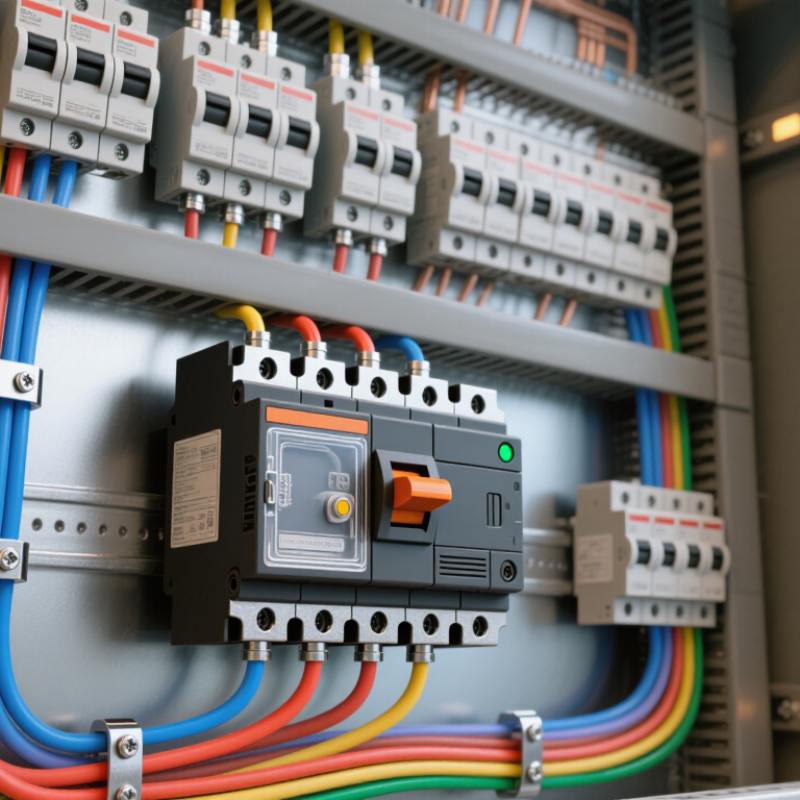
2026 Best 125amp MCCB for Global Buyers?
What Is a 125A MCCB and How Does It Work?
A 125A molded case circuit breaker protects low-voltage circuits from overloads and short circuits. The “125A” rating usually indicates its continuous current capacity, not a guaranteed trip current. Some models use adjustable thermal settings. That difference matters.
Inside the breaker, a thermal element responds to sustained overcurrent. A bimetal strip heats, bends, and releases the trip mechanism. A magnetic element reacts much faster to severe short-circuit current. It activates the mechanism almost instantly. Contacts then separate inside an arc chamber, where metal plates help cool and divide the electrical arc.
A practical selection check includes voltage, pole count, frequency, interrupting capacity, and cable size. A 125A breaker may suit a feeder, workshop panel, pump system, or small commercial distribution board. However, the installation environment changes the result. High ambient temperature can reduce usable current. Heat matters.
The easy assumption is that every 125A MCCB performs identically. It does not. Buyers should compare trip curves, terminal capacity, insulation voltage, and coordination with upstream protection. Short-circuit ratings must match the available fault current at the installation point. Local electrical rules also require attention, especially for enclosure spacing and conductor protection. A datasheet can look complete while hiding an unsuitable trip setting. Careful verification remains necessary.
A 125 amp MCCB should match the system voltage, frequency, and fault level. Check the rated operational voltage before comparing prices. A device marked 125 A may not carry that current continuously in every enclosure. Ambient heat changes performance. So does poor ventilation.
Compare the ultimate short-circuit breaking capacity, Icu, and the service breaking capacity, Ics. Ics matters during repeated faults. For industrial panels, higher fault ratings can provide greater design confidence. Verify test conditions carefully. Figures may apply only to specific voltage levels. This detail is easy to miss.
Choose thermal-magnetic protection for simple distribution circuits. Electronic trip units offer more precise adjustment and coordination. Check overload and instantaneous settings, pole configuration, terminal size, and installation orientation. Look for compliance with IEC 60947-2 or the relevant national standard. Certification should match the destination market, not merely the factory document.
Real projects often expose the weak points. Cable temperature, altitude, humidity, and enclosure size can require derating. I have seen a correctly rated breaker nuisance-trip after installation because airflow was ignored. That mistake is costly. Ask for test reports, calibration information, dimensions, tightening torque, and spare-accessory details. A clear datasheet is useful, but it is not the whole design. Local verification remains necessary.
A 125A molded-case circuit breaker is not globally compliant by rating alone. Buyers should verify its rated voltage, short-circuit breaking capacity, pole configuration, and trip characteristics. These details affect safety inside a compact distribution panel.
IEC 60947-2 is a key reference for many international projects. It covers performance, temperature rise, insulation, endurance, and short-circuit testing. Some markets may require compliance with UL 489 or equivalent national standards. The correct requirement depends on the installation location and authority having jurisdiction.
Request a current declaration of conformity, routine test records, and type-test reports from an independent laboratory. Check whether the documents identify the exact 125A model, not merely a similar product family. A CE mark may support European market access when the applicable directives and assessment procedures are satisfied. It is not automatically a universal safety certificate. Other regions may require local marks, such as UKCA, CCC, RCM, KC, or NOM, depending on the product and destination.
Field experience shows that paperwork often receives less attention than the breaker label. That is a mistake. The label should clearly show voltage, interrupt rating, frequency, terminal limits, and tightening torque. Installation instructions must match local wiring rules. Certification can also become outdated after a design change. Buyers should recheck revision dates, laboratory scope, and authorized production sites before ordering. Even careful reviews can miss an accessory mismatch. That possibility deserves attention.
2026 Best 125amp MCCB for Global Buyers?
How to Select the Right 125A MCCB for Your Application
A 125A frame is not automatically a 125A promise. Start with the continuous load, conductor rating, ambient temperature, and installation method. For motors, transformers, or capacitor banks, inrush current can exceed normal operating current. A thermal-magnetic trip may nuisance-trip if its curve is poorly matched. Electronic protection offers finer adjustment, but it usually costs more and requires trained commissioning.
Check the fault level at the installation point. The breaker’s ultimate and service short-circuit ratings must exceed the available prospective fault current. IEC 60947-2 provides the main performance framework for low-voltage circuit breakers, while local rules may require additional testing. The 2024 edition of the International Energy Agency’s Electricity 2024 report expects global electricity demand to grow by about 4% annually through 2026. That growth makes future load allowance important, especially in compact commercial panels and small industrial lines.
Look closely at poles, terminals, insulation voltage, and operating temperature. A 125A MCCB installed inside a hot enclosure may need derating. Confirm whether the device supports isolation, adjustable overload protection, earth-fault protection, or coordination with upstream and downstream breakers. Selectivity matters. Otherwise, one small feeder fault may disconnect an entire workshop. Installation errors remain possible, even with a compliant device. Verify torque values, cable lugs, clearance, and test results before energizing. Cite the manufacturer’s test documentation and applicable national certification, not only a sales datasheet.
2026 Best 125A MCCB for Global Buyers?
A strong 125A MCCB begins with the fault level, not the catalogue price. IEC 60947-2 requires verified short-circuit performance, but buyers must match Icu and Ics with the installation’s prospective fault current. Thermal-magnetic protection suits many small distribution panels. Electronic trips offer finer adjustment and better coordination. Check rated voltage, frequency, pole configuration, insulation voltage, and operating temperature. In hot enclosures, derating can quietly reduce usable capacity. It matters.
The IEA’s Electricity 2024 report expects global electricity demand to grow by about 3.4% annually from 2024 to 2026. That growth increases demand for dependable low-voltage protection, especially in commercial and industrial upgrades. Pricing depends on interrupting capacity, trip technology, enclosure protection, accessories, testing, certification, copper content, and delivery conditions. A low quote can still be expensive. Compare five-year ownership cost, not only purchase cost. Ask for test certificates, conformity documents, warranty terms, spare-trip availability, and batch traceability. Confirm whether the quoted price includes terminals, auxiliary contacts, shunt trips, and freight. In real procurement reviews, missing accessories often create the largest surprise. I would also question optimistic service-life claims without switching-cycle evidence. The “best” 125A MCCB is the one that fits the fault study, coordination plan, climate, and maintenance skill level.
| Evaluation Dimension | Typical Data for a 125 A MCCB | Why It Matters | Global Buying Consideration |
|---|---|---|---|
| Rated current (In) | 125 A at the specified reference temperature; adjustable thermal settings may be available on selected models. | Confirms that the breaker can carry the intended continuous load without nuisance tripping. | Check the derating curve, ambient-temperature reference, enclosure temperature, and conductor size. |
| Number of poles | 2-pole, 3-pole, or 4-pole configurations are commonly offered; 3-pole is widely used for three-phase systems. | Determines which live conductors are disconnected during fault isolation. | Match the pole arrangement to the supply system, neutral-switching requirements, and local wiring rules. |
| Rated operational voltage (Ue) | Common ratings include 400/415 V AC; some product families are rated up to 600 V or 800 V AC. | The breaker must be suitable for the system voltage and insulation coordination. | Verify the exact voltage, frequency, altitude, pollution level, and short-circuit test conditions in the datasheet. |
| Interrupting capacity | Typical 415 V AC options range from approximately 18 kA to 50 kA; higher ratings may be available for heavy-duty applications. | The breaker must safely interrupt the prospective short-circuit current at the installation point. | Compare Icu and Ics values under the same voltage and test standard; do not compare kA figures in isolation. |
| Trip technology | Thermal-magnetic trip units are common; electronic trip units provide more precise long-time, short-time, instantaneous, and sometimes ground-fault protection. | Trip technology affects selectivity, adjustment range, monitoring capability, and total cost. | Choose electronic protection when coordination, measurement, or adjustable settings are required. |
| Standards and conformity | IEC 60947-2 is a common international reference; UL 489 may be required for certain North American installations. | Standards define testing, performance, marking, and verification requirements. | Request the applicable test report, declaration of conformity, certification scope, and complete datasheet. |
| Frequency | Usually 50/60 Hz AC; some models may have separate AC and DC application ratings. | Interrupting and operating performance can change with frequency and current type. | Confirm whether the application is AC or DC and obtain the correct pole-series connection diagram for DC use. |
| Installation method | Fixed-mounted versions are common; plug-in or draw-out arrangements may be available depending on the frame design. | Influences panel layout, maintenance time, safety, and accessory compatibility. | Check terminal orientation, mounting dimensions, front clearance, busbar spacing, and enclosure space. |
| Terminal and conductor compatibility | Often suitable for copper or aluminum conductors when the listed terminal kits and tightening torques are used. | Incorrect terminals or torque can cause overheating, loosening, or insulation damage. | Verify conductor cross-section, lug type, allowable cable material, torque values, and terminal accessories. |
| Environmental suitability | Many indoor products operate around −5 °C to +40 °C without special derating; outdoor, humid, dusty, or high-altitude installations require additional review. | Temperature, moisture, dust, and altitude can affect current capacity and insulation performance. | Ask for derating data above 40 °C, altitude limitations, enclosure IP rating, condensation protection, and storage conditions. |
| Protection and accessories | Common options include auxiliary contacts, alarm contacts, undervoltage releases, shunt trips, motor operators, and door-mounted handles. | Accessories support remote control, status indication, emergency shutdown, and integration with control systems. | Confirm accessory voltage, factory or field installation, wiring terminals, lead time, and compatibility with the selected frame. |
| Indicative unit price | Approximately US$80–US$350 for a basic 125 A thermal-magnetic unit; higher interrupting capacity, electronic trips, accessories, and certified configurations can increase the price substantially. | The lowest purchase price may exclude terminals, releases, testing, certification, freight, or taxes. | Treat this as a planning range only; request a delivered quotation with configuration, quantity, Incoterms, currency, warranty, and taxes clearly stated. |
| Lead time and order quantity | Standard configurations may be available from stock; customized trip units, accessories, or large project quantities commonly require additional production time. | Delivery timing affects project commissioning and spare-parts planning. | Confirm stock status, production lead time, minimum order quantity, packaging, spare availability, and replacement policy. |
| Selection priority for 2026 projects | Correct voltage and pole count, adequate Icu/Ics, verified conformity, suitable trip settings, reliable accessories, and documented service support. | A technically suitable breaker reduces safety risks, downtime, and lifecycle cost. | Compare complete technical configurations rather than headline amperage or unit price alone. |
Note: Values shown are general industry reference ranges for preliminary comparison. The final selection must be based on the manufacturer’s current datasheet, applicable local regulations, system fault-current study, and installation conditions.
I&M Industrials Inc.
10 Akron Drive
Greenville SC 29605
Phone: 864-277-2450
GSA Number – GS07F0379Y